This is how to fertilize clivia efficiently for blooms every year and rampant growth every month
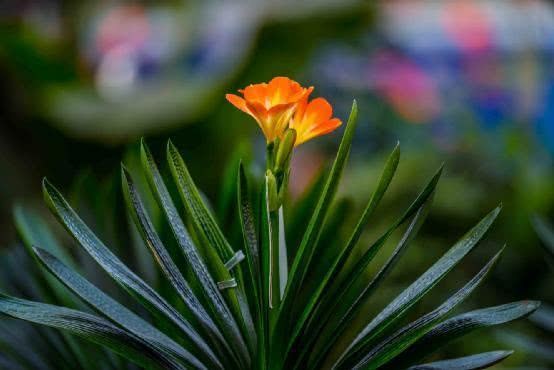
A master clivia grower once chatted with me and said, "You can tell whether a clivia is growing well just by looking at its fertilizer." At first I didn't pay much attention, but later, when I saw my own clivia that never seemed to grow, I realized how true those words were. Indeed, if we have already done everything else well enough but the clivia still shows no improvement in growth, then the key to the problem very likely lies in fertilizing. So what little tricks are there for fertilizing clivia? Today I bring you plenty of practical tips.
Targeting the right remedy is the way to go. Throughout its entire growth process, clivia needs many kinds of trace elements, but the three that account for the highest proportions are nitrogen, phosphorus and potassium. In fact, different elements have different effects on clivia. Nitrogen is the main raw material for chlorophyll; the reason clivia can have broad, thick, emerald green and upright leaves is the support of nitrogen. Phosphorus mainly serves to "strengthen the roots"; whether a clivia can grow well depends to a large degree on whether its root system is well developed. Finally, potassium is mainly responsible for photosynthesis and metabolism in clivia; its content is not high, but its role is not small. Supplementing whatever is lacking and targeting the right remedy is the way to go.
For flower care, fertilizer is very important. It is best to choose an ecologically safe organic fertilizer, rich and balanced in nitrogen, phosphorus and potassium, with various organic matter, minerals and amino acids added, to promote vigorous plant growth, produce more flower buds, bloom more and last longer.
There are different approaches for the four seasons. In different seasons, the growth conditions of clivia are also different. Using specific methods at specific times, and mastering the core growth patterns of clivia in each season to supplement the appropriate fertilizer, is the key to healthy growth. Generally speaking, spring is the period of rampant growth for clivia, with a high demand for nutrients. In addition to the necessary light and water, for fertilizer you can choose some decomposed soybean cake, sesame, flaxseed and other commonly used nitrogen fertilizers as supplements. However, note that fertilizing should follow the principle of "rather weak than strong" to guard against root burn.
In summer, temperatures in most parts of China are generally high, and clivia enters a semi-dormant state. Its growth rate is already very slow, and its absorption of nutrients is not very active either. During this period, it is best to stop supplementing fertilizer and just keep the potting soil moist. Fertilizing in summer is a major taboo in clivia growing, so everyone must be especially careful.
In autumn, clivia resumes growth. At this time, supplement it with a multi-element fertilizer. If there are seeds, they can mature by now; just pick them and then supplement it with a multi-element fertilizer. At this point, pay attention to replenishing the three elements nitrogen, phosphorus and potassium to add more momentum to the growth of clivia.
In winter, besides controlling the temperature well, you can reduce fertilizer supplementation as appropriate, fertilizing about once every half month. Of course, be sure to remember that before fertilizing it is best to ensure the soil is dry, as this is more favorable for fertilizer absorption.