Main Cultivated Varieties and High-Yield Cultivation Techniques of Lotus Root in Quzhou City, Zhejiang Province
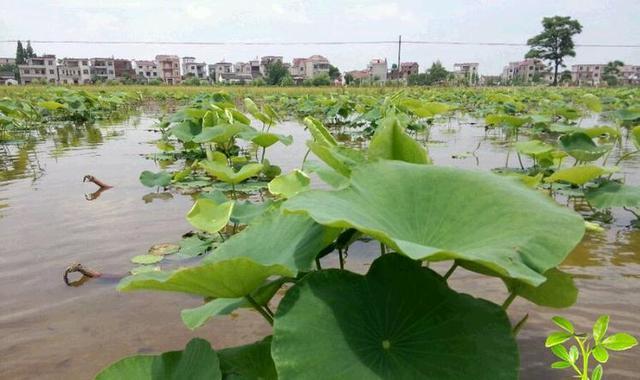
Main Cultivated Varieties and High-Yield Cultivation Techniques of Lotus Root in Quzhou City, Zhejiang Province
Project source: Zhejiang Province "Three Rural Six-Party" Science and Technology Collaboration Program project "Research on High-Yield Cultivation Techniques of Selenium-Enriched Lotus Seeds."
Lotus root is one of the main aquatic vegetables in Quzhou City. For a long time, local farmers mainly planted old varieties such as Jiangxi seedless lotus root. Due to the lack of timely purification and replanting, the varieties degenerated year by year, yield, quality, and disease resistance declined, and rot disease occurred severely, causing the lotus root industry to almost stagnate or even shrink. In recent years, the Quzhou Academy of Agricultural Sciences has successively introduced a batch of early-maturing and mid-maturing high-yield Elian series varieties from the Jinhua Academy of Agricultural Sciences, such as 'Elian No. 6', 'Elian No. 7', 'Elian No. 9' (Juwuba), as well as 'Donghe Early Lotus Root', 'Piaohua Lotus Root' and other varieties for trial planting and promotion. Through several years of promotion, the Elian series and other varieties have become the main locally cultivated varieties, achieving good economic benefits.
1 Cultivated Varieties and Characteristics
1.1 'Elian No. 7'
Early-maturing variety. Plant height 110-130 cm, leaf diameter about 70 cm, flowers white. Main lotus root has 4-6 nodes, internodes are short cylindrical, internode length 10-14 cm, diameter 8-10 cm, internodes uniform, lotus root flesh thick and solid, skin yellowish-white, single whole lotus root weight 2.2-2.5 kg. From late June to... early July, green lotus root yield per 667 sq m is about 1 000 kg, and withered lotus root yield is about 1 900 kg.
1.2 'Elian No. 6'
Mid-maturing variety. Plant height 160-180 cm, leaves nearly round, surface smooth, leaf blade radius about 36 cm, petiole diameter about 1.9 cm, many flowers, flowers white, lotus root begins to form at about 13 leaves, growth period... about 125 d, shallow penetration into mud. Internode shape is medium-short cylindrical, skin yellowish-white, lotus root head and internode shoulders round and blunt, internodes uniform, main lotus root 6-7 nodes, length 90-110 cm, internode length 14-17 cm, diameter 8 cm, single whole lotus root weight about 3.5 kg. In mid-July, green lotus root yield per 667 sq m is about 1 500 kg, and withered lotus root yield is 2 000-...2 500 kg.
1.3 'Elian No. 9' (Juwuba)
Early-mid-maturing variety. Plant height about 180 cm, petiole relatively thick, leaves nearly round and relatively flat, radius about 43 cm, leaf surface rough, many flowers, flowers white. Internodes medium-short cylindrical, skin yellowish-white, internode length about 14 cm, diameter about 8 cm, lotus root shape index about 1.6, main lotus root 5-7 nodes, single whole lotus root weight about 4 kg, main lotus root weight... about 2.4 kg. Withered lotus root yield per 667 sq m is 2 500-3 000 kg.
1.4 'Donghe Early Lotus Root'
Early-maturing variety. Spring lotus root rear ridge leaf length about 66 cm; few secondary lotus roots, main lotus root length about 51 cm, average internode number 2.3, internodes long cylindrical, length and transverse diameter about 20 cm and 6.7 cm respectively, light yellow, skin smooth, flesh sweet and crisp, suitable for stir-frying or eating raw. Summer lotus root rear ridge leaf length about 69 cm; 1-2 secondary lotus roots, main lotus root length about 62 cm, average internode number about 3.3, internode length and transverse diameter about 18 cm and 7.5 cm respectively, light yellow. Growth periods of spring lotus root and summer lotus root are 76 d and 75 d respectively. Yields per 667 sq m of spring lotus root and summer lotus root are...1 500 kg and 2 000 kg respectively.
1.5 'Piaohua Lotus Root'
Early-maturing variety. Petiole length 140 cm, leaves elliptical, leaf diameter...75 cm, flowers white with red tips. Main lotus root 5-7 nodes, length 120-...150 cm, transverse diameter 7-8 cm, single root weight 5-6 kg, tip node thick and large, penetration into mud 25-30 cm deep, skin light yellowish-white. In early July, green lotus root yield per 667 sq m is about 1 500 kg, and in August mature lotus root yield is about 2 000 kg.
2 Greenhouse Two-Crop Double-Season Cultivation
2.1 Variety Selection
Select early-maturing varieties such as 'Donghe Early Lotus Root', 'Elian No. 7', 'Piaohua Lotus Root', etc.
2.2 Cultivation Facilities
Steel frame or bamboo frame greenhouses can be selected, commonly used are steel frame 8 m, steel frame
6 m greenhouses, etc.
2.3 Seed Lotus Root Selection and Treatment
For spring lotus root cultivation, select whole lotus roots or secondary lotus roots that conform to variety characteristics, have intact apical buds, fresh color, no disease spots or insect damage, thick and strong lotus root body with 3 or more nodes. Seed quantity per 667 sq m is 300-400 kg. Before planting, soak seed lotus roots in 25% prochloraz EC 500-800 times solution for 1 h, or soak in 98% hymexazol SP 2 000 times solution for 3-5 min, and plant after the solution dries. For summer lotus root cultivation, young lotus roots can be used as seed to reduce production costs.
2.4 Planting
Spring lotus root in Quzhou City is generally transplanted in early March on sunny and warm days. If greenhouse with small tunnel covering is used for insulation, cultivation can be appropriately advanced. Seed lotus roots should be selected, dug, and planted promptly. When planting, insert the lotus root head slightly downward at an angle of 10-15 cm, with the lotus root tip exposed above the mud surface, forming an angle of about 20° with the soil surface. Greenhouse lotus root adopts high-density cultivation, with row spacing of 1-1.5 m × 0.8-1 m, and seed quantity per 667 sq m of 400-500 kg. Summer lotus root is planted as spring lotus root is harvested.
2.5 Temperature Management
In the early floating leaf stage of spring lotus root, sealing for insulation is the main approach, generally not removing the film, and in case of cold waves, appropriately irrigate to maintain temperature. After standing leaves unfold, appropriately ventilate. On hot sunny days, when the temperature inside the greenhouse is above 35°C, ventilate promptly to prevent high-temperature damage to seedlings. During the unfolding period of the 2nd standing leaf, open both ends of the greenhouse film daily for ventilation and hardening of seedlings. After the 3rd standing leaf unfolds, as the outside temperature rises, open one side of the film during the day for ventilation and cooling, and seal the film in the evening for insulation. After mid-April when the temperature stabilizes above 20°C, remove the film. For summer lotus root, during the early transplanting period when temperatures are high, duckweed and similar plants can be used to shade and insulate, preventing water temperature from becoming too high, while also inhibiting weed growth.
2.6 Water and Fertilizer Management
From planting to sprouting stage of spring lotus root, water depth is maintained at 3-5 cm, from standing leaf emergence to row closure 5-10 cm, from row closure to lotus root formation stage 10-20 cm, and during lotus root formation stage 5-10 cm. In late May, control water and growth to promote new lotus root expansion. For summer lotus root, during the early planting period when temperatures exceed 35°C, deep water should be irrigated for protection to prevent bud scalding and promote early and rapid seedling growth. During overwintering, maintain water depth above 10 cm. Spring lotus root is generally top-dressed 3 times: the 1st time when 1-2 standing leaves appear, applying urea 15-20 kg per 667 sq m; the 2nd time before row closure, applying compound fertilizer 20-25 kg per 667 sq m; the 3rd time when terminal leaves appear, applying compound fertilizer 20-30 kg and potassium sulfate 5-...10 kg per 667 sq m. Before fertilizing, drain the field water shallow to let the fertilizer be absorbed into the soil, then irrigate to restore the original water level. Fertilizing should be done on sunny and windless days, and absolutely not at noon. For summer lotus root, apply compound fertilizer 50 kg promptly after transplanting.
2.7 Pest and Disease Control
Main diseases include Phytophthora blight, brown spot disease, and rot disease. For Phytophthora blight, at the early stage of onset, 64% oxadixyl mancozeb WP 600 times, 72% cymoxanil mancozeb WP 800 times solution, etc. can be used for control. For brown spot disease, at the early stage of onset, 50% mancozeb WP 500 times, 30% difenoconazole EC 1 500 times, 50% iminoctadine tris WP 1 500 times solution, etc. can be used for control. For rot disease, when a small amount occurs, promptly pull out diseased plants, take them out of the field for destruction, and spread quicklime in and around the diseased holes; for chemical control, 98% hymexazol SP...3 000 times, 30% difenoconazole EC 1 500 times, 50% iminoctadine tris WP 1 500 times solution, etc. can be used, or the above agents can be mixed into medicated soil and broadcast over the entire field at the 1-2 standing leaf stage and 5-6 standing leaf stage respectively. Main pests include aphids and Spodoptera litura. For aphids, 70% imidacloprid EC 4 000 times, 10% nitenpyram AS 2 000 times solution, etc. can be used alternately for control; for Spodoptera litura, at the peak hatching stage to the peak of 1st and 2nd instar larvae, 5% chromafenozide EC 1 000 times, 20% chlorantraniliprole SC 2 000 times solution, etc. can be used alternately for control.
2.8 Timely Harvesting
Spring lotus root is harvested from late May to mid-June when many terminal leaves appear in the field. Summer lotus root begins to be harvested in mid-to-late August. For those harvested as old lotus root, the harvest period can be extended to early April of the following year.
3 Open-Field Cultivation
3.1 Variety Selection
Early-maturing and mid-maturing high-yield Elian series varieties such as 'Elian No. 6', 'Elian No. 7', 'Elian No. 9' (Juwuba), etc., as well as 'Piaohua Lotus Root', 'Donghe Early Lotus Root' and other varieties.
3.2 Land Selection and Preparation
Strictly select land; field plots require sufficient water source, convenient drainage and irrigation, rich organic matter, and soft soil. 10-15 d before planting lotus root, irrigate and plow, apply decomposed organic fertilizer 2 000-2 500 kg, quicklime 75 kg, compound fertilizer 50 kg, superphosphate 50 kg, zinc sulfate...2 kg, borax 2 kg per 667 sq m, then plow and harrow level.
3.3 Planting
Seed lotus root selection and treatment before planting can refer to greenhouse cultivation. Plant from mid-to-late March to early April, with row spacing of 1.5-2 m × 1 m, planting 300-400 holes per 667 sq m, placing 1 whole lotus root or 2 secondary lotus roots per hole. When planting, the lotus root heads along the four sides and border rows should all face toward the field interior; when lotus root heads face each other in the middle of the field, increase row spacing.
3.4 Intertillage and Weeding
Intertill and weed once 15 d after planting seed lotus roots. When weeds are abundant, weed once at 10 d intervals, and stop intertillage and weeding after lotus leaves close rows. When weeding, operate in shallow water, and attention should be paid to working on both sides of curled leaves, not trampling or damaging lotus root runners; the removed weeds and withered floating leaves can be stuffed into the mud as fertilizer.
3.5 Turning Lotus Root Tips
When curled leaves are 1 m from the field edge, to prevent lotus root tips from crossing the field ridge, turn the lotus root tips near the field ridge back toward the field interior at any time, and during the peak growth period, turn tips once every 2-3 d. Turning lotus root tips should be done in the afternoon to avoid breaking them.
3.6 Water and Fertilizer Management
Can refer to greenhouse cultivation.
3.7 Pest and Disease Control Can Refer to Greenhouse Cultivation.
3.8 Timely Harvesting
Early-maturing varieties are harvested from late June to mid-July; mid-maturing varieties begin harvesting in mid-July... and finish harvesting before mid-August.