Detailed Explanation of High-Yield Cultivation Techniques for Chaenomeles speciosa (Wild Flowering Quince) in Zheng'an County
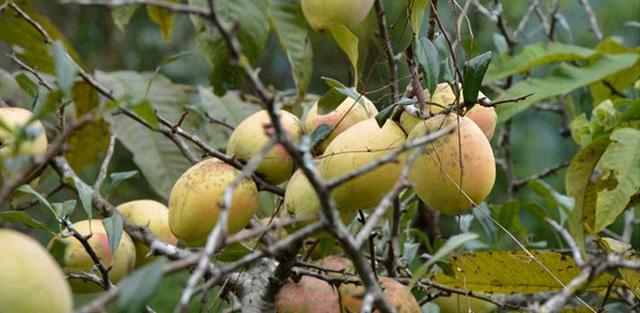
High-Yield Cultivation Techniques for Chaenomeles speciosa in Zheng'an County
From a cultivation standpoint, Chaenomeles speciosa has strong adaptability and does not have strict requirements for the growing environment, but its artificial cultivation activities are mostly carried out in southern China.
1 Site Selection for Chaenomeles speciosa
As mentioned in the preface, Chaenomeles speciosa has an extremely strong overall adaptability to external environmental conditions, so it is cultivated on a large scale as a commercial fruit product in southern China. In terms of plantation site selection, sunny slopes or semi-sunny slopes with good ventilation and sun exposure are optimal; in terms of soil requirements, relatively deep, fertile, loose soil rich in organic matter is preferred, and a low groundwater table is required so as to ensure no waterlogging and good overall drainage, with soil properties classified as slightly acidic. If there is no slightly acidic soil, but rather relatively barren wasteland and slopes, then more organic fertilizer capable of improving the soil must be used; on the one hand this achieves rational and economical use of land, and on the other hand it can also satisfy intercropping with Chaenomeles speciosa during the cultivation of grain and fruit crops in the region.
2 Planting of Chaenomeles speciosa
Generally speaking, the best planting time for Chaenomeles speciosa in southern China is autumn; of course, in some areas it is planted before sprouting in spring. Typically, the planting spacing is controlled within the range of 2.2 m x 3.0 m. If cultivated on flat land, triangular planting should be adopted; if cultivated on mountain land, high-line planting should be adopted, and for the terraced soil portions of Chaenomeles speciosa, planting should be done in the center of the soil. At field edges and earthen ridges, planting should be done at a position extending 1 m outward, and then planting pits (80 x 80 x 80 cm) should be dug around the planting points.
For fertilization in the pit, choose 15-20 kg of decomposed cow dung and 1 kg of calcium superphosphate. After evenly mixing the topsoil with the fertilizer, backfill and compact the soil, finally piling it into a hill shape, then spread a layer of thin soil 10 cm thick on top, ensuring that the sapling can stretch out its root system in the pit, meeting the basic requirement of even distribution, and finally backfill with soil. During planting, ensure that the root collar and graft interface of the Chaenomeles speciosa are about 5-7 cm above the ground. A soil ridge with a diameter of 1 m can be made around the seedling, together with sufficient settling water, so that watering is adequate. After the settling water has completely infiltrated into the soil, consider constructing the tree basin position to improve the survival efficiency of the Chaenomeles speciosa root system. At this time, watering once every 5-6 d can be chosen, loosening the soil while watering, keeping the soil always in a moist and well-watered state[1].
3 Management of Orchard Intercropping
Soil management for Chaenomeles speciosa must achieve loose soil and full evaporation of water. Generally, after heavy rain and before seed setting, intertillage should be carried out on Chaenomeles speciosa, with the intertillage depth controlled at about 7-9 cm, and the topsoil must be sufficiently loose. At the same time, cultivation of Chaenomeles speciosa in southern China can be carried out together with certain short-stalk grain and fruit crops, that is, intercropping. The main intercrop grain and fruit crops include various vegetables, tuber crops, and so on. In combination with the intercropping process of these grain and fruit crops, weeding and turning the soil should be ensured about twice a year. At the same time, the basic principles of orchard intercropping must be strictly observed. First, intercrops must be selected from varieties beneficial to the growth and development of Chaenomeles speciosa, such as sweet potato, peanut, mung bean, rapeseed and other grain and oil crops, while tall crops such as wheat and corn cannot be used as intercrops for Chaenomeles speciosa because they compete with Chaenomeles speciosa for water and fertilizer. Second, a certain intercropping distance must be maintained between intercrops and Chaenomeles speciosa, generally kept at about 30-40 cm, to avoid conflicts of competing for water and fertilizer caused by the intertwining of the root systems of Chaenomeles speciosa and intercrops. Overall, intercrops must be selected from short-stalk crops with high economic value, high adaptability and a relatively short growth cycle, and it must be ensured that the selected intercrops also do not share common pests and diseases with Chaenomeles speciosa.
4 Fertilizer and Water Management for Chaenomeles speciosa
After autumn planting of Chaenomeles speciosa, its basal fertilizer application should also be completed in autumn before leaf fall together with deep plowing of the orchard. If basal fertilizer cannot be applied in autumn, it should be supplemented before freezing in winter. Generally, fertilizers more suitable for use as basal fertilizer include organic fertilizers such as barnyard manure and farmyard manure, which can also be used together with chemical fertilizers. Here, taking the single-plant fertilization method as an example, because the root distribution range of young Chaenomeles speciosa trees is very narrow, and there is an outer-edge issue with the vertical projection of its crown, a ring-shaped ditch with a width of 20 cm and a depth of about 30 cm should be dug around the young Chaenomeles speciosa tree, and fertilization should be carried out in the ditch. The amount of farmyard manure used is about 25 kg/plant, while the amount of calcium superphosphate used is 1 kg/plant. After fertilization, soil should be covered in a timely manner. If drought occurs, irrigation must be carried out again after fertilization to ensure the soil is thoroughly watered; doing so can effectively accelerate the decomposition of fertilizer.
The topdressing stage should be carried out during the growing season of Chaenomeles speciosa, for example, winter topdressing, for which the selected fertilizer can be quick-acting fertilizer, such as calcium superphosphate, urea, clear manure, and so on. Except in spring, topdressing for young trees should be ensured 3 times a year. The first topdressing is at the bud-breaking stage of young Chaenomeles speciosa trees (late January to early February), applying about 5-10 kg/plant of decomposed organic fertilizer; the second topdressing is after the spring shoots stop growing each year (late May to June), applying 50 g/plant of chemical fertilizer; the third topdressing is in July to September each year, applying calcium superphosphate and potassium sulfate (150 g/plant), ensuring that the young trees' buds are plump and the branches are full[2].
5 Shaping and Pruning of Chaenomeles speciosa
The purpose of shaping and pruning Chaenomeles speciosa is to make its tree body robust and achieve the goal of high and stable yield. Considering its shrub-like growth characteristics, the overall shaping requirements are not strict. Generally, natural clump-form pruning can be adopted, retaining 3-5 root-sucker plants per hole. Because Chaenomeles speciosa generally grows relatively vigorously and the clumps often become too dense, pruning of Chaenomeles speciosa plants must be taken seriously. Starting from the fruiting of young trees, appropriate heavy pruning must be carried out, focusing on cultivating compact branch groups closest to the skeletal branches, cutting off basal suckers, dead branches, diseased and pest-infested branches, and aged branches, and generally mastering the basic principle of renewing before aging, ensuring stable growth of young Chaenomeles speciosa trees. Furthermore, use vigorous developmental branches to renew the crown, finally stabilizing the framework and always maintaining the growth advantage of the skeletal branches. Another point is that the purpose of pruning Chaenomeles speciosa plants should focus on improving ventilation and light transmission conditions inside the clumps, avoiding dense clustering of branches and trunks that affects the overall growth of young trees. Generally speaking, after pruning, the growth vigor of the cut buds of young trees will have a certain advantage, sprouting a large number of long branches, and the crown can also be expanded, and they will quickly flower and bear fruit in the second year. In the summer of the year of flowering and fruiting, the excessively long branches should also be pinched to ensure full growth of the lower buds. Generally, the pruning time is chosen from after the leaves fall each year to before sprouting again.
6 Flower and Fruit Management of Chaenomeles speciosa
Flower and fruit management of Chaenomeles speciosa plants follows the basic principle of "thinning flowers and fruits", that is, removing excess flowers and fruits, and maintaining the balance between growth and fruiting through this reasonable adjustment of flower and fruit quantity, that is, reasonably balancing the fruit tree load. Reasonable flower and fruit management can ensure that the tree body is robust, the fruits are reasonably distributed on the tree, and the final goal of high quality and high yield is achieved. Usually, flower and fruit thinning must be flexibly controlled according to its branches, flower quantity, and so on. Generally, the first fruit thinning is carried out about 20 d after flowering, and the second fruit thinning is carried out about 50 d after flowering. If conditions permit, bagging should be carried out after fruit thinning to avoid damage to the fruit tree by pests and diseases. In summary, the basic principle of fruit thinning is to remove upward-facing fruits and keep downward-facing fruits; remove small fruits and keep large fruits; remove weak fruits and keep strong fruits; remove densely set fruits and keep sparsely set fruits; remove deformed and pest-diseased fruits and keep healthy fruits.
7 Pest and Disease Control of Chaenomeles speciosa
Chaenomeles speciosa itself has a very strong ability to resist pests and diseases, and reasonable pruning and fertilization in ordinary times can achieve the purpose of controlling pests and diseases. However, corresponding control measures should still be taken for the relatively common bark blight, leaf blight, dry rot, and so on, and centralized treatment should be carried out. After June each year is the high-incidence period for pests and diseases of Chaenomeles speciosa. At this time, Bordeaux mixture at 1:1:100 times can be used for Chaenomeles speciosa plants, together with 50% carbendazim wettable powder, sprayed at 1000 times solution to control ring spot disease, aphids, and so on. At the same time, carry out the pinching work on the plants, and eliminate all overwintering insect eggs by manually cutting off branch-tip leaf rolls.
The above has discussed in detail many high-yield technical links during the cultivation period of Chaenomeles speciosa. Only by vigorously promoting these techniques and paying full attention to each technical link during the planting process, excluding natural disasters, can the stable growth of Chaenomeles speciosa and a high fruit-bearing rate basically be guaranteed, ensuring stable and high yield of local Chaenomeles speciosa and obtaining good benefits.