Don't keep these toxic flowers at home, to avoid harming your health
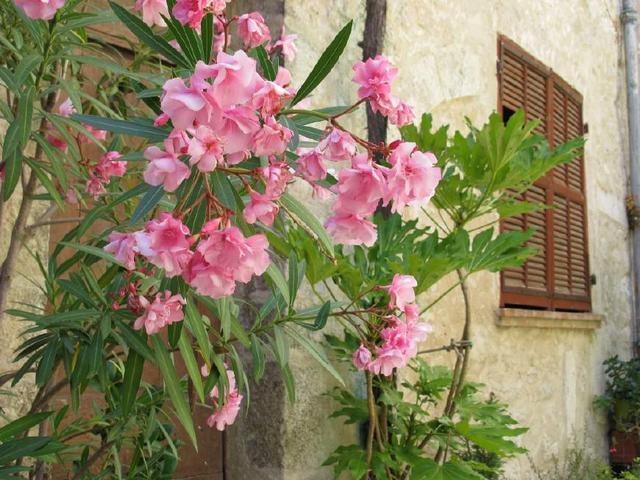
In the vast world, there are thousands upon thousands of species of flowers and plants. From the perspective of those of us who grow flowers, they are generally divided into several major categories: flowering plants, foliage plants, succulents, water-grown plants, and so on. Besides these categories, some plants can also be grouped into one class, namely those toxic flowers with brilliant blooms. We can collectively call them toxic flowers. Although these flowers and plants are beautiful, they are not suitable for growing at home. Next, Potted Plant Inn will take stock of which plants are toxic, and flower lovers should stay away from them.
The first type of toxic flower: oleander
Oleander, look at how beautiful its blooms are. Many people like to grow it in their small courtyards. This flower blooms almost all year round, and it blooms most luxuriantly especially in summer. However, if there are children at home, it is advisable not to grow oleander anymore, since oleander is toxic after all.
According to encyclopedia introductions, oleander is the most deadly poisonous flower in the world. These toxins can be found in every part of the oleander. Its branches, leaves and bark contain oleandrin. If ingested even a few grams, it will cause poisoning, so great care is needed.
The second type of toxic flower: poinsettia
In flower markets, we often see patches of red seas of flowers. That's right, this is the poinsettia. The color of this flower is truly stunning, more beautiful than Chinese roses and roses. On many occasions, such as hotel lobbies and small family courtyards, people grow a few poinsettias, because it suits the occasion well. Quite a few flower lovers also think it is truly too vivid, and decisively bring it home to grow indoors.
But be careful: the poinsettia is also toxic in all its parts. Its white milky sap can irritate the skin and cause redness and swelling, and accidental ingestion of its stems and leaves can cause death. Some flower lovers may say, who would accidentally eat it? For those with children at home, even without accidental ingestion, just casually picking one or two leaves so that the white sap touches the hands will cause poisoning.
The third type of toxic flower: lily of the valley
Lily of the valley has a short and small plant, and all its flowers open downward. It is elegant and fresh, with a pleasant fragrance. It is an excellent potted ornamental plant, usually used in flower beds and flower borders, and can also be used as cut flower material. Lily of the valley appears commonly all over the country, blooming from May to June each year. Many flower lovers think its flowers are fresh and delicate, a bit like lilies and gardenias. So they bring it home to grow.
But the toxicity of lily of the valley is not low either. All its parts are toxic, especially the leaves, and even the water used to preserve the fresh flowers can be toxic. So flower lovers with children at home should not grow it anymore in the future.
The fourth type of toxic flower: morning glory
Morning glory, those who live in rural areas probably all know it, right? This flower is very common in the wild by the edges of fields and plots. In childhood it was also called trumpet flower, bowl flower, and broken-bowl flower. There are many varieties of morning glory, with flower colors including red, blue, yellow, purple, and so on. Planted in the ground in a patch, it looks very beautiful. Especially in summer, which is around this time, it blooms most vigorously.
But in childhood I didn't know morning glory was toxic. Only now do I know it is a toxic plant. Its stems, leaves and flowers all contain toxicity, and the seeds are especially the most toxic. Morning glory is generally grown in the ground in courtyards. Just remember not to let children pick it casually, otherwise they will be poisoned.
Besides the several kinds of flowers above that are toxic, there are also narcissus, tulips, mimosa, evergreen, peace lily, and so on, all of which are toxic, so when growing flowers in the future, special attention must be paid.
That's all for sharing in this article. Thank you flower lovers for reading.