Leasing state-owned public land for organic farming, with a lease term guaranteed for more than 10 years
Text / by Lin Pei-chun, reporter for News & Market
The Organic Agriculture Promotion Act is about to take effect, and the related subsidiary regulations will be completed before the end of May next year (2019). The Council of Agriculture held a symposium today (the 21st) for industry, government and academia, hoping to gather opinions and strengthen the related supporting measures.
At present in our country (as of the end of May 2018), the area under organic and environmentally friendly cultivation reaches 7,778 hectares, accounting for 1.1% of total cultivated land. The goal is to reach 15,000 hectares within two years and 40,000 hectares after ten years. Chen Chi-chung, deputy chairman of the Council of Agriculture, said that actively promoting organic agriculture is not only for farmers and consumers, but also for the purpose of environmental sustainability.
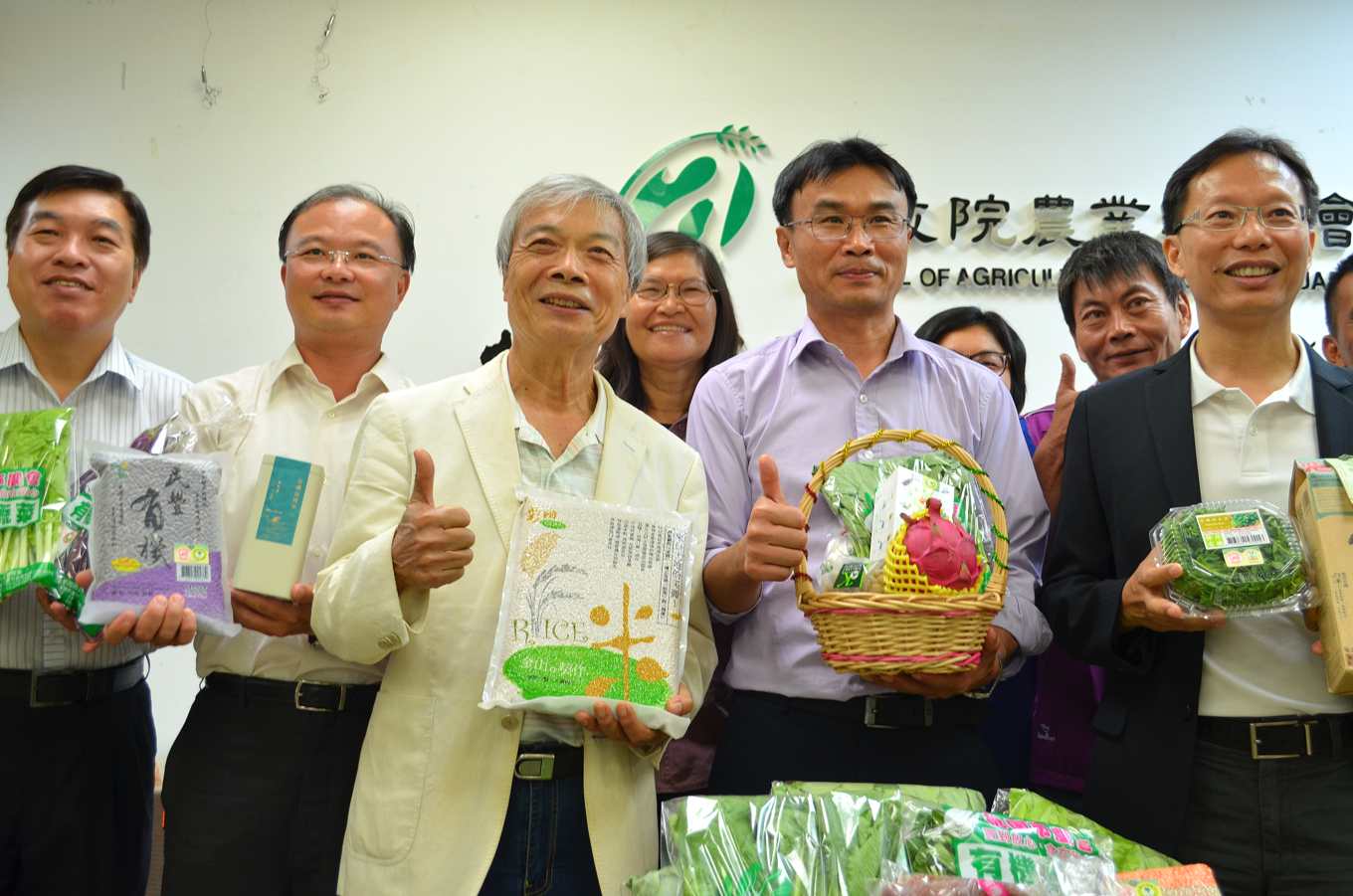
To promote organic and environmentally friendly farming, the Council of Agriculture has six major approaches
How to promote organic and environmentally friendly cultivation? Chen Chi-chung pointed out six specific approaches. First, to attract more organic farmers to join, farmers who switch from conventional to organic will receive an ecological reward of 30,000 yuan, and farmers in the transition period can also receive subsidies of 60,000 to 80,000 yuan. In addition, because organic production costs are higher but yields are lower, the government will also provide subsidies for organic inputs.
Furthermore, considering that organic certification fees are high and reduce many farmers' willingness to enter organic agriculture, Chen said that certification fees will be lowered, and 90% of them will be borne by the government. "Only when the fees are lowered will farmers be more willing to move forward."
Leasing public or state-run enterprise land for organic farming, with a lease term guaranteed for more than 10 years
In addition, when farmers lease public or state-run enterprise land for organic agricultural use, they have a guarantee of a land lease term of more than 10 years and less than 20 years, and enjoy rent discounts. Special zones are also being set up for organic agriculture, thereby preventing organic farmland from being polluted by neighboring fields that spray chemical pesticides.
"Demand drives supply!" Chen Chi-chung said that the Council of Agriculture will develop diverse marketing channels, for example by encouraging the military to purchase organic ingredients for meals, "so that farmers will be more willing to invest in production."
Promoting a new organic agricultural product label to improve brand image
As for the problem that the public finds it hard to identify organic labels, Chen Chi-chung believes that establishing a new organic agricultural product label can improve Taiwan's organic brand image and will no longer cause the public the trouble of being unable to tell the labels apart.
Chen Chi-chung also pointed out the importance of promoting "bilateral organic equivalence" internationally. The European Union is the main destination for Taiwan's organic agricultural product imports, with a proportion as high as 21%. In the future, consensus must be reached on import and export regulations for organic agricultural products in order to promote trade exchanges between the two sides.
Tzu Chi Foundation: more dialogue and communication with farmers is needed
Su Mu-jung, chief executive officer of the Tzu Chi Organic Agriculture Development Foundation, said that eating healthier food is a common idea among the public, and she believes that the Organic Agriculture Promotion Act helps maintain biodiversity and also allows the environment to develop in a friendly direction. However, Su stressed that passing legislation alone is not enough; the development of the organic industry requires all units to cooperate with one another, and also requires more dialogue and communication with farmers.
Chen Shih-hsiung, a professor at Nanhua University, said that the Organic Agriculture Promotion Act has come a long way, "and although its content is somewhat different from what was originally expected, it has finally passed." Regarding the shortcomings in its content, he pointed out that setting up "organic agriculture special zones" is not a fundamental way to solve pollution from neighboring fields; the spraying of chemical pesticides should be controlled at the source. "Only by restricting the areas where pesticides are used can environmental pollution truly be eliminated."
Lin Lo-sheng, director of the promotion department of the Taoyuan City Farmers' Association, believes that farmers' associations can play the role of integrating local agricultural products and providing screening and quality control functions, and can help farmers establish sales channels, for example by promoting the use of local organic ingredients in school lunches.
Organic farmers: labeling rules are too strict
Yang Ju-men, head of Caitian Friendly Farming Co., Ltd., affirmed the many subsidy measures for organic farmers in the Organic Agriculture Promotion Act, and also admitted that organic production involves uncertainty. "Organic yields sometimes simply cannot be estimated."
Organic farmer Wu Cheng-fu pointed out that the current labeling rules for organic agricultural products are too strict and the fines for violations are too heavy. "(If) one character is wrong (on the label), you have to pay a fine." He believes the government should strengthen quality certification of organic agricultural products rather than being too rigid about the wording on labels.