Key Field Management Techniques for Eggplant After Transplanting
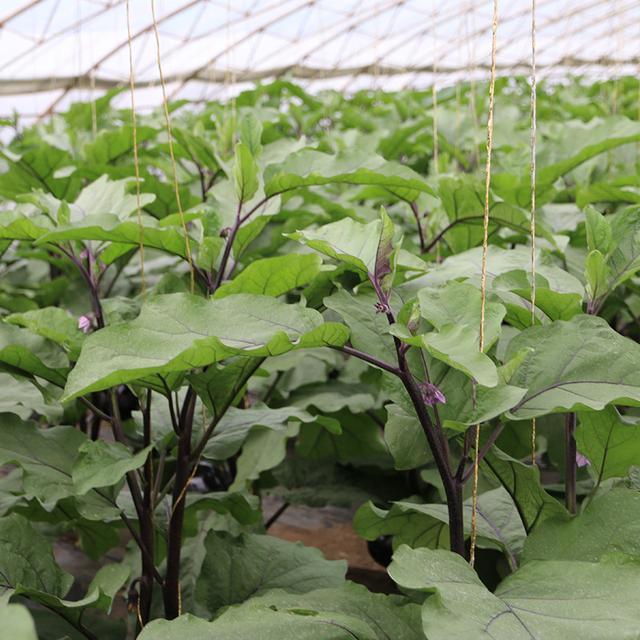
Field Management Techniques for Eggplant After Transplanting
After the eggplant has been transplanted and recovered from transplanting, it should be cultivated and loosened early. Loose field soil helps raise soil temperature and promote root growth, and generally more than 3 cultivations are needed. Eggplant has a long growth period and high requirements for fertilizer and water. The principle of watering is to control first and then promote. Generally, watering should be controlled before the first fruit sets; the recovery water after transplanting should be lightly watered when necessary, and cultivation and seedling hardening should be carried out immediately after watering. When the first fruit reaches more than 3 cm in diameter and the fruit begins to grow rapidly, stop seedling hardening and begin watering. Afterward, as the temperature rises, the water requirement gradually increases. Especially when the second and third tiers of fruits are relatively swelling, watering is generally needed once every 4-5 d, keeping the relative soil moisture at about 80%. In the later stage, when the temperature gradually drops, watering should be reduced. Eggplant is not tolerant of waterlogging and also fears high temperature and excessive humidity, which can cause root rot and fruit rot. In the rainy season, attention should be paid to drainage. In summer, watering in the morning and evening is preferable. If there is a thunderstorm with hot rain, the measure of "watering the garden during waterlogging" should also be adopted, letting clear water pass through the field to lower the soil temperature.
Eggplant likes fertilizer. In the early stage, supplying the plants to promote fruit development is very important. After recovery from transplanting, along with cultivation, apply about 100 kg of dried manure per mu into the furrows. During the swelling period of the second and third tiers of fruits, apply one topdressing each of diluted manure or nitrogen. For autumn-bearing eggplants with a long growth period, topdressing should continue to extend the leaf lifespan and promote fruit growth.
Before and after the first fruit sets on the eggplant, keep 2 forked branches and remove the remaining axillary buds on the main stem to reduce nutrient consumption and help ventilation and light penetration. In principle, do not remove leaves during the growth period, especially the functional leaves in the upper layer of the plant, which have strong photosynthesis and greatly affect the fruit, and should not be removed. However, as the fruits are harvested, the old leaves, yellow leaves, and diseased leaves in the lower part of the plant can be removed, which helps improve ventilation and light conditions and reduce the occurrence of diseases.