Cultivation Techniques for Sophora japonica var. violacea: Propagation Methods and Pest and Disease Control
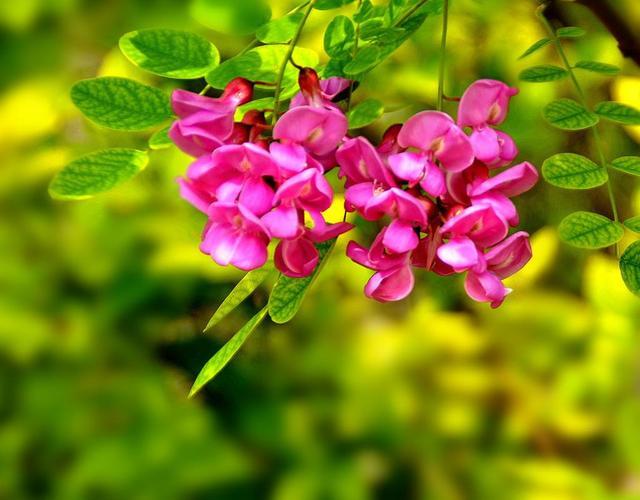
Cultivation Techniques for Propagation and Pest and Disease Control of Sophora japonica var. violacea
1 Biological Characteristics
Sophora japonica var. violacea belongs to the Papilionoideae, Fabaceae, a tree species with a height of 10-12 m, a straight and upright trunk, sparse branches and long internodes, and grayish-brown to brown bark. Leaves are alternate, 17-19 in number, pinnately compound, elliptical to ovate, with smooth, bright green leaf surfaces, larger than those of black locust (Robinia pseudoacacia). It blooms from May to August, and in southern China it can bloom continuously in spring, summer, and autumn. The inflorescences are axillary, densely arranged in racemes, pendulous, 8-12 cm long, with individual flowers nearly 10 cm in size. The flowers are large, beautiful in shape, long in blooming period, abundant in number, and pleasantly fragrant. Sophora japonica var. violacea prefers a good environment with ample sunlight and good air circulation, and can also withstand severe cold of -25 to -28°C. In China, except for Heilongjiang, from coastal plains to high mountains at an altitude of 2100 m, it grows well in neutral, acidic, or slightly alkaline soils. Its adaptability, ease of propagation (both root segments and branches can be used for propagation), rapid growth (seedlings can reach up to 2 m in the same year), regenerative capacity (roots buried in the first year produce seedlings, and multiple seedlings can grow in the second year), as well as its value as an excellent nectar and pollen source, ornamental, landscaping, sand fixation, and soil conservation economic and ecological values, determine its broad development prospects.
2 Propagation Techniques
Sophora japonica var. violacea flowers but does not set fruit, and has no seeds for propagation. It can only be propagated vegetatively by burying root segments, cutting branches, or grafting.
2.1 Root Burial Propagation
This is the most important and most commonly used propagation method, with a survival rate of 85%-95%.
2.1.1 Seed Preparation. After the leaves of Sophora japonica var. violacea fall and before spring bud break, root stock can be introduced. Before planting, store it buried in sandy soil, managing the moisture of the sandy soil well, so that the root segments neither dehydrate and dry out nor become moldy and rot from too much water. Select 1-2 year old main and lateral roots of Sophora japonica var. violacea, preferably 0.5-1.0 cm in diameter. Cut the lateral roots at 20-30 cm, and the amount cut should not exceed 1/2 of the lateral roots, so as not to affect the normal growth and flowering of the plant.
2.1.2 Land Preparation and Seedling Raising. Select sandy loam soil with deep soil layers, flat terrain, convenient irrigation and drainage, and no sources of pest and disease infection for the seedling beds. In early April, take out the roots, cut them into 5-7 cm root segments, open furrows along the beds, generally set the plant and row spacing at 20 cm x 30 cm, then place the root segments flat in the furrows, cover with 3 cm of fine sandy soil, water thoroughly to settle the roots, and seedlings will emerge in 20 d.
2.1.3 Seedling Management. Water promptly after emergence, and pay attention to drainage during continuous rainy weather. During the seedling stage, weed promptly and remove lateral buds. When removing buds, pay special attention to leaving only 1 vigorous bud per root segment, loosen the surface soil shallowly, and be careful not to damage the tender, weak, short roots. Control pests and diseases promptly, apply fertilizer appropriately, and during prolonged drought use clear manure water for drought resistance while also applying topdressing to promote strong seedling growth.
2.1.4 Transplanting and Management. Transplant and establish the seedlings after leaf fall in late autumn of the same year or before bud break in the following spring. Dig holes and apply fertilizer according to the plan, fill soil and compact after planting, water thoroughly to settle the roots, and the survival rate is generally over 95%. By autumn, the trees can reach 2-3 m in height and 3-5 cm in diameter at breast height, and bloom in the second year. Sophora japonica var. violacea has an upright trunk, an open crown, a graceful tree shape, brilliant flowers, and striking fragrance.
2.2 Branch Cutting Propagation
(1) The cutting time is the same as for root burial seedling raising. (2) Select lignified hard branches 8-20 mm in diameter, cut them into 15 cm long cuttings; cut the upper end flat, 1-2 cm from the bud, and cut the lower end at a 45° angle, 5 mm from the bud, soak the lower end in 50 mg/kg rooting powder solution (or treat the roots with "920") for 3-4 h, then remove and set aside. (3) The land preparation requirements are the same as above. After land preparation, select 70 cm wide plastic film, lay flat film with a ridge width of 60 cm and a ridge spacing of 30 cm, insert the branches into the plastic film at a 45° angle at a plant and row spacing of 20 cm x 20 cm, and build 1 small arch frame every 2 ridges to increase temperature and preserve moisture. (4) After emergence, promptly expose the seedlings and cover with soil, maintaining the temperature and humidity of the bed soil; during high temperatures, open both sides of the arch film for ventilation and cooling; remove lateral buds, strengthen fertilizer and water management, and cutting seedlings can grow to over 1-1.5 m in the same year.
3 Cultivation Management
Sophora japonica var. violacea prefers a warm and humid climate and an environment with ample sunlight and good ventilation. For soil, it prefers moist, well-drained, deep, and loose neutral soil, and can also adapt to slightly acidic or slightly alkaline soil. Sophora japonica var. violacea is cold-resistant and drought-resistant, able to withstand low temperatures of -25 to -28°C, and can be cultivated in the open field in northern China. Cultivation management is relatively extensive, with the main focus on seedling-stage management.
When the seedlings grow 4-5 leaves, weed by hand; when the seedlings reach 40 cm, herbicides can be used. Generally, lateral buds (heart) should be pinched off before they grow to 3 cm, so as not to affect seedling growth and straightness. When they reach about 60 cm, prevent lodging caused by strong winds, which can be prevented by inserting sticks and tying. Apply fertilizer when the seedlings are over 50 cm, broadcasting urea or diammonium before rain. Apply fertilizer once every 20 d.
4 Pest and Disease Control
Before planting the root stock of Sophora japonica var. violacea, to control underground pests, spray with 40% methyl parathion 1000-fold solution; seedlings of Sophora japonica var. violacea should be protected against locusts or grasshoppers eating the main trunk and tender leaves; in summer, pay attention to controlling black aphids on the tips and tender leaf parts of Sophora japonica var. violacea seedlings, commonly sprayed with 50% phoxim emulsifiable concentrate or 40% omethoate emulsifiable concentrate at 1500-2000 fold dilution; around early autumn, the root and trunk parts of Sophora japonica var. violacea are prone to rot disease or nematode feeding, and can be controlled by drenching with 50% thiophanate-methyl wettable powder 500-fold solution and 50% phoxim emulsifiable concentrate 1000-fold solution.