Detailed Explanation of Red Currant Cultivation and Propagation Techniques
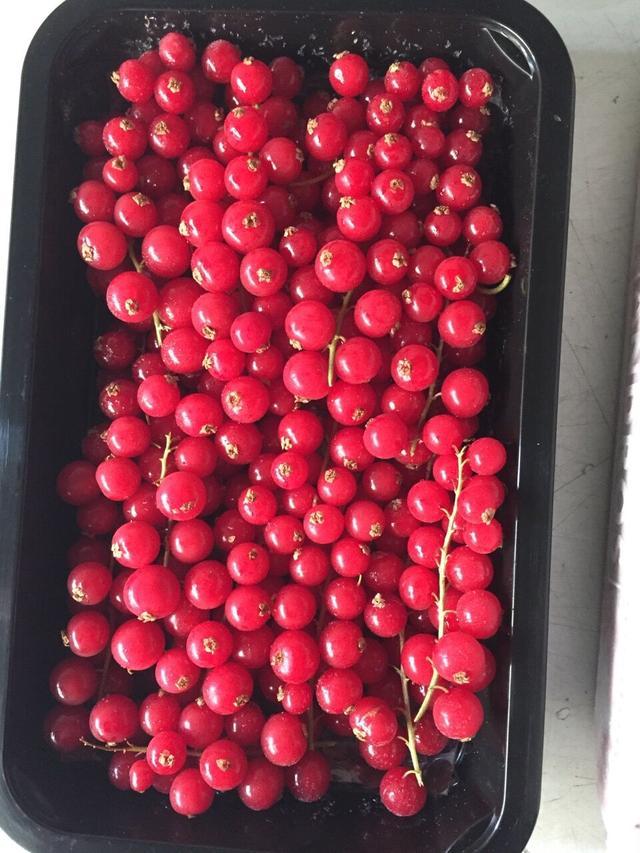
Cultivation and Propagation Techniques of Red Currant
Currants are valuable economic and ornamental tree species with wide application value in the fields of food, medicine, landscaping and ecology. Their shrub form is graceful, and the colors of their flowers, fruits and leaves are brilliantly diverse. The fruits can not only be made into canned goods, fruit wine, juice drinks and jelly, but can also be used to extract natural pigments and anthocyanins, polyphenols, minerals and vitamins, with various medicinal and health-care effects, giving them very broad prospects for development and utilization. In view of this, in April 2010, Liaoning Province, building on the introduction of superior provenances of currant tree species, carried out research and demonstration on the biological characteristics of the tree species, propagation of different tree species and intensive cultivation techniques, and promoted and applied them in Shenyang, Fushun and Dandong areas within the province. The implementation of the project not only adds new superior species resources for Liaoning Province, gives full play to the ecological advantages of species diversity, and fills in the prominent problems of the existing forestry economic tree species being monotonous and the urban and rural greening and beautification landscapes being dull and insipid, but will also certainly drive the rapid development of regional industries, increase employment positions, raise farmers' incomes, and play an important role in the greening, beautification and economic development of urban and rural areas in Liaoning.
Red currant (Ribes rubrum L.) originated in Poland; its berries are bright red, of good quality and highly cold-resistant. Through hybrid selection and clonal comparison trials as well as regional cultivation trials, the superior clone has a cold-resistant and disease-resistant tree body, excellent berry quality, a moderate and robust tree vigor, and a spreading tree form. Its fruiting habit falls between early-maturing and late-maturing; after entering the full fruiting stage, simple pruning is enough to maintain high and stable yields. At present, it has been widely cultivated in Heilongjiang, Jilin and other areas, and trial-cultivated in Shenyang, Fushun, Fengcheng and other areas of Liaoning Province.
1 Variety Characteristics
Shrub, plant height 1-2 m, branches thornless, leaves 3-5 lobed or entire, no glandular dots on the leaf underside, berries bright red and semi-transparent. The fruit stalk is about 0.5 cm long, the diameter is 0.9-1.1 cm, and the fruit cluster is 7-13 cm long. Each cluster bears 10-22 berries; the fruit contains 9.0% soluble solids and tastes sweet and sour. It can be eaten fresh or processed into juice, etc. This variety has strong high-yielding and stable-yielding ability; in the full fruiting stage, the average yield per plant of 'Chuanzhu' red currant is 1.0 kg, and the yield can reach 300 kg/667 sq m, more than 25% higher than the 'Suiyan No. 1' currant variety. It has relatively strong cold resistance and can be cultivated in areas with an average annual temperature above 5°C.
2 Propagation Techniques
Red currant is mainly propagated by cuttings. (1) Select high-yielding, high-quality, pest- and disease-free basal branches; the cutting material should be 1-year-old branches with good lignification and a thickness of 0.6-1.0 cm. (2) When cutting the cuttings, the principle is to retain 2-3 plump buds, with a general length of 12-15 cm. The cut surfaces of the cuttings should be smooth: the upper cut is made flat and the lower cut is made obliquely, with the upper cut 1.0-1.5 cm from the terminal bud. (3) Soak the lower cut of the cutting material in IBA (indolebutyric acid) at 500 mg/L, with a soaking depth of 3-5 cm and a soaking time of 2-3 s.
3 Cultivation Techniques
3.1 Climatic Factor Requirements
Annual average temperature ≥4.8°C, extreme minimum temperature ≤-35°C, extreme maximum temperature ≤38°C. Frost-free period ≥150 d, annual precipitation ≥500 mm, annual sunshine hours ≥2000 h.
3.2 Soil
Groundwater level ≥2 m, good drainage and irrigation. Soil layer thickness ≥1.0 m. The soil should be loose and breathable loam, sandy loam or clay loam, with a pH value of 6.5-7.5. Convenient transportation, no environmental pollution.
3.3 Terrain
For site conditions, choose a slope ≤15°, sheltered from the wind and facing the sun, with a groundwater level ≥2 m and good drainage and irrigation. Soil layer thickness ≥1.0 m. Convenient transportation, no environmental pollution.
3.4 Planting Period
Use high-quality seedlings cultivated by vegetative propagation methods. The planting period for seedlings is late April; planting can be carried out once the soil has thawed enough to dig the planting hole to the required depth.
3.5 Planting Density
The new currant varieties 'Cizihong' currant and 'Chuanzhu' red currant have moderate tree vigor and spreading crowns. On plots of medium fertility, the suitable density is a row spacing and plant spacing of 1.5-2 m × 1.5 m, with 1 plant per hole, that is, 222-296 plants/667 sq m, planted in the same direction, with planting holes 30 cm in diameter and 30 cm deep.
3.6 Fertilization Method and Fertilization Rate
The new currant varieties 'Cizihong' currant and 'Chuanzhu' red currant are fond of fertilizer. At planting, sufficient base fertilizer should be applied, mainly farmyard manure, at a rate of 30 t/ha; in mature orchards, urea and diammonium phosphate are applied as a top dressing, with a urea : diammonium phosphate ratio of 1:1, at a fertilizer rate of 0.33 t/ha.
3.7 Field Management
Strengthen fertilizer and water management during the flowering period and the fruit enlargement period. In mid-May and at the end of June and beginning of July, pay attention to controlling the currant clearwing moth. Timely tillage and weeding should be carried out throughout the entire growth period, and harvesting should be done at the proper time. This variety has a semi-spreading tree form, and the branches tend to droop after fruiting; therefore, after fruit harvest, the perennial branches (over 4 years old) should be thinned, removing diseased branches and old, weak branches from the base, and retaining strong branches with plump buds for fruiting.
3.8 Cold Protection and Pest and Disease Control
For 1-2 year old young trees, in late November in the northwest region, windbreak screens are installed every 6 m for cold protection; during the peak period of powdery mildew from May to July, sprays of carbendazim, Tuzet and similar agents at 500 times dilution can be applied 2-3 times for control.
3.9 Harvesting and Post-harvest Handling
Harvest in mid-to-late July, using manual picking or a special portable picker. Pile the fruit in a cool shaded place in the courtyard, then box it and place it in a cold storage facility for preservation.
4 Main Uses
As a berry-type economic forest tree species, red currant fruit can be eaten fresh or processed into beverages and other products, among which the γ-linolenic acid in the fruit is a pharmacologically active component against cardiovascular diseases. In addition, red currant has wide adaptability and vigorous growth, and can serve as an ideal tree species for landscaping, with notable ecological benefits such as beautifying the environment and purifying the air.