Technical Key Points for Improving the Survival Rate of Full-Crown Transplanting of Nursery Stock
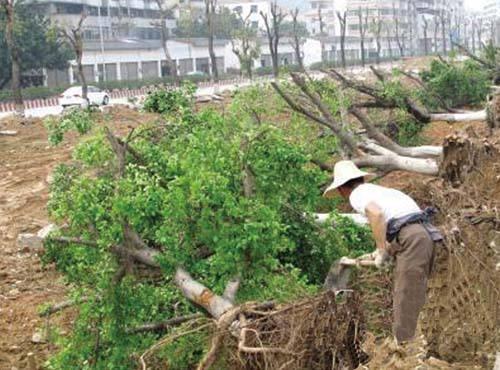
Survival Techniques for Full-Crown Transplanting of Nursery Stock
1 Choose the Best Transplanting Time
Generally in early spring, when sap begins to flow and buds sprout and grow, roots damaged during digging heal and regenerate easily; after normal growth from early spring to late autumn, the injured parts of the tree have recovered and can survive the winter safely. If nursery stock is transplanted in autumn or winter, protection of the soil surface around the tree and cold-proof measures must be taken in northern regions.
2 Dig and Plant Immediately
After nursery stock is dug up, care must be taken during transport, and the time the stock is left standing should be shortened as much as possible. Generally, if the distance between the stock's original site and the transplanting site is relatively short, dig and plant immediately. If the stock is shipped from elsewhere, the transplanting time must not exceed 1 day. If the journey is relatively long and the transplanted species is an evergreen or precious species, then the stock must be cared for during transport; measures such as spraying antitranspirants on the leaves, wrapping the root ball, spraying water on the branches and leaves for moisture retention, or shading can be used to reduce the consumption of organic matter in the tree body and ensure normal regeneration of root hairs. Conversely, if transplanted stock is left standing too long, the branches, leaves or roots of the tree body will wilt due to water loss, affecting the stock's survival. Therefore, in order to prevent damage to the organs of the stock plant, in addition to strengthening care during transport, the principle of selecting stock suited to the site is recommended to better ensure the survival of full-crown transplanted stock.
3 Watering and Building Soil Berms
After nursery stock is planted, it must be watered thoroughly 3 times. Within 24 hours after planting, water the 1st time; the water must soak through so the soil fully absorbs moisture and binds closely with the tree roots, favoring root development. If there is subsidence, backfill soil and fill the cracks; after 2 to 3 days, water the 2nd time; after 1 week, water the 3rd time. Evergreen plants need daily spraying of water on the leaves, greatly improving the survival rate of nursery stock after full-crown transplanting.
4 Pruning
When pruning, the engineering planting quality requirements must be met, using thinning or heading cuts to meet landscaping engineering quality requirements. The trunk and main branches of full-crown transplanted nursery stock are already formed, so the stock only needs orderly, measured pruning to ensure the direction of the branches and trunk and to control tree vigor, preserving to the greatest extent the crown spread and the skeleton branches of the trunk and branches, prompting the plant to recover and grow in a relatively short time and form a beautiful tree body, thereby achieving the expected landscaping effect.
When planting, first cut off the weak, leggy, dried-up branches and pest- or disease-infested branches growing within the crown; then thin the branches growing in the same direction and crossing branches, keeping one and removing one. To make the crown well ventilated and light-transmitting, parallel branches, overlapping branches, opposite branches, upright branches, drooping branches and leggy branches within the crown must also be selected and pruned. Blind pruning or non-standard pruning will cause an uneven crown or blank areas in the crown, affecting the plant's tree-body landscape.
5 Fertilizing
After full-crown transplanting, nursery stock needs supplemental nutrients, and root fertilization can be used to replenish the tree body's nutrients. The method is to mix backfill soil with organic fertilizer, with the mixing ratio depending on the tree's own conditions; after the 1st watering, apply organic fertilizer in a ring within the tree pit. The amount of fertilizer depends on the tree body's own conditions; do not apply excessive fertilizer, and do not apply insufficient fertilizer, so as to meet the tree body's nutrient needs.
6 Root Protection
When digging bare-root nursery stock, all roots outside the reserved roots should be completely cut off; thick roots should be sawed off by hand, and the cut surfaces should be smooth and must not be split, and native soil may be kept. For digging with a soil ball, generally the size of the soil ball is 7 to 10 times the nursery stock's diameter at breast height, and the height is about 2/3 of the soil ball's diameter. The soil ball must be wrapped so that the protective soil around the tree roots does not scatter and damage the root hairs; the taproot must be cut in the root-hair zone to ensure the root cap, meristematic zone and elongation zone remain intact. After the nursery stock is lifted from the soil, apply wound-healing agent to the exposed roots to prevent bacterial infection and rot that would affect the stock's survival.
7 Use Antitranspirants to Reduce Tree Body Metabolism
During transplanting transport, storage and after transplanting, nursery stock must be shaded to reduce the photosynthetic rate and decrease nutrient consumption in the tree body; the crown should be moderately thinned of leaves to reduce leaf transpiration; antitranspirants should be sprayed on the leaves to inhibit leaf transpiration; and the trunk should be wrapped with straw rope to reduce trunk transpiration.
8 Tree Pit, Backfill Soil and Soil Berm
The specifications of the planting pit should be determined according to the root system and the size of the soil ball. The tree pit should have the same upper and lower diameters, with the diameter of the root system or soil ball increased by 60 to 80 cm and the depth increased by 20 to 30 cm. Place a 10 to 20 cm mound of soil at the bottom of the pit. The planting depth is generally level with the original soil line or 5 cm deeper. Choose a good viewing side; if the trunk is crooked, adjust it as much as possible to the best state, and when planting, the tree must be planted upright and supported. When planting bare-root trees, the root system must be spread out and must not be cramped; split and broken roots should be cut off, and the cut surfaces should be smooth; if conditions permit, rooting agent may be applied. When the backfill soil reaches 1/2 of the pit, gently lift the nursery stock a few times, then continue filling and tamp moderately. When planting trees with a soil ball, place the soil ball steadily, then remove the wrapping and take out the packaging material; if the soil ball is loose, the part below the waist rope may be left in place, while the part above should be untied and removed. When planting, backfilling soil requires doing "three steps" well: Step 1, the planting depth is generally level with the original soil line or deeper, fill soil to 1/3 of the tree pit, and tamp moderately after filling; Step 2, fill soil to 2/3 of the tree pit, and tamp moderately after filling; Step 3, fill soil until the tree pit is completely full, and tamp moderately, then build the soil berm well.
9 Post-Planting Management
After completing the early-stage planting of nursery stock, later-stage maintenance should begin with management links such as irrigation, loosening soil and hoeing weeds, fertilizing, pests and diseases, and pruning, so as to meet the needs of the stock's growing conditions and adopt timely emergency measures. Conventional management methods such as trunk wound treatment, tree-hole repair, whitewashing, shading, trunk wrapping and mounding soil over the root crown may be used, and special methods such as tree-body injection of nutrient solution and root spraying of hormones may also be used to further improve the survival rate of nursery stock.