The method for making a Serissa japonica bonsai is simple; just give it a trim and its value multiplies.
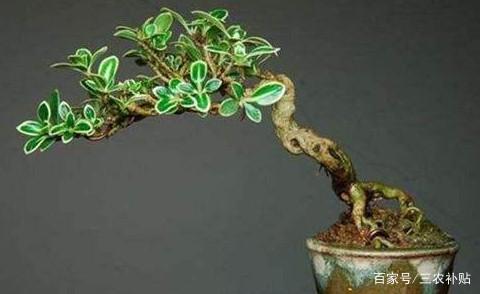
The five famous trees for bonsai are Serissa japonica, elm, Chinese plum yew, orange jasmine, and banyan, which are also the most popular and most famous ones that most people love to grow. The first small bonsai I got started with was Serissa japonica. Serissa japonica is also known as snowstar; its leaves are tiny, and in midsummer it blooms small white flowers, hence the name "June snow." A bonsai made from Serissa japonica shows exposed roots and claws, is elegant and free-spirited, with changeable postures and a unique charm. If you have grown enough pothos and spider plants, you might try switching to a bonsai. If you are interested in making a Serissa japonica bonsai, you can also try it yourself and prune it into your own shape, which has an even more special charm.
In June, the snow branches are supple and easy to shape, and seedlings can be made into small bonsai. So I can do it freely. If you like, you can give it a try. My first bonsai was June snow. In June, the snow seedlings are sturdy, durable, and soft and tender for scissors. According to these characteristics, many types of bonsai can be made, such as root type, stone-attached type, cliff type, and continuous root type. After the branches are coiled, they must be kept for 2 years to finally take shape. If they are removed too early, they will easily revert to their original form and all your effort will be lost.
Pruning snow in June is very important. In fact, pruning many bonsai is very important. In June, because of its beautiful tree shape, snow is very free in pruning. For June snow, prune twice a year: the first stops in mid-April to promote flowering in June; the second is after the flowers fade, cutting off the branches and letting the buds sprout. Roots and buds should be cut off at any time. During the growing season, frequent pinching is needed so that the branches and leaves suit the appearance.
June snow pruning can shape it into curved dry, slanted dry, cliff-style, forest-style, and so on. It can be pruned according to personal pleasure. When pruning a Serissa japonica bonsai, attention should be paid to the principle of "trunk: strong prune, weak..." to easily control branch growth, while branches follow the principle of "strong prune and weak side branches, weak prune side branches" to control branch growth and promote flowering.
Notes on growing June snow: every year from half-leaf in winter to before sprouting in spring, stop pruning, and remove pests on the length of branches, branch divisions, fine branches, and fallen branches; during the growth period, stop pinching, sprouting, and branch removal, etc., in addition to maintaining a good appearance. In June, snow roots are abundant, and the tree roots are covered with claws. During the maintenance stage, designing rocks and arranging stones is very important, and the design plan and the choice of stones must be strict. During the composting period, deal with the trend of heavy fertilizer and control the shaping age according to specific conditions. Avoid watering. In June, snow is very sensitive to water. If too little water is poured, there will be consequences of dry branches and dry stumps.