The rose that never withers: if you love her, give her a pot
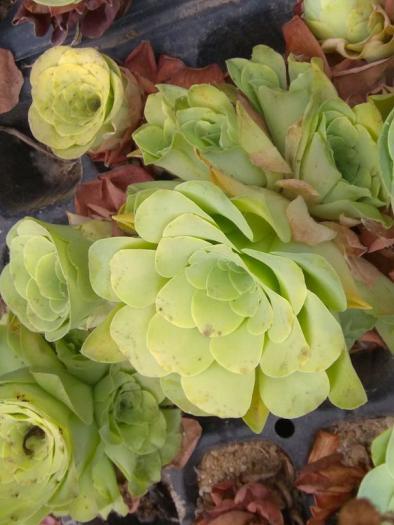
Everyone loves beauty, and women even more so. Many people love buying fresh-cut roses from flower shops, and among succulents there is one called the mountain rose (Greenovia), which can keep the form of a rose all year round. The mountain rose gets its name because its original growing environment is ravines or gaps in mountain terrain, and it grows to look very much like a rose, hence the name "mountain rose".
The mountain rose has green leaves that are on the thin side, wrapped tightly layer upon layer, shaped like a rose. As it grows, new leaves keep emerging from the inside, while the outer leaves gradually age, turn yellow and wither. When the plant ages, the mother plant will wither and die, but do not worry: the mountain rose is a plant that produces offsets very easily, and a whole ring of small plants will grow around it.
From early autumn each year to early summer of the following year is the growing season for the mountain rose. After summer arrives, it begins dormancy, and during dormancy strong light must be avoided. In midsummer the leaves of the mountain rose draw in slightly toward the center: first, because it fears strong light and heat, and second, to reduce water evaporation along the way, wanting only to close its leaves and sleep soundly for a long stretch.
In summer, be sure to protect the mountain rose from the sun, otherwise the leaves will develop red-brown sunburn scars. Especially the outer leaves, which may turn orange-red, with only the leaves in the middle still green. At this time the outer leaves can be left as they are, with no need to remove them; they are essentially serving as its sun-protection clothing.
In summer, besides avoiding strong light, also avoid rain. If rainwater falls directly onto the flower center, because its shape is like a cup, water easily collects inside and is hard to drain out, very easily causing the center to rot. In summer, watering must be controlled; keep the soil slightly moist, and water thoroughly only after it has dried out completely, with three to four weeks between each watering. At this time its pores and root system are in a contracted state, with low absorption capacity, and standing water easily causes the center to rot. Also, do not water directly onto the plant.
The mountain rose is "bloom and die", meaning the mother plant that has bloomed will die, but all its other small offsets will be perfectly fine. Once its offsets have grown fairly large and their root systems are fairly sturdy, they can be divided into separate pots, which helps each offset have more growing space and more nutrients. When dividing, try not to damage the roots: gently pinch an offset with your hand, rock it left and right, and it can be pulled out in one tug.