Clematis Selection Tips: How to Choose Strong, Free-Flowering Plants
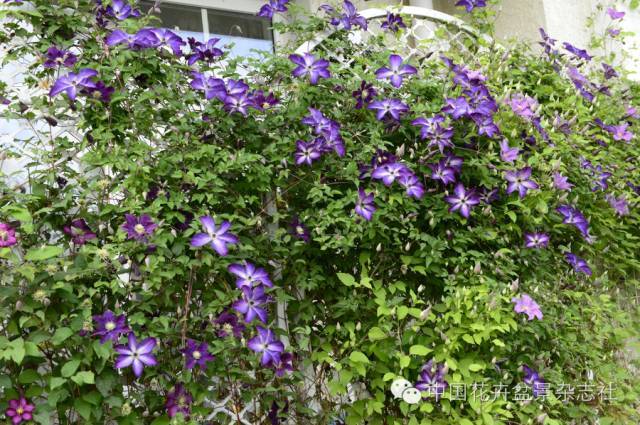
As the undisputed queen of climbing plants in the international horticultural world, the beauty of Clematis is hard to resist. Its elegant habit, varied flower forms and rich colors make it the worthy focal point of any garden. However, after many varieties are introduced into the country, they easily suffer from clematis wilt in summer, though some varieties are more resistant. How beginner flower lovers should choose in order to get a good start is a subject in itself. Facing several hundred horticultural varieties, is there a simple selection rule?
Setting aside the several conventional factors in choosing clematis, such as flower color, flower form, plant height and light, in order to realize different color schemes and layout plans for the garden. Usually, people choose stronger, more free-flowering varieties. Therefore, we first need to briefly understand the grouping of clematis. Horticulturists divide clematis varieties with the same attributes or kinship into different groups, but this is by no means an academic concept. Only by understanding the growth vigor and characteristics of the same type of clematis can you easily grow clematis well.
The most common clematis in gardens are roughly divided into the following groups: Evergreen Clematis Group, Viticella Group, Integrifolia Group, Early Large-Flowered Clematis Group, Late Large-Flowered Clematis Group, and Montana Group. Follow Aimu Penjing and play with penjing together with Aimu. Each group has different characteristics, and the many clematis varieties belonging to the same group all share the common characteristics of that group. From the grouping perspective, the Viticella Group is the strongest and most free-flowering.
Compared with roses, although clematis has few pests and diseases, clematis wilt has caused everyone great trouble.
Clematis wilt is a disease in which fungi in the planting medium invade damaged branches, causing the branches to be unable to circulate normally and water to be unable to be transported, ultimately causing the branches to wilt and the leaves to droop. Clematis wilt mostly occurs in early summer, and is most likely to occur especially after rain when the sky first clears. Clematis wilt is mainly prevented, and the planting medium should have good drainage and air permeability, preferably mixed with a small amount of charcoal granules or rice husk ash (rice hull charcoal). Follow Aimu Penjing and play with penjing together with Aimu. When planting, it must not be buried deeply; the covering soil position is preferably about two cm above the roots. Mr. Long Yayi of the Botanical Garden of the Chinese Academy of Sciences published the article "The 'Distress' of the Queen of Climbing Plants" as early as 2002 in issue 10 of "Chinese Flowers and Penjing", introducing the causes and prevention of clematis wilt.
The Viticella Group is the type least prone to clematis wilt, and for planting novices, it can be considered the entry choice. Because different groups of clematis have different characteristics, there are also differences in the difficulty of planting and care. Therefore, the following is a screening and ranking of the easiest clematis to plant and manage, from group to variety, to make it easier for everyone to choose varieties.
Viticella (Italian) Group Strong and free-flowering, with elegant flower forms and rich colors. The leaves and flowers are somewhat smaller than those of the large-flowered groups, but the abundant flower quantity is enough to make up for the shortcoming of smaller flower diameter. Follow Aimu Penjing and play with penjing together with Aimu. The varieties currently introduced into the country that belong to this group include: Abundance, Avant-Garde, Carmencita, Polish Spirit, Viola Star, Elegant Purple, Red Pink Beauty, Jenny Caddick, Elf, Warrior Dance, Mrs. Julia, Polish Spirit, Veil, Viorosa (Figure 1), Tentel, Emilia Platter, Eternal Memory, Luxury White, Good Luck, Royal Velvet, Little Nell, Pride of Perrin, Prince Charles (Figure 2), Wollenberg, Solina, Minuet, Mikelite, Excellent, I Am a Little Beauty, I Am Mrs. J, I Am Very Happy.
Figure 1 Viorosa
Figure 2 Princess Diana and Prince Charles (light purple flowers)
Integrifolia Group The above-ground parts of plants in this group wither in winter, and new shoots sprout from the ground in spring. The branches do not have strong climbing ability, and when relying on a vertical trellis to climb they need to be trained and fixed. Therefore, they are very suitable as ground cover and are also very good cut flower materials. Follow Aimu Penjing and play with penjing together with Aimu. Varieties include: Oriental River, Star River, Blue River, Mississippi River, Aphrodite, Arabella, Durand, Olga, Pink Butterfly, Pink Delight, Jan Fopma, Blue Pirouette, Inspiration, Rosie, Charm, Rugu (Figure 3), Dancing Girl, Bird of Happiness, etc.
Figure 3 Rugu
Late Large-Flowered Group Most varieties in this group originate from hybrids of Viticella and Clematis lanuginosa. The flowers bloom on new shoots of the current year, with abundant flowers and strong disease resistance. Varieties include: Mrs. Baron, Countess, Daniel Deronda (Figure 4), Excellent, Like a Dream, Oriental Morning Song (Figure 5), Gisela, Monte Cassino, Crispin, Ville de Lyon, Volu, Bishop Red, Purple Jack, Super Jack, Blue Angel, Blue Pearl, Victoria, Lady Betty Balfour, Rhapsody (Figure 6), Happy Birthday, Star of India, Tie-Dye, Viola, Purple Cloud, etc. Follow Aimu Penjing and play with penjing together with Aimu.
In addition, some varieties in the Early Large-Flowered Group are also relatively strong, such as Xiangyun, Kingfisher (Figure 7), Warsaw Nike, Crystal Fountain (Figure 8), The Priest, etc. Relatively speaking, because flower bud differentiation in the Early Large-Flowered Group occurs on old branches from the previous year, the requirements for the planting environment are higher.
Figure 4 Daniel Deronda
Figure 5 Oriental Morning Song
Figure 6 Rhapsody (blue flowers) and Ville de Lyon
Figure 7 Kingfisher
Figure 8 Crystal Fountain
Therefore, the simplest rule when buying clematis is to choose varieties that can be hard-pruned, such as the Viticella Group, Integrifolia Group and Late Large-Flowered Group, all of which are types that can be hard-pruned. Because these hard-prunable varieties bloom on new shoots, even if the old branches wither in winter, the branches newly grown that year can still guarantee a large flower quantity. When you cannot remember the groups, you only need to understand whether the variety you like needs hard pruning or light pruning.
If you want to grow clematis well, proceed step by step! Start with the easiest varieties and create the most beautiful garden!
Originally published in: "Chinese Flowers and Penjing", authorized for publication, please indicate the source when reprinting.
The best way to approve of Aimu Penjing - share,
The best way to support Aimu Penjing - follow,
Follow Aimu Penjing and play with penjing together with Aimu.