Star jasmine flowers are fragrant and pleasant, and can be made into bonsai to place indoors
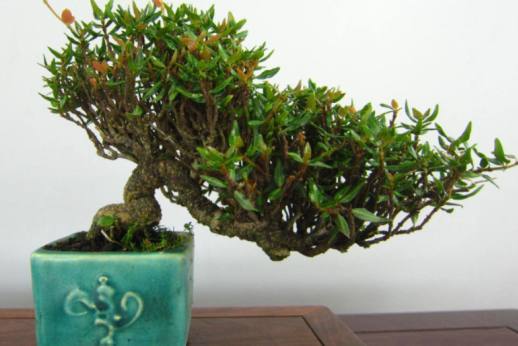
Other names for star jasmine: Shilongteng, Naidong; Baihuateng; Luoshiteng; Ruanjinteng; Paqianghu, Shiling; Xuanshi; Yunhua; Yunying; Yundan; Yunzhu, etc. An evergreen woody vine of the Apocynaceae family, with reddish-brown stems, young branches covered with long yellow pubescence, and aerial roots. It often climbs on trees and rock walls to grow; in early summer in May it blooms white flowers shaped like the character "wan", and is fragrant. Next, let's take a look at how to make star jasmine bonsai.
The star jasmine plant is toxic, but its floral fragrance is not. The scent released by the fresh flowers is composed of dozens of volatile compounds, containing aromatic esters, alcohols, aldehydes, ketones and other substances. A suitable amount of these substances can stimulate people's respiratory center, thereby promoting the human body's respiratory function. If one breathes in a fragrance beneficial to the human body, it can allow the brain to receive sufficient oxygen, regulate the nervous system, promote blood circulation, and bring energy, thinking and body vitality to a very high level.
Making star jasmine bonsai:
1. Pot selection: Star jasmine is suitable for relatively deep glazed ceramic pots or purple clay pots, commonly including tall cylindrical pots and medium-deep square or round pots.
2. Soil: Star jasmine likes loose, well-drained sandy loam. For pot cultivation, it is best to use humus soil or aged garden soil mixed with sandy soil, with vermiculite placed at the bottom of the pot to facilitate drainage.
3. Planting: It is suitable to pot in spring, and autumn is also acceptable. It is best to transplant with a soil ball.
4. Pruning: For the processing and shaping of star jasmine, the main branches can first be appropriately bent and tied, then combined with pruning to cut off overly dense or overly long branches and maintain a certain framework posture. Bending and tying should be done in summer, when the branches are tender and more malleable. Pruning should be done during the dormant period to avoid wounds exuding milky sap and affecting growth.
5. Tree shape: Star jasmine is trailing and its branches droop, so it is suitable to make into a hanging style, and can also be made into a rock-attached bonsai. There are two ways to handle the rock-attached style: one is to plant the star jasmine in a cavity in the upper part of a rock, letting it hang and twine downward; the other is to plant it in the pot soil, arrange stalactite-like stones, and let it twine upward. Both are relatively simple and easy to carry out.
Star jasmine has strong creeping and climbing ability, and can be planted in courtyards, parks, courtyard walls, stone pillars, pavilions, corridors, steep cliffs and other places as climbing embellishment, looking very beautiful. Because its stems easily take root after touching the ground and it has good shade tolerance, it is also an ideal ground cover plant, and can be used as ground cover between sparse trees and at the edges of woodlands and lawns. At the same time, star jasmine leaves are thick and leathery, with a wide range of adaptability.
The content comes from the internet. If there is any infringement, please let us know.