Aquatic plant facts: more fascinating than you'd think
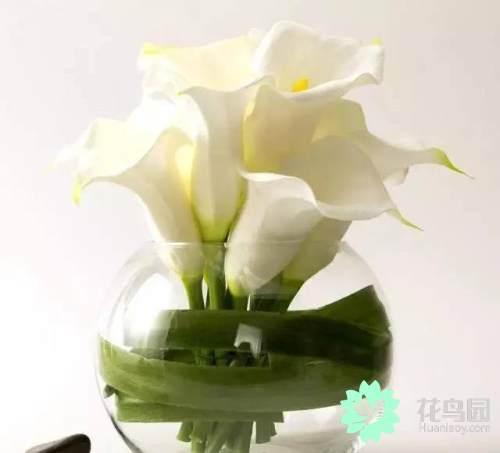
The unkillable calla lily
Calla lily, a perennial robust herb in the family Araceae, genus Zantedeschia. It has tubers and easily tillers to form clumping plants. Leaves are basal, with a sheath at the lower part; the leaf blade is relatively thick, green, heart-shaped-sagittate or sagittate, with a sharply pointed, acuminate or tail-like tip, and a heart-shaped or hastate base. It prefers loose, fertile, humus-rich clay loam.
Calla lily flowers are toxic, containing large amounts of raphides (herbal calcium crystals) and alkaloids; accidental ingestion can cause symptoms such as drowsiness and other poisoning signs, and it must never be taken internally. Calla lily can be used medicinally and has the effect of clearing heat and detoxifying. To treat burns, take an appropriate amount of fresh calla lily tuber, mash it and apply externally. To prevent tetanus, mash the calla lily tuber and apply it externally to the wound.
There is a saying that the calla lily is "unkillable by watering," because it likes a warm, humid environment and cannot tolerate drought, so the potting soil must be kept moist and never allowed to dry out. If the environment is dry, spray water on the ground to maintain a humid microclimate. During the growing and flowering periods, water thoroughly. Keep the potting soil moist, but after flowering reduce watering to allow dormancy.
During the flowering period, pay attention to light: the calla lily "likes long light but not strong light," and especially in summer it most fears direct blazing sun. So place it in a spot with ample light, and in summer it can be moved farther from the window.
If the calla lily gets insufficient light during the flowering period, it will only produce buds without blooming, or the buds will gradually turn green and shrivel. In spring and autumn, no shading is needed. The calla lily is a perennial herb and can bloom multiple times in a year. Regularly cutting off old leaves can encourage it to bloom repeatedly.
In European and American countries, the calla lily is a commonly used flower in bridal bouquets. It is also the national flower of Ethiopia. Flower colors include white, red, yellow, silver-star and purple-spotted; generally speaking, the white ones are called calla lilies, and the colored ones we call arum lilies.
If I love you,
I will surely,
give you a calla lily,
that is, besides jasmine and white carnations,
the choice I love more,
because its flower meaning is,
I want to give you the purest and most eternal love...
With elegant flower words,
quietly await the beauty of early summer.
Holding a calla lily,
riding in a carriage,
bring home the bride who loves you unto death!
bring her home!
Iris, the messenger of love
Iris, named "iris," meaning "rainbow" in Greek, alluding to the irises' brilliant colors, like a rainbow; in legend the rainbow is the messenger of love. This is also the origin of the name "messenger of love."
Also known as: blue butterfly, purple butterfly, flat bamboo flower, etc. It belongs to the order Asparagales, family Iridaceae, a perennial herb with a thick rhizome. It can be grown for ornamental purposes; the flowers have a delicate fragrance and can be used to make perfume; its rhizome can be used as traditional Chinese medicine, harvestable year-round, and has anti-inflammatory effects.
The iris is the national flower of France. It is large and beautiful, graceful and charming, and looks very similar to the lily. But the lily has six petals, while people do not realize that the iris has only three petals; the other three outer ones are sepals that protect the bud. It is just that these three petal-like sepals look so much like petals that they often pass for the real thing, making them hard to tell apart.
In May, the season when irises bloom in profusion, you can see beautiful blue butterflies fluttering among the green leaves, lingering and unwilling to leave, as if they want to carry the news of spring far away.
Needless to say, you should already know that the creator of this intoxicatingly beautiful scene is the iris.
The iris's graceful posture swaying in the spring breeze, blooming once a year, makes people feel that the time is very brief, but more people cherish these days all the more. Year after year the flowers are alike, but year after year the people are different.
Seeing the irises bloom again, we need only use a simple, ordinary heart to discover beauty, keep friendship in our hearts, and face the light to bravely pursue freedom. I think that we, like flowers, will not feel lonely as we face flowers blooming and fading.