What issues should be noted when introducing flowers and trees?
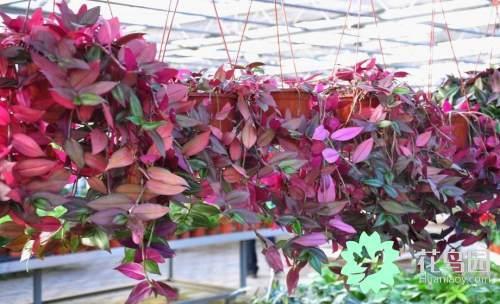
Introducing new varieties of flowers and trees to beautify the environment and enrich garden landscapes is a routine task. But in some places, due to insufficient understanding of seedling introduction knowledge, the results ended in failure, and some even caused economic losses. Therefore, in the process of introducing flowers and trees, some basic knowledge should be mastered.
First, pay attention to differences in natural geographical conditions.Any plant survives and develops under certain natural conditions. Different natural geographical conditions give rise to different plant resources. Before introducing flower and tree varieties, one should first understand and analyze the local natural geographical conditions, and how much they are the same as or similar to the natural geographical conditions of the native places of the plant varieties to be introduced. If there are differences, can measures be taken to make up for them? For example, flowering plants such as fuchsia, Clerodendrum thomsoniae, and Chinese lantern, accustomed in subtropical gardens to a cool, moist environment like eternal spring, when moved to temperate plains with four distinct seasons, can survive the winter if greenhouse facilities are available, but when the hot summer comes, they cannot withstand the onslaught of the fiery south wind; their growth stalls, not only can the fine flowers not bloom continuously, but summer dormancy also occurs. If there are many similarities and there are ways to make up for the differences, the possibility of successful introduction is greater; otherwise success is difficult. For example, cacti native to the arid and low-rainfall desert regions of the tropics and subtropics can endure a dry season lasting several months, but when introduced to rainy regions, there is only one outcome: death; in mild cases the stems turn yellow, and in severe cases the roots rot and the plant yellows. Aquatic flowers growing in waterlogged environments cannot do without water and moisture. For example, bowl lotus, which grows as an emergent plant, needs mud below and water above; floating plants such as water hyacinth drift on the water and cannot survive without it; although cattail, dragon's beard flower, and butterfly flower can be amphibious in water and dry conditions, when grown dry they must have a high-humidity environment, otherwise they will grow poorly; moisture-loving flowers such as red-flowered oxalis, calla lily, and pothos need a waterlogged environment to be graceful and colorful.
Second, pay attention to the biological characteristics of the plants.Every plant has its own biological characteristics. Their growth and development have a certain rhythm, and this rhythm is a response to various meteorological factors. There are many plant species; when a plant survives and grows in a region for a long time, it becomes acclimated to the various local natural conditions, and over time this forms its hereditary nature, which is relatively conservative. If after introduction these basic climatic factor conditions cannot be basically satisfied, failure often results. For example, annual flowers from the north are easily introduced to the south, such as China aster and China pink; but some biennial flowers require low-temperature vernalization, and most are not heat-tolerant, especially the seedling stage, which is not tolerant of high temperatures, so introduction to the south is difficult to succeed. If introduction is truly needed, small seedlings should be introduced from the north, such as cineraria and pot marigold; these flowers can only be grown in tropical regions by introducing small seedlings from the north. Another example is that the sunshine duration in the north is longer in summer than in the south, and shorter in winter than in the south. When introducing northern flowers to the south, attention should be paid to flowers that are relatively sensitive to photoperiod. Some are difficult to succeed; some can bloom, but the flowering period changes greatly compared with the place of origin. If the original flowering period is to be maintained, flowering-period regulation must be carried out. For example, in conventional chrysanthemum cultivation, in North China they can bloom during the National Day period, but in the Yangtze River basin they can only bloom in late October and early November.
Third, pay attention to the suitable soil conditions of the introduced plants.The suitable conditions of soil mainly refer to the soil's acidity and alkalinity (pH value). Some plants, such as crape myrtle and maple, can grow well in all types of soil; tamarisk, bishop wood, smoke tree, blanket flower, and forsythia can adapt to alkaline soil; while flower and tree plants such as Michelia figo, Aglaia odorata, and gardenia, accustomed to growing in the acidic soil of the south, even if "married off" together with the pot and southern acidic potting soil, will soon develop physiological alkaline yellow leaves after arriving in the saline-alkali areas of the north, and in severe cases of alkali damage may even die. Plants of the Lauraceae and Ericaceae families and plants such as Podocarpus nagi are relatively suited to growing in acidic soil; in the south they are good evergreen tree species, but after introduction to the north many of them often develop chlorosis, mainly caused by unsuitable soil alkalinity.
Fourth, pay attention to combining hardening with protection.The introduction of flowers and trees involves a process of localization. Generally speaking, introduced seedlings should undergo at least 3 years of introduction trials locally. Therefore, when introducing, in addition to examining their stress resistance and ornamental value, one should also observe whether their phenological periods are consistent with those of the introduction site. Introduced plants will always be somewhat unsuitable during the planting process, especially in overwintering and oversummering. When introducing from north to south, the high temperature and high humidity of summer often exceed the limits of the place of origin; when introducing from south to north, the low temperature and drought of winter are mostly above their hereditary limits. To promote their gradual adaptation, measures such as shading, water spraying, soil mounding, and setting up wind barriers can be taken at the early stage of seedling cultivation to reduce the damage of high and low temperatures to the seedlings, so that they can reach basic survival conditions and gradually become acclimated. After the seedlings grow larger, with strong root systems and thick branches, their ability to resist adverse environmental factors will gradually increase, and they will slowly become accustomed to the local growing conditions, greatly increasing the probability of successful introduction.