What to Do When Clivia Leaves Grow Crooked? A Detailed Guide to Correction Methods
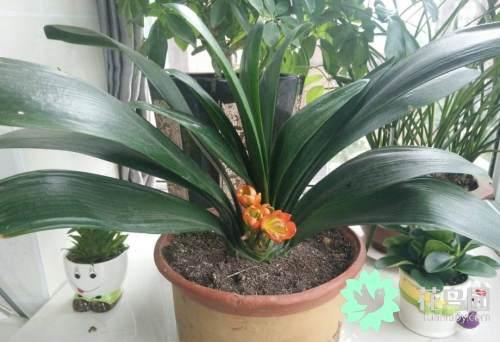
Clivia is a fairly common flowering plant in our daily lives. Its leaves grow in opposite pairs, neatly arranged, with thick leaf texture and sword-like leaf shape. Even when it is not in bloom, it can be appreciated as a foliage plant. But during cultivation, we often encounter the situation where the leaves grow crooked, which greatly reduces the ornamental value of Clivia. Below, the editor will introduce to you the methods for dealing with crooked Clivia leaves.
Some Clivia varieties simply have leaves that grow in a random way. If they were not neat from the start, then just let them grow as they please. If it is not a problem of the variety, then it is basically caused by uneven light exposure during care.
I. Reasons Why Clivia Leaves Grow Crooked and Twisted
Many plants are phototropic, meaning they grow toward the side with more sunlight. This is especially true for plants kept on balconies and windowsills, as they grow toward the outside of the window. Some leaves receive more light and grow outward, and with sufficient photosynthesis they also grow faster. Over time, the leaves become crooked and slanted.
II. Introduction to Leaf Correction Methods
1. Regularly adjust the placement of the flower pot
If you want to avoid Clivia leaves growing unevenly, you need to keep every leaf receiving light evenly. But our balconies always have light on only one side, so we have to manually make the plant's leaves receive even light. We can rotate the pot once a week, and each time rotate it 180 degrees. This way we can maintain the plant shape and prevent the leaves from growing crooked.
2. Use aluminum foil to block light
This method uses light blocking. If the Clivia is a larger plant, you can directly wrap it with aluminum foil. The effect will be much better than using some thick cardboard, and it will not cause any damage to the leaves. As shown in the picture above, it is best to also prepare some paper clips, or small hair clips will work too.
Whichever side the leaf protrudes toward, cover that side. This method combined with pot rotation doubles the effect. If the leaf is not crooked too seriously, it only takes half a month to recover.
3. Fix with a paper frame
The above method is relatively simple and direct. Just prepare some cardboard, preferably lightweight, and cut evenly spaced holes in the paper so that the Clivia leaves can be placed through them (as shown in the picture above). You may worry that this will damage the plant, but flower lovers came up with an improved method: place a frame above, then use string to hang both ends of the cardboard, so the leaves will not be crushed.
4. Foam pads
This method is gentler. Prepare some foam boxes, cut many small pieces, and then clip them between the leaves. For crooked leaves, use paper to block light. Used together with the second method, the effect is best. Correcting the leaves cannot be done in just a day or two. It takes a certain amount of time for the leaves to return to neat arrangement. Keeping light exposure even is the most important thing.
Note:
Clivia does not like harsh sun exposure. Providing appropriate scattered light is enough. Rotating the pot properly on a regular basis can prevent the leaves from growing crooked.