Rose toothpick seedlings ate animal manure, hurry and repot into a bigger pot
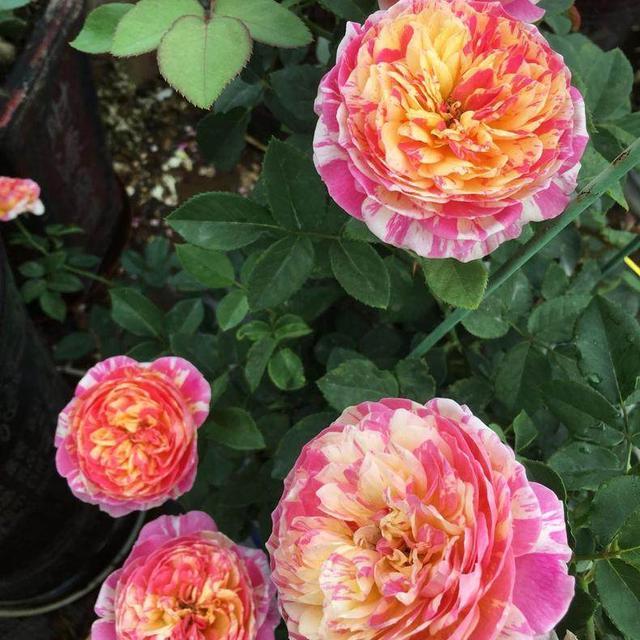
The Monet roses at home have been growing like crazy lately. Of the toothpick seedlings bought together in March, Monet has already been moved up to a 3-gallon pot! It hasn't stopped blooming since the first flower. There has been so much rain lately that several pots at home got black spot, but Monet shows absolutely no pressure. Fellow gardeners want to know why rose toothpick seedlings can grow so fast and so well? The answer: they ate "animal manure."
This "animal manure" is: chicken manure. Chicken manure is a super fertilizer, it doesn't burn seedlings, and it's easy to use. Its only drawback is the strong smell, and in summer it's best not to use it at first, because without ventilation you really can't stand the smell. However, fermented chicken manure is now sold on the market, it has almost no smell, the effect is just as great, and it's very easy to use. The Queen rose at home used chicken manure and pushed out three big shoots, and Monet used chicken manure and went crazy with multiple flower heads.
This can be buried at the bottom of the pot or spread on the surface, and you can also dig a ring along the edge of the pot to fertilize, then cover with soil. For those planted in the ground, bury it in a ring around the plant, and as long as it doesn't touch the roots it should be fine. But I generally bury it at the bottom of the pot, because summer is here and there are lots of mosquitoes and bugs. Chicken manure is already smelly, and spreading it on the surface makes it even more likely to attract bugs, and then the whole home suffers too.
As for frequency, there is no standard. I generally apply it once a month, one big clump each time, as long as you don't bury it right next to the rose roots. How much gets mixed into the surface soil doesn't matter much, and it generally won't burn the roots.
Actually, I just grab it by hand each time. For a 3-gallon pot I grab a handful, for a 2-gallon pot I grab half a handful. The most important thing is not to let the roots touch it directly, that's very dangerous. I always put chicken manure at the bottom of the pot and mix it evenly with the medium, then grab a few handfuls of soil to cover it, then place the seedling, so it won't burn the seedlings. I have also tried placing the seedling directly without covering with soil, and it always burned a little.
This can be adjusted according to the situation. I apply it fairly frequently. A friend also uses chicken manure, but he applies it when repotting. For top dressing, he generally waits several months between applications, and uses a rose-specific organic nutrient solution for top dressing, once a week, diluted 500 times and watered into the roots, and the growth is still pretty good.
When I first started using chicken manure, every spring the leaves would surge like crazy. Each time it scared me into thinking it would only grow leaves and not bloom, but clearly I worried too much. It still bloomed, and rebloomed very quickly.
If you use fresh chicken manure, pay attention to the spacing when using it. Freshly dropped manure burns seedlings badly, and it will also cause an outbreak of fungus gnats. It's best to use fermented manure, which is safer and easier to use. Some people wonder about the fermentation method. Here's the simplest one to share: pile the chicken manure together, and after a few days it will ferment and mature on its own, very easy.
Some other animal manures are also fine, pig manure, sheep manure, cow manure, all are okay, they all have fertility. However, sheep manure seems less fertile than chicken manure, and the others too, but sheep manure doesn't burn seedlings easily. If you plan to buy some, chicken manure is still recommended, as it is rich in fertility and can maximize flower promotion. If it's from your own home, use whatever you have.
There is also a saying about burying fish. The principle is actually similar, they all act as fertilizer. I tried it before too. In early spring I buried a chopped-up fish, and now the effect is visible. The flowers and leaves are all glossy and shiny, not even in the same league as those grown with compound fertilizer.
Although chicken manure stinks and looks bad, it really works. However, it's summer now and the temperature is high, so it's best to use liquid fertilizer for top dressing the roses first. When autumn comes, those who have been hesitating can then use chicken manure!