Roses bloom just as joyfully even in the hot summer
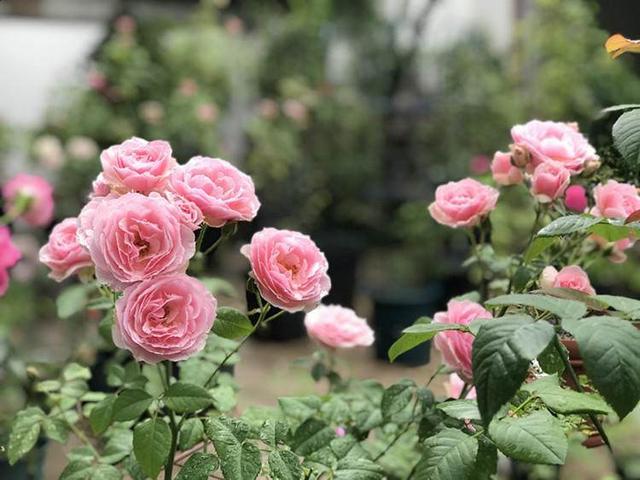
Roses have vivid and rich colors and beautiful flower shapes, and they bloom every month during the growing season, playing an important role in beautifying the yard. In the yard, roses are used to create flower beds of various forms, or planted in rows beside the door and in front of the fence. They tolerate high temperatures, and in the hot summer they can still bloom "with great joy."
Cultivated roses prefer an environment with ample sunlight and good air circulation that can shelter them from cold, dry winds, and a loose, fertile, well-drained neutral soil. Never plant them on the shady side of a building or under tree shade, but in the heat of midsummer, appropriate side shade makes them grow even better.
For most rose varieties, the optimum growing temperature is 15-26°C during the day and 10-15°C at night, and relative humidity should be kept at 70-80%. When the temperature falls below 5°C, they enter dormancy. In summer they can withstand high temperatures of 35°C, but when the temperature stays above 30°C continuously, the plants also enter a semi-dormant state.
From South China to Northeast China, the peak blooming period for roses is March to June. Taking the Yangtze River basin as an example, roses sprout new buds in late February to early March, enter their first flowering peak in early May, and can continue blooming until early July. In the hot peak summer period of July to August, they enter a semi-dormant state; in September, when the temperature drops slightly, roses once again form a large number of flower buds, producing a second flowering peak, and the blooming period can continue until the first frost.
The most important part of growing roses is fertilizing. Fertilizing mainly means applying base fertilizer after winter pruning, using decomposed chicken manure granular fertilizer, applied in furrows, 8-10 granules per plant. During the growing season, apply a rose organic nutrient solution as a top dressing once a week, diluted 500 times and poured onto the roots.
In addition, water the roses in conjunction with fertilizing. In the dry season, water once every 20 days; in the rainy season, stop watering and pay attention to drainage; before winter arrives, water thoroughly with winter protection water. In terms of water and fertilizer management, note also that fertilizing should stop after early autumn to prevent autumn shoots from growing excessively and being damaged by frost. When leaves begin to unfold in spring, new roots grow in large numbers, and concentrated fertilizer should not be applied either, so as to avoid damaging the new roots.
Pruning of roses should be done in early winter; pruning too early easily causes new branches to sprout and suffer frost damage. The degree of pruning depends on the desired tree shape, and each plant should preferably keep 3-5 strong main stems. Generally, plants that are required to be short with large flowers should be pruned low, that is, heavily pruned at 30-45 cm above the ground; plants that are taller and bear many flowers should be pruned high, with appropriate light pruning at 75-120 cm above the ground.
For the inner side branches within the rose canopy, thinning pruning is needed; diseased branches, insect-damaged branches, and dead branches must all be cut off. When larger plants are transplanted, heavy pruning is also needed. For roses with strong upright growth, they can also be pruned into a single-trunk tree form.