Growing orchids on an enclosed balcony: what to watch out for during the hot season
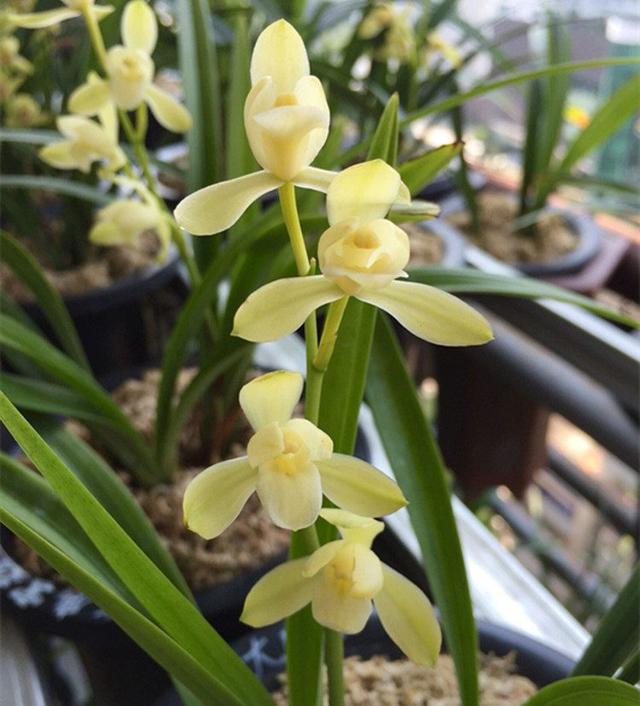
Compared with an open balcony, an enclosed balcony has poorer air circulation, stronger moisture retention, faster warming, slower cooling, and slightly worse light conditions. Therefore, as soon as the hot season arrives, when growing orchids, you must pay special "attention."
Growing orchids on an enclosed balcony in spring, autumn, and winter is more suitable for orchid growth than an open balcony, but in summer, you must pay special "attention" to the following issues.
1. Growing orchids on an enclosed balcony has poor air circulation. In summer, the temperature rises quickly and humidity is high, which easily breeds harmful pathogens and causes soft rot, root rot, and so on. Therefore, ventilation must be strengthened. You can open the windows at night to exchange air with the outdoors; this kind of natural ventilation works best. During the day, use an electric fan to strengthen ventilation to prevent harmful pathogens from breeding. If conditions permit, an air conditioner can be used to lower the temperature.
In addition, whether the balcony is enclosed or open, you should pay attention to promptly replenishing nutrients for the orchids. In summer, fertilization can be carried out in a targeted way. It is recommended to use an organic nutrient solution specially made for orchids, diluted with water at 500 times, and simply water the roots with it.
2. When growing orchids on an enclosed balcony, watering should be based on how dry or moist the potting medium in the orchid pot is. It must not be too wet. The amount of water should be such that the potting medium can be moist without becoming waterlogged. Properly controlling water so the potting medium dries out for one day before watering again can prevent harmful fungi from multiplying massively under high temperature and high humidity.
3. Because an enclosed balcony warms up quickly, it is usually necessary to draw a curtain with good shading inside the window to block strong sunlight and prevent the temperature from rising too quickly. But also note that a decrease in light intensity will affect the orchids' photosynthesis, so supplemental lighting can be used to maintain the orchids' normal photosynthesis.
Finally, do a good job of pest and disease prevention and control. Adhere to the principle of "prevention first, combining prevention and control." The hot season is a time when orchid pests and diseases occur frequently. First, keep the balcony clean and hygienic; a disinfectant can be used once a month for sterilization and disinfection.
In a high-temperature, high-humidity environment, orchids are also prone to scale insects and thrips. Once found, they should be promptly killed with medication. Soft rot is a major enemy of orchids in summer, and improper handling can cause serious losses. If soft rot is found, immediately repot, cut off and remove the diseased seedlings infected with pathogens, disinfect the healthy uninfected seedlings, replace the potting medium, and replant them, and carry out isolated care to prevent the disease from spreading and transmitting.