Taiwan produces over 550,000 metric tons of food waste annually; the Environmental Protection Administration recruits food-saving shops and turns imperfect produce into dishes
Text by Lin Pei-chun, reporter for Upstream and Downstream
According to United Nations statistics, one-third of the world's food is wasted, generating carbon emissions of as much as 4.4 billion tons; Taiwan's food waste recycling volume in 2017 exceeded 550,000 metric tons. To align with the United Nations' sustainable development policy of "responsible production and consumption" and to respond to the goal of reducing food waste by 50% by 2030, the Environmental Protection Administration will hold a series of food-saving education activities from July until World Food Day (October 16).
To promote concepts such as "reducing discarded food, avoiding food waste, using local ingredients, and shortening transport distances," Environmental Protection Administration Director-General Lee Ying-yuan demonstrated on site how to make dishes using "imperfect produce," hoping the public will start with themselves and change the fate of discarded food.
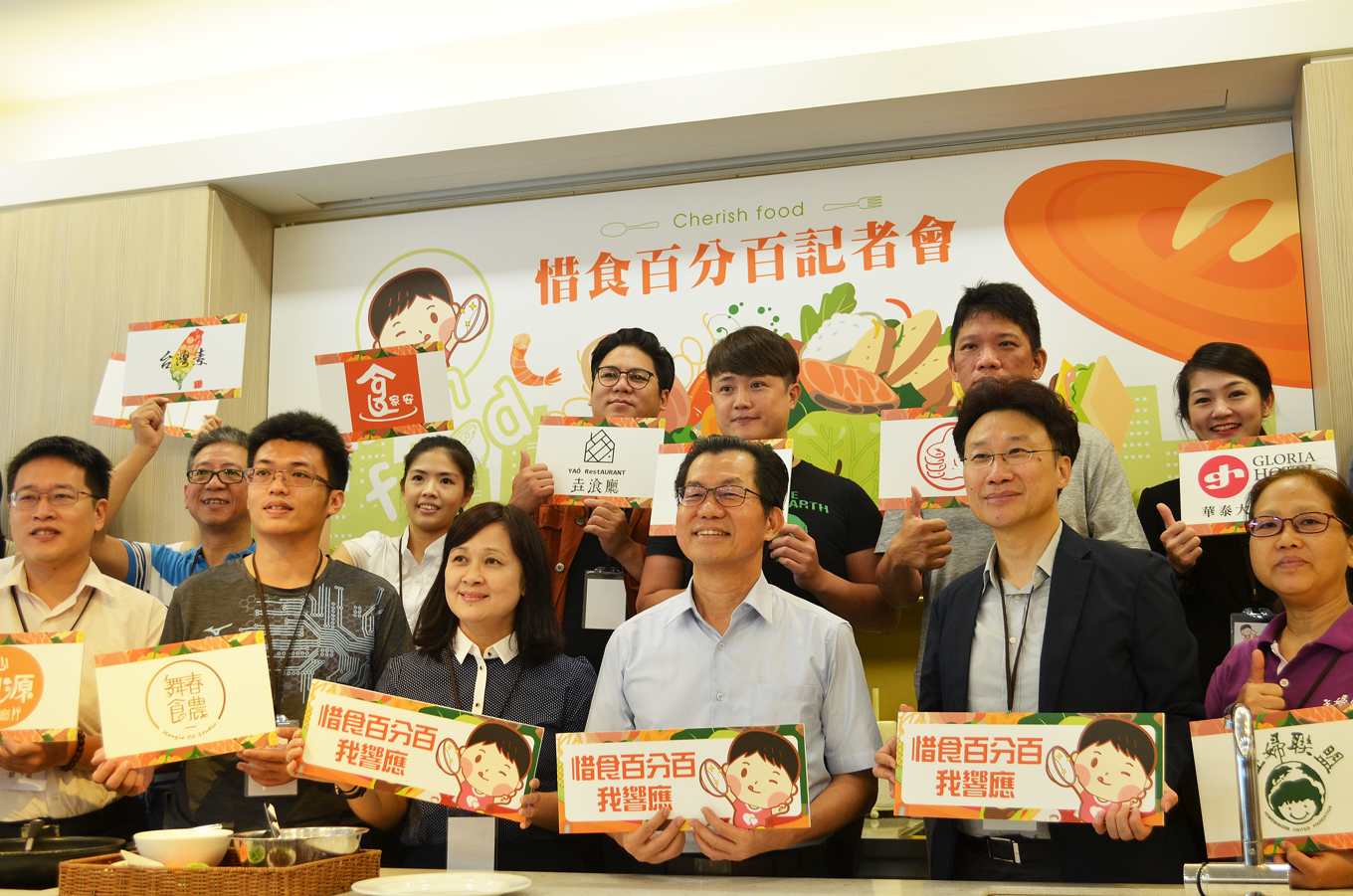
Lee Ying-yuan: Eat an appropriate amount on the consumption side and develop a "doggy bag habit"
At the same time, Lee Ying-yuan also stressed the need to start from the "consumption side," encouraging consumers to gladly buy "imperfect produce" and change the fate of discarded food.
"Eating an appropriate amount is very important!" Lee called on the public not to overeat, which is more helpful for health; in addition, when dining at restaurants, people can take the initiative to develop a "doggy bag habit," taking home food they cannot finish and reducing the chance of food being thrown into the trash.
Regarding education activities on the consumption side, Lee said that starting in July, the Environmental Protection Administration will hold lectures on food saving and food and agriculture, teaching the public how to reuse "imperfect produce."
Solving supermarket leftover food: Lee says purchase quantities must change
In addition to promoting the concept of "food saving" from the consumption side, Lee Ying-yuan said that between March 2017 and April 2018, the declared amount of discarded food in Taiwan's supermarket and mass-merchandise sector's food waste reached as high as 6,630 metric tons, equal to more than 500 metric tons of food waste generated each month, showing that the "leftover food problem" is serious.
In response, Lee suggested that businesses improve purchase quantities based on sales data, taking "appropriate quantity" as a management principle, or supply soon-to-expire food to groups in need.
APEC economies participate in reducing food loss; goal is to cut food loss rate by 10% in two years
The food waste problem has drawn international attention. Representatives from the public and private sectors of APEC economies gathered in Taipei on the 14th and 15th of this month to discuss through high-level dialogue how to reduce food loss, with the goal of reducing the food loss rate by 10% by 2020.
Council of Agriculture Deputy Minister Huang Chin-cheng said that food loss is not only a waste of agricultural investment, but also reduces producers' profits and can further cause food prices to rise, leading to a food crisis.
Hung Chung-hsiu, Director-General of the Department of International Affairs under the Executive Yuan's Council of Agriculture, pointed out that a National Taiwan University team proposed the concept of a "toolkits for reducing food loss," which means examining problems one by one along the food supply chain. For example, insufficiently refined technology can cause waste of land and fertilizer resources on the production side; in addition, post-harvest handling of food is also very important, requiring good logistics, storage, and distribution environments and equipment; finally, on the consumer side, education must be used to teach consumers to cherish food.
Hung said that the Academia Sinica and National Taiwan University teams responsible for technical research will use this concept and are expected to propose specific methods for reducing food loss in August this year at "Food Security Week" in Papua New Guinea.