Causes and solutions for yellowing, dry leaves and black rot on the stems of Kalanchoe blossfeldiana in summer
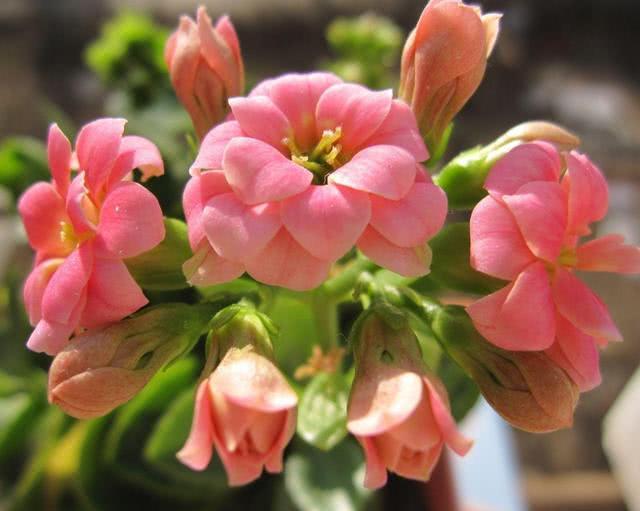
Yesterday a gardening friend sent a message saying that their Kalanchoe blossfeldiana grew very vigorously through winter and spring, covered in flower branches, but over the past few days as the high-temperature period set in, they found many leaves turning yellow and drying up, and even one plant's stem had developed black rot. They asked how to deal with it? Today we will solve this problem.
Gardeners who often grow Kalanchoe blossfeldiana know that it is a winter-and-spring blooming plant that prefers a cool air environment, and its vigorous growth period is in spring, autumn and winter. In summer, if the temperature is too high, Kalanchoe blossfeldiana will enter dormancy or semi-dormancy due to unsuitable temperatures. At this time it will show slow growth, old leaves turning yellow and drying up, and so on; these are normal reactions shown during the plant's dormant period. Another reason is: during dormancy and semi-dormancy, Kalanchoe blossfeldiana does not need large amounts of water and nutrient supplementation. If at this time you still provide large amounts of water and fertilizer, or expose it to strong direct sunlight, and on top of that the plant's branches and leaves are too dense and ventilation is poor, Kalanchoe blossfeldiana will very easily develop yellowing leaves. If the leaves have turned yellow and you do not remove them in time, the yellowed leaves will slowly dry up as the plant grows.
So experienced gardeners will, in early summer, remove or cut off the overly dense branches and leaves or stems of Kalanchoe blossfeldiana for cuttings, which can both turn one pot into many pots and increase the plant's airiness, avoiding various problems that arise when the plant goes through summer.
When yellowing leaves are found, the yellow leaves should be removed promptly to reduce nutrient loss, and at the same time the plant should be moved to a cool, ventilated place, watering frequency reduced so that you do not water until the potting soil has dried out, and fertilizing stopped. Kalanchoe blossfeldiana has very vigorous vitality; even in the hot summer, after removing the yellow leaves you will find that before long new leaves grow out, and they will grow more vigorously than the old leaves. This is a normal reaction of the plant's metabolism. So the earlier the yellow leaves are removed, the faster the new leaves grow. After the temperature drops in autumn, give sufficient water and fertilizer, and in winter and spring it will likewise be covered in flower branches.
A Kalanchoe blossfeldiana that quickly grew new leaves after the yellow leaves were removed
As for the problem of black rot on the stems, most cases are due to Kalanchoe blossfeldiana contracting black rot disease. Black rot disease is caused by a fungus called "Fusarium oxysporum". Fusarium oxysporum can infect the soil around the plant's roots and the plant itself, and is a soil-borne pathogenic fungus. The causes of the disease are excessively high growing temperatures, compacted and non-air-permeable soil, overwatering, and poor ventilation. In the height of summer, watering under strong direct sunlight can also easily trigger black rot disease in plants. If black rot is found starting from the roots, the plant should be pulled out promptly, the black-rotten part cut off, soaked and disinfected in carbendazim or thiophanate-methyl powder mixed with water at 200 times dilution, and after drying, re-planted in soil and potted up as a cutting. If one of the branches has black rot, it should also be cut off promptly, the black-rotten part removed, and after disinfection re-planted as a cutting. At the same time, use a carbendazim solution to drench the soil of the original pot for disinfection, to prevent the fungus from infecting again.