Detailed Explanation of Key Techniques for Sunlight Greenhouse Grape Flowering Period Management
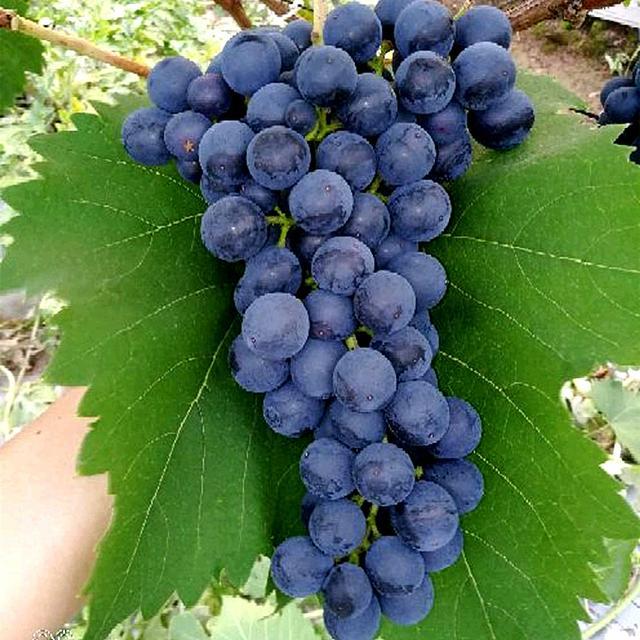
Sunlight Greenhouse Grape Flowering Period Management Techniques
1 Core Objectives of Flowering Period Management
Comprehensively apply various technical measures to balance tree nutrition, reduce nutrient consumption, and maintain a dynamic balance between plant growth and flowering/fruit set, thereby promoting more rational distribution of tree nutrition. Inflorescences can receive more nutrients, ensuring better development and maturation of floral organs, laying a solid foundation for normal flowering, pollination, and fertilization, and improving fruit set rate.
2 Management from Inflorescence Appearance to Inflorescence Extension Stage
From mid-to-late January to early February, the pre-flowering stage from when new shoots produce inflorescences until inflorescences gradually elongate, extend, and flower buds develop and mature. The main technical points are as follows:
2.1 Shoot thinning. When it can be visually determined whether new shoots have inflorescences, excess vegetative shoots can be appropriately removed, retaining fruiting shoots. Early removal of root suckers and excessively dense or weak shoots on fruiting branch groups. Additionally, when multiple new shoots grow from the same bud eye, only retain the most vigorous one or the one with inflorescences.
2.2 Inflorescence trimming. Through manual selective trimming, reasonably regulate the tree's load capacity, improve the leaf-to-fruit ratio, facilitate concentrated nutrient supply from the tree to retained inflorescences, improve fruit set rate, make fruit clusters compact with beautiful cluster shape, and improve fruit quality.
2.2.1 Inflorescence thinning. 10 ~ 15 d before flowering, thin out excessively dense and weak inflorescences according to tree vigor and reasonable load capacity. Generally, vigorous shoots and moderate shoots retain 1 inflorescence. When the current year's yield is low, consider retaining 2 inflorescences on vigorous shoots to achieve increased production. For two inflorescences on the same new shoot, remove the one with poorer growth.
2.2.2 Pinching inflorescence tips. Carry out 5 ~ 7 d before flowering. Victoria grape is a large-cluster variety, with inflorescence length reaching 20 ~ 28 cm. To improve fruit set rate, secondary clusters can be cut off, and the tip of the entire inflorescence and the tips of larger branch clusters in the upper part of the fruit cluster should be cut off by 1/4 ~ 1/5 of their total length. If retained inflorescence branch clusters are too densely arranged, appropriately cut off some thin and weak branch clusters or those in poor growing positions. Through such trimming, the retained inflorescences are guaranteed to receive more nutrition during flowering and fruit set, reducing flower and fruit drop, and ensuring fruit cluster quality.
2.3 Temperature and humidity management. Daytime room temperature 20°C ~ 27°C, nighttime 15°C ~ 18°C, relative humidity 60% ~ 65%. During this period, temperature is greatly affected by external temperature changes. Straw mats should be uncovered late and covered early. On clear days, when the indoor temperature reaches about 27°C at noon, the top vent can be opened for ventilation. As temperature rises, gradually increase ventilation. In the afternoon, close the top vent when the room temperature is about 24°C, and cover straw mats when the room temperature is about 20°C. When outside temperature is too cold, a secondary curtain can be hung at the front window inside, or plastic film can be covered over the outer layer of straw mats to provide nighttime insulation. The greenhouse temperature should not be too high during the day or too low at night; otherwise, it will lead to excessive or slow growth of fruiting shoots, poor development of inflorescences and floral organs, and slow inflorescence growth.
2.4 Water and fertilizer management. During inflorescence appearance stage, if plant growth is weak, water and fertilize once, applying magnetic nano-modified nitrogen fertilizer (N≥46%) at 15 ~ 20 kg/667 sq m and rooting bacterial fertilizer at 5 ~ 10 kg/667 sq m with irrigation; 7 ~ 10 d before flowering, apply a pre-flowering fertilizer once, broadcasting nitrogen-phosphorus-potassium (17-17-17) balanced compound fertilizer at 20 ~ 30 kg/667 sq m on the pond surface, lightly turning the soil to cover, then watering, or applying water-soluble compound fertilizer (20-20-20+TE, TE refers to trace elements) at 20 kg/667 sq m with irrigation. It is worth noting that pre-flowering fertilizer should not be applied with excessive nitrogen, otherwise it easily causes excessive growth of new shoots. Foliar spray 0.3% borax solution 1 ~ 2 times. Additionally, fertilizer and water management at each stage before flowering should be strengthened to increase tree accumulation, which can effectively reduce the occurrence probability of Victoria parthenocarpic small round fruits.
3 Flowering Period Management
In mid-February, the stage from the first flower opening indoors to all flowers finishing blooming and fruit set. Technical points are as follows:
3.1 Tendril removal and new shoot tying. When new shoots reach 30 ~ 50 cm, carry out single-shoot tying so they are evenly distributed on the trellis. Locally, for efficient use of space and reasonable increase of load capacity, new shoots are tied along the direction of trunk growth on the trellis, while weaker new shoots are allowed to grow upright to strengthen them. Vigorous shoots can be lightly twisted and injured at the base 2 ~ 4 nodes before tying to moderate their growth vigor. The force used in tying new shoots should be small and movements gentle; otherwise, new shoots can easily detach from the grape trunk, causing unnecessary losses. The specific operation method is to hold the base of the new shoot with one hand, guide the upper part of the new shoot to the trellis wire with the other hand, then tie and secure it. While tying new shoots, remove tendrils to save nutrients and prevent disrupting tree shape.
3.2 Pinching and lateral shoot treatment. Carry out from 3 ~ 5 d before flowering to early flowering stage. Pinching should be done earlier for vigorous shoots and later for weak shoots. Generally, retain 5 ~ 7 leaves above the inflorescence, and retain 8 ~ 10 leaves for vegetative shoots without fruit clusters. The degree of pinching should be such that the leaf at the pinching site is equivalent to 1/3 ~ 1/2 of a normal leaf. All lateral shoots below the inflorescence should be removed. Above the inflorescence, only retain 1 ~ 2 lateral shoots at the top, pinching repeatedly each time leaving 2 ~ 3 leaves.
3.3 Temperature, humidity, water and fertilizer management. Daytime room temperature 25°C ~ 27°C, nighttime 15°C ~ 20°C, relative humidity about 60%. During this period, temperature requires precise management. When room temperature reaches 27°C, ventilate to cool down and control temperature at about 25°C. Continuous daytime temperatures above 30°C or nighttime temperatures below 15°C will adversely affect various floral organs, thereby affecting normal pollination and fertilization, causing large amounts of flower and fruit drop. Additionally, during flowering period, generally do not water or fertilize.
4 Disease Control
Before and after flowering, spray 70% Shulewei suspension concentrate at 1 000 ~ 1 500 times dilution, or 50% Kaize water-dispersible granules at 500 ~ 1 500 times dilution once each, which can effectively prevent the occurrence of grape gray mold and downy mildew. Alternatively, at the early stage of pathogen infection, spray the above agents once every 5 ~ 7 d, continuously spraying 2 ~ 3 times. To prevent phytotoxicity, do not carry out spraying operations at noon on sunny days.