High-yield and high-efficiency cultivation techniques for early rice, ratoon rice and arrowhead in Liuzhou City
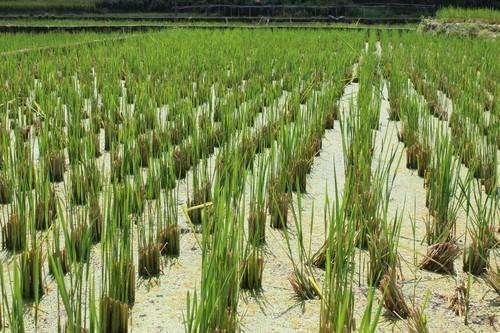
Liuzhou CityHigh-yield and high-efficiency cultivation techniques for early rice + ratoon rice + arrowhead
With the development of society, a large amount of rural labor has flowed to cities, causing a shortage of rural labor. Coupled with the gradual advancement of land transfer, some farmers' own grain-growing fields have decreased, and their own grain supply has fallen short, forcing them to buy grain from the market as a supplement. For this reason, the agricultural department of Liujiang District, Liuzhou City, based on local conditions and combined with the climate characteristics of the region, explored the model of "high-yield and high-efficiency cultivation techniques for early rice + ratoon rice + arrowhead". Combined with the water-air balance cultivation technique for early rice, agricultural production on limited fields can both meet the ration problem and increase the economic benefit per unit area.
At present, Liujiang District has promoted the model of "high-yield and high-efficiency cultivation techniques for early rice + ratoon rice + arrowhead" on 350 hm2. Early rice produces an average of 680 kg of dry grain per 667 m2, ratoon rice produces 293 kg of dry grain per 667 m2, and arrowhead produces an average of 1 050 kg per 667 m2. The average output value per 667 m2 is...9 850 yuan, which is 6 800 yuan more per 667 m2 than conventional double-cropping rice planting, ...the income increase is significant, and it is very popular among farmers. The cultivation techniques are summarized as follows.
1 Cultivation techniques for early rice
1.1 Seedling raising
Select late-maturing hybrid varieties with high yield, good quality and high resistance. The growth period is generally 130-135 d, and the seeding rate is 1.5-2 kg per 667 m2. ...Sow and raise seedlings from March 10 to 15, adopt dryland film-covered seedling raising, and sow sparsely (sow 1 seed in a 14.5 m2 seedling bed) to cultivate strong seedlings.
1.2 Transplanting
When the seedlings have 3-4 expanded leaves and 1-2 tillers, they can be transplanted. Generally, transplanting is carried out from April 1 to 5, using the water-air balance planting cultivation technique. Plant in compartments, with the compartments oriented north-south. Each compartment adopts a planting method with alternating wide and narrow rows. The wide row spacing is 33 cm, the narrow row spacing is...23 cm, and the plant spacing is 20 cm. Plant 2-3 seedlings per hill, and plant 12 000 hills per 667 m2. Drainage ditches are dug between compartments and around the field ridges to facilitate water-air balance in the middle and late stages, promote rooting and growth control of the rice seedlings, and reduce pest and disease damage.
1.3 Field management
1.3.1 Water management From transplanting to the tillering stage, maintain a thin layer of...1 cm water on the compartment surface to accelerate the increase of water temperature and soil temperature, promote early and rapid growth of rice seedlings, and increase the effective tillering rate. When each hill has 10-12 tillers, drain and sun the field to promote rooting and control tillering and reduce ineffective tillers. When the sunned field shows chicken-claw cracks, re-irrigate with 1 cm of thin water on the compartment surface and let it dry naturally. After that, it is sufficient to keep water in the field ditches (except when fertilization is needed during this period, after which running water should be irrigated and then allowed to dry naturally). Because the second crop is to be ratoon rice, the field must never be sunned too much, otherwise it will affect the growth of ratoon rice.
1.3.2 Fertilization management Apply fertilizer 5 times in the whole field (base fertilizer - tillering fertilizer - young panicle differentiation fertilizer - booting fertilizer - grain-filling fertilizer). Among them, the base fertilizer is applied per 667 m2 as...1500 kg of decomposed organic fertilizer, ...50 kg of 45% compound fertilizer (15:15:15), and 50 kg of calcium magnesium phosphate fertilizer, using whole-layer fertilization. Tillering fertilizer should be applied in time, 7-10 d after transplanting, to promote rapid tillering of rice seedlings and increase the rate of effective tillers becoming panicles. Apply 15 kg of urea and 15 kg of 64% added potassium per 667 m2. The young panicle differentiation fertilizer, booting fertilizer and grain-filling fertilizer are all applied according to the leaf color of the rice seedlings. If the leaves are too dark green, do not apply; otherwise, apply...3-4 kg of urea and 5 kg of 64% added potassium per 667 m2. From the heading and flowering stage to the maturity stage, spray foliar fertilizer 3-4 times in combination with pest and disease control to improve the seed-setting rate and plumpness.
1.3.3 Pest and disease control Spray pesticide once 5-6 d before transplanting the seedlings to prevent stem borers and rice blast. A 1 000-fold solution of 2.5% abamectin and a 500-fold solution of isoprothiolane can be used for spraying. To control stem borers and leaf rollers, pesticides such as abamectin, emamectin benzoate and DuPont "Kangkuan" can be used, sprayed before the larvae are 1-3 instars old. For rice planthoppers, pesticides such as imidacloprid, pymetrozine and chlorpyrifos can be used for spraying. In the later stage, due to high density and tall rice seedlings, the effect of spray control is low, so it is suitable to use the dichlorvos toxic soil broadcasting fumigation poisoning method. Pay attention to controlling sheath blight and rice blast. Tricyclazole, pyraclostrobin, difenoconazole, azoxystrobin and others can be used for spraying.
1.4 Harvesting
Harvest when the grain is 80%-90% mature, generally from...early July to early August. Use manual harvesting to prevent mechanical harvesting from breaking the rice stubble and affecting the growth of ratoon rice. Harvesting should not be too early or too mature. If harvesting is too early, the seed-setting rate of the previous crop grain is low, affecting yield; if overmature, although yield can be increased, it affects the growth of ratoon rice. The rice straw is uniformly moved and pushed to one corner of the field ridge, where it naturally decomposes through sun exposure and rain. It can serve as fertilizer and also avoid covering the rice stubble.
2 Cultivation techniques for ratoon rice
2.1 Preparation before harvesting the previous rice crop
6-7 d before harvesting early rice, apply ...10 kg of 45% compound fertilizer (15:15:15) and 5 kg of urea per 667 m2 to supplement the late-stage nutrition of rice and promote the sprouting and growth of axillary buds on the rice stems after harvesting.
2.2 Height standard for harvesting the previous rice crop
Investigate the previous rice crop and cut from the upper part of the axillary buds, leaving 3-4 nodes counted from the aboveground high nodes. Generally, the harvesting height is 40-50 cm.
2.3 Field management
2.3.1 Water management The whole growth period of ratoon rice does not require sunning the field. Maintain a 2-3 cm water layer until 4-5 d before harvesting, then drain the water to facilitate harvesting.
2.3.2 Fertilization management Because the growth period of ratoon rice is relatively short, generally about 60 d..., fertilization must be timely and heavy. Topdressing is carried out 7-8 d after harvesting the previous crop. Apply 15 kg of urea and 15 kg of 64% added potassium per 667 m2; ...at the heading and flowering stage, apply 4 kg of urea and 5 kg of 64% added potassium per 667 m2, and at the same time spray foliar fertilizer 3-4 times.
2.3.3 Pest and disease control After harvesting the previous rice crop, promptly spray pesticide on the rice stubble to control rice planthoppers. A 500-fold solution of pymetrozine wettable powder can be used for spraying. After that, mainly prevent stem borers and leaf rollers. Pesticides such as abamectin, emamectin benzoate and DuPont "Kangkuan" can be used alternately for spraying. Pay attention to preventing rat damage. 3-4 d after harvesting the previous crop, place rodenticide around the field. Rodenticide should also be placed during the large booting and flowering stage; otherwise, rats may ruin everything in one or two nights, resulting in no harvest at all.
3 Cultivation techniques for arrowhead
3.1 Breeding and raising arrowhead seedlings
Adopt asexual propagation techniques for arrowhead. Select disease-free and high-quality arrowhead with a diameter of 1.5-2 cm and intact terminal buds as seed. Before sowing, soak the selected arrowhead seed in a 500-fold solution of 50% carbendazim for 2-3 h for disinfection, and sow after drying. Generally, sowing is carried out from early June to late June. The sowing specification is 40 cm x 30 cm, and the insertion depth should be such that 1-1.5 cm of the arrowhead terminal bud is exposed above the mud surface. When the seedlings grow 2-3 leaves, topdress, applying 10 kg of urea and 5 kg of 45% compound fertilizer (15:15:15) per 667 m2. When the seedlings grow to 6-7 leaves and begin to produce tiller seedlings, first press down the old yellow leaves and then topdress once more, applying ...15 kg of urea per 667 m2 to promote the tillering growth of arrowhead seedlings. When the tiller seedlings grow 3-4 leaves, the arrowhead tiller seedlings can be dug and collected for field transplanting. The arrowhead tiller seedlings can be dug and collected once every 4-5 d. Generally, raising arrowhead seedlings on 667 m2...can provide seedlings for 0.4-0.53 hm2 of field arrowhead.
3.2 Transplanting and planting
Harvest ratoon rice from late September to early October. Immediately after harvesting the ratoon rice, apply base fertilizer and plow and level the whole layer. Apply 1 000 kg of decomposed farmyard manure, 25 kg of superphosphate, 10 kg of urea and 10 kg of potassium sulfate per 667 m2 as base fertilizer. After plowing and leveling, carry out transplanting and planting. The planting specification is 50 cm x 45 cm, and 3 000 plants are planted per 667 m2. When planting, remove the main root and old diseased leaves of the seedlings, leaving 3 leaves and 1 heart. Pinch the base of the seedling with the hand and insert it into the mud 10 cm, then backfill soil to level the gaps beside the roots to prevent the arrowhead seedlings from floating on the water surface due to buoyancy and dying.
3.3 Field management
3.3.1 Water management From planting to the stage of growing new leaves, arrowhead requires shallow water irrigation to prevent increased water depth and buoyancy, which makes arrowhead seedlings easily leave the soil, float on the water surface and rot to death. In the vigorous growth period, maintain a water layer of 5-...10 cm. From the beginning of arrowhead corm formation to the harvest period, reduce the irrigation water layer to 2-3 cm. During the day, this can increase water temperature and soil temperature, while at night it is easy to lower water temperature and soil temperature, which is beneficial to the conversion and accumulation of nutrients and the expansion of corms, thereby improving quality and yield.
3.3.2 Fertilization management When 5-6 leaves have grown after transplanting and planting, press the leaves. After clearing old diseased leaves, topdress with seedling fertilizer, applying 7.5-...10 kg of urea per 667 m2. After the second leaf pressing, apply 5-7.5 kg of urea per 667 m2. ...After the third leaf pressing and thorough clearing of tiller seedlings, apply ...5 kg of urea and 15-20 kg of potassium sulfate per 667 m2 to meet the fertilizer nutrients required for arrowhead corm formation.
3.3.3 Leaf pressing From transplanting to harvesting, arrowhead generally requires 3 leaf pressings. The first leaf pressing is carried out when 5-6 leaves have grown after transplanting and planting; the ...second leaf pressing is carried out when another 7-8 leaves have grown; the third leaf pressing and clearing of all tiller seedlings are carried out 3-5 d around Frost's Descent. During leaf pressing, remove old diseased leaves and tiller seedlings and bury them in the mud. Each arrowhead plant should retain only ...3 leaves and 1 heart, which is beneficial to ventilation and light transmission, improves photosynthesis, reduces pests and diseases, and at the same time is beneficial to the accumulation of nutrients in the mother plant.
3.3.4 Pest and disease control The main disease is smut. After strong wind and heavy rain or in the early stage of disease onset, use a 1 000-fold solution of 37% difenoconazole, or a 800-1 000-fold solution of 70% thiophanate-methyl wettable powder alternately, spraying once every 6-7 d for 3-4 consecutive times.
The main pests are golden apple snails and aphids. Golden apple snails mainly cause damage during the transplanting seedling stage. Before transplanting, tea seed cake can be soaked for 2-3 d and then mixed with water and splashed in the field, using 7.5 kg of tea seed cake per 667 m2. Chemical pesticide niclosamide wettable powder can also be dissolved in water and splashed in the field, using 40 g of niclosamide wettable powder per 667 m2. For aphid control, in the early stage of occurrence, use a 2 000-fold solution of 10% imidacloprid wettable powder, or a 500-fold solution of 40% dimethoate alternately for spraying.
3.4 Harvesting
From mid-to-late December to late January of the following year, arrowhead leaves gradually turn yellow and withered, and the corms fully expand and mature, so they can be harvested. Select mature and plump arrowhead for market, and retain disease-free and injury-free arrowhead with a corm diameter of 1.5-2 cm as seed for the following year.