Detailed Explanation of Key Points of Irrigation and Drainage Techniques for Jujube Orchards
Irrigation and Drainage Techniques for Jujube Orchards
In the jujube-growing areas of northern China, spring is dry and the summer rainy season arrives late. To ensure that jujube trees meet their water requirements for growth and development, timely irrigation should be carried out before budbreak and during flowering and the young fruit stage. Jujube trees have strict requirements for irrigation water quality, especially the content of harmful heavy metals in the water, which must not exceed the standard. Combined with rainfall conditions, irrigate 2 to 5 times throughout the year with clean river water or well water with low salt and fluoride content.
1 Irrigation
1.1 Sprouting-promoting water. Carry out in early to mid-April; it benefits root formation and growth, promotes uniform sprouting and growth of jujube shoots, and at this time a thorough watering should be combined with fertilization. The purpose is to meet the needs of the tree for sprouting, shoot growth, leaf expansion and flower bud formation.
1.2 Flower-promoting water. Carry out in late May. If the weather is dry with little rain, the jujube orchard should be given a light watering at this time, not a heavy one. The purpose of watering is to increase the air humidity in the jujube orchard, prevent flower scorching, prolong the flowering period, enhance pollination and fertilization capacity, and increase the fruit-setting rate. If too much water is applied, it can accelerate vegetative growth and reduce the fruit-setting rate.
1.3 Fruit-promoting water. Early July is the stage of rapid young fruit growth, when water demand is very high. If the weather is dry, water thoroughly in time; otherwise fruit growth will be inhibited.
1.4 White-ripening water. Watering in early August when the fruit approaches the white-ripening stage is very important. It can meet the water needs for sugar conversion during the fruit coloring stage, increase fruit weight by 20% to 30%, and also prevent fruit cracking. The amount of water for this irrigation only needs to be enough to dissolve fertilizer; it should not be too much.
1.5 Freezing water. Carry out in early November after autumn application of base fertilizer. The purpose is to increase the tree's nutrient reserves, enhance the tree's ability to resist freezing, disease and dehydration, and it is also greatly beneficial to the growth and development of jujube trees and high-quality, high-yield jujube fruit the following year, so this watering should be thorough.
1.6 Watering during the young fruit stage and fruit enlargement stage can achieve a very good effect in preventing fruit cracking. In dry years, attention should be paid to watering early during the young fruit stage of jujube trees, with no more than 20 d before the second watering; if drought continues, a third watering can be given after another 20 d, and the cracking-prevention effect will be even better.
2 Drainage
Jujube trees are highly adaptable and more tolerant of waterlogging than other fruit trees, but long-term standing water on the ground will also worsen soil aeration. When water stands on the ground for a long time, it fills all the spaces between soil particles in the jujube orchard soil, causing serious imbalance in the "three-phase ratio" and other physical properties of the soil, severe oxygen deficiency in the root system, causing large numbers of roots to die, weakening tree vigor, and even killing the entire tree.
In addition, when soil aeration is poor, substances toxic to roots such as hydrogen sulfide and methane are easily produced in the soil, which will also aggravate root rot and death. Therefore, promptly removing standing water is one of the conditions that cannot be ignored to ensure normal growth of jujube trees and strive for high yield.
3 Effect Survey
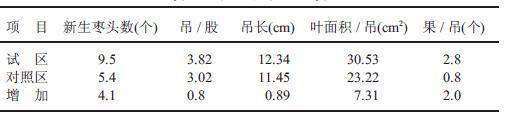
Using the above watering methods, the yield increase effect is obvious. The survey results are shown in Table 1:
Table 1 Survey Table of Yield Increase Effect