How to mix soil for roses? The soil should be as loose as fried rice
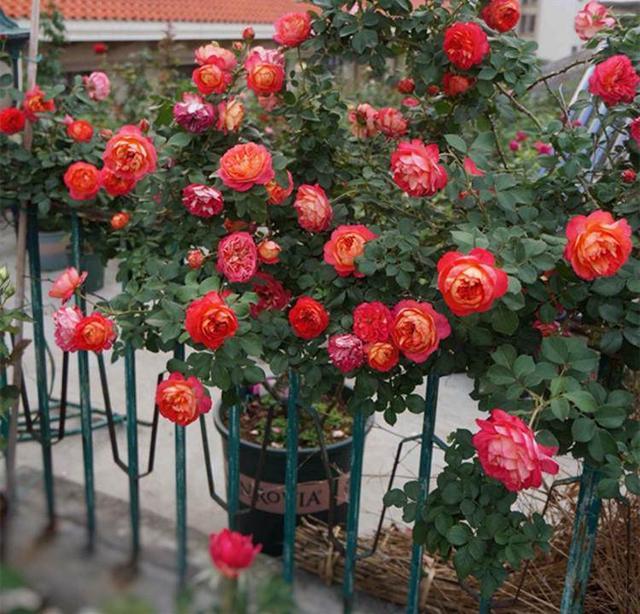
When growers cultivate roses, the root system sometimes easily develops problems, which then affects growth. In fact, this ultimately comes down to the soil mix. For roses, the most basic requirement for the soil is that it be loose, so just how loose should it be? Very simple: loose to the degree of fried rice.
So, how do you mix rose soil so that it is "as loose as fried rice"?
The basic ratio for rose soil is roughly 6 parts soil to 4 parts organic matter. If you use materials that are easy to buy on the market, akadama soil (small grade, medium grade) makes up 6 parts, and leaf mold plus compost makes up 4 parts. After mixing these simple materials together, you can make soil for roses.
If the environment where growers keep roses has poor light, or is a place that easily stays damp, then when mixing, increase the proportion of akadama soil (medium grade), which has good drainage. If it is a place that easily dries out, then increase the proportion of akadama soil (small grade), which has good water retention. For the specific mixing methods, growers can refer to the following:
Type 1
Small-grade akadama soil 6 : compost 2 : leaf mold 2. If there is too much compost, the roses will grow too fast, powdery mildew may appear, and the plants will also not be strong enough. At this time, growers can add a little less compost and just cultivate patiently.
Type 2
Small-grade akadama soil 6 : compost 3 : leaf mold 1. This type of soil is suitable for most repeat-flowering rose varieties, and flowering requires sufficient energy, so in regular topdressing, growers also need to use a rose-specific organic nutrient solution, diluted 500 times with water, to water the roots. Or, when planting roses, you can add a little more compost to make soil that lasts a longer time.
Type 3
Small-grade akadama soil 7 : compost 2 : leaf mold 1. This type of soil is especially suitable for use at the stage when the rose root system has weak growth capacity and cannot absorb large amounts. At this time, increase the proportion of base soil to create a soil environment that is breathable and dries easily, and keep the compost proportion slightly lower.
In addition, if growers use flower pots with good breathability, such as red clay pots, plastic pots with air holes on the sides, and so on, then when mixing soil, they need a soil ratio with slightly more compost and good water retention. For flower pots with poor breathability, a soil with slightly more base soil and leaf mold and good drainage is suitable.