Do these 2 things for hydrangeas in June and they will bloom again
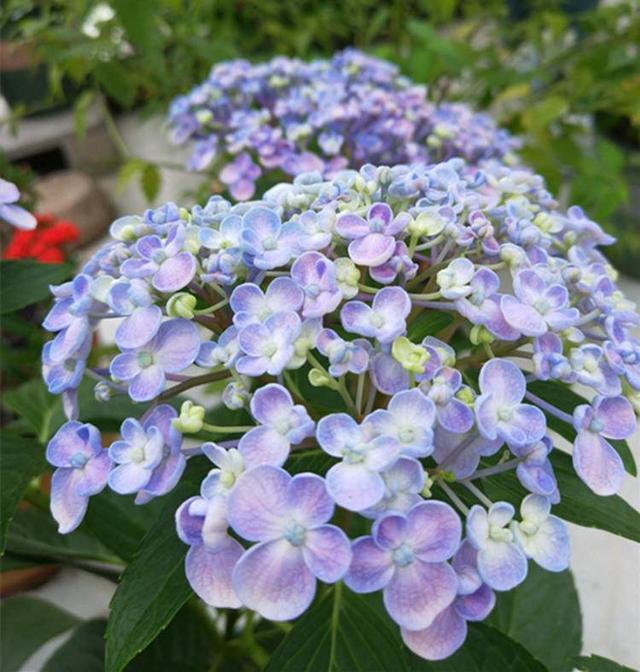
After June, having been through the test of high heat and high humidity, the hydrangeas in the garden should be just about done blooming. At this point, to help the hydrangeas bloom even more profusely and produce even bigger flower balls next time, gardening friends need to do 2 things well.
These 2 things are pruning the hydrangeas after flowering, and using the pruned branches for cuttings. Below is a detailed explanation of how to carry out these 2 things.
The first: pruning
If hydrangeas are pruned in time after flowering, they will generally sprout and bloom again about a month later. Pruning hydrangeas is very simple: gardening friends know that hydrangea flowers can keep blooming for a long time, but if you notice new leaf buds already growing below, that is the time to cut off the flowering branches.
This is because the new leaf buds need plenty of nutrients and sunlight, and if gardening friends never prune, it may delay the next round of blooming. Generally when pruning, cut off the first flower ball, at a position above the leaf bud; then cut off the second flower ball, at the same position as the first flower ball. If pruning a branch, simply cut off the flower and the pair of leaves below it.
In addition, after cutting off all the hydrangea flower balls, gardening friends also need to cut off all leaves with withered or yellow edges and clear the weeds from the pot. Then, after pruning, give the hydrangea a top dressing, using a general-purpose organic liquid fertilizer for flowers, diluted 50 times with water, slowly pouring it into the roots along the edge of the pot, doing this once every 7 days; the pruned plant will quickly sprout and bloom.
The second: cuttings
Do not waste the hydrangea branches cut off during pruning. Use them for cuttings; in the high heat and high humidity environment of June, this is very favorable for hydrangea cuttings to take root, and they are even easier to keep alive than rose cuttings. The specific method of taking cuttings is as follows:
Gardening friends, prepare a flower pot and a moist cutting medium. Generally vermiculite, perlite and a small amount of peat, or no peat at all. Then choose the branches; generally branches that have flowered and have no leaves are not suitable for cuttings; branches that have flowered and have leaves and buds, as well as branches that have not flowered and have terminal buds and leaves, can all be used for cuttings.
Cut these selected branches into sections of 1-2 nodes each, trim the lower leaves, cut the upper leaves in half, and the terminal buds can be kept completely. For trimming the hydrangea leaves on the cutting branches, the method is to fold the leaf once, and it can be simply cut in half.
Next, use a wooden stick to make a small hole in the surface of the potting soil, insert the cut hydrangea branches, and cut the other branches' leaves into suitable cuttings in the same way; after the cuttings are done, water thoroughly. Place the hydrangeas in a spot with scattered light and keep the soil moist; if the weather is dry, you can spray some water with a spray bottle, and they will take root in 3-4 weeks. Once white roots grow out from the bottom of the pot, they can be divided and potted up.