Water propagation of roses has many benefits; master this technique and your balcony becomes a garden in no time
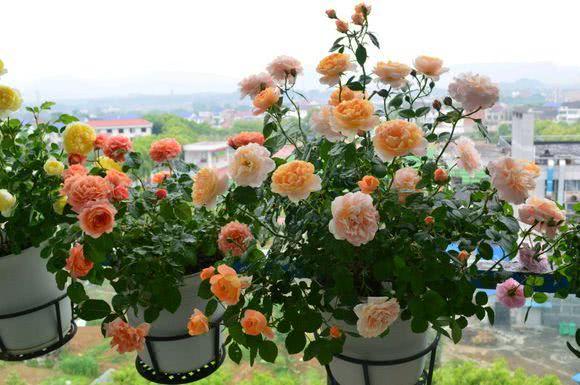
Red as applied vermilion, white like plain jade, yellow as if silk brocade, purple like gemstones, a riot of color! Indeed, as an ornamental flower we love so much, the rose (Rosa chinensis) deserves so many beautiful adjectives. In recent years, as the planting craze keeps heating up, roses have entered countless homes and become the darling of many gardening enthusiasts. In the past, however, when growing roses we were mostly used to the more traditional potted-soil cultivation. In fact, besides this method, water propagation works quite well too, so today let us learn about it together.
Water propagation is a relatively popular method of growing roses these days, and it does have some advantages over soil cultivation. The biggest one is that roses grown by water propagation root quickly and have a high survival rate, and the whole water propagation setup looks cleaner and is more portable, making it easy to move the plant somewhere it can receive more sunlight. In short, if you do not want to keep expending effort on growing flowers, then the simple and easy-to-learn water propagation method is a good choice.
For water propagation of roses, there are usually two ways to choose a branch. First, if you do not have a rose at home but know a friend who grows roses, you can simply cut a strong branch. Second, if you do grow roses at home but want them to bloom more and more vigorously, you can choose to cut off the spent flowers after the blooming period when the flowers have withered, let the branch grow for a few days, and then cut a segment. The key to both methods is ensuring the health of the branch used.
Remove the leaf stalks at the bottom of the candidate branch, and use a sharp, already sterilized knife to cut the bottom into a slanted surface; this helps with the absorption of water and nutrients during the later water propagation. The cut branch is best inserted quickly into a prepared culture bottle filled with clean water. For the water needed, we recommend mineral water rich in trace elements; of course, this is somewhat wasteful, and a compromise is to use tap water that has been left in the sun for a full day, since on one hand it also contains quite a few trace elements, and on the other hand the chlorine in it has been fully dissipated by the sun exposure, so it will not cause too many side effects for the subsequent cultivation of the rose.
The cutting can be inserted 1/3 of the way into the water. To reduce water evaporation from the leaves, some leaves can be trimmed off. The branch from water propagation should not be exposed to light immediately; it can be placed in a cool spot for a while, and the benefit of doing so is that it can root quickly. Of course, if your home has excellent lighting conditions and it is hard to set up a shady area, the editor also has a trick: when choosing the culture bottle, you can use a dark-colored bottle, or simply shade the bottle with cardboard, and the effect is also very good.
When the temperature is high, change the water once a week. At a temperature of 15-25°C, roots will grow in only about 20 days. Once the young roots grow to 1-2 cm long, the plant can be transplanted into a pot. Because the young roots grew in water, to help them adapt to the environment, water once a day at the start of transplanting, then gradually reduce this. After shading for one week, it can be exposed to sunlight in the morning and evening, and it will survive.