Succulent leaves wrinkled? Keep watering like this and they won't survive 3 days
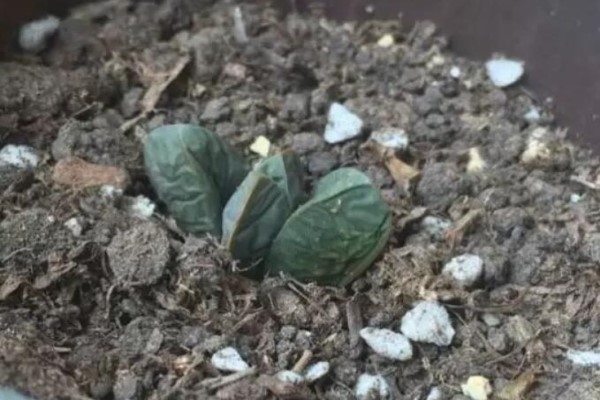
Why do succulents wrinkle
Wrinkled leaves in succulents mean lack of water, but watering doesn't help, and instead speeds up the succulent's death... what exactly is going wrong?
1. Not enough water, the leaves can't drink their fill
In summer everyone waters succulents cautiously, afraid that a dormant succulent will be drowned, so they only give a tiny bit of water. Add the high temperature and fast evaporation, and the water evaporates before it even reaches the soil.
2. Soil isn't breathable, roots can't absorb water
Many growers use peat soil or garden soil to plant succulents, which is neither breathable nor permeable. The succulent's roots dry out too, so even if you water, it can't absorb it, and watering more only makes them rot.
3. Pots evaporate quickly, water dries up immediately
The fastest-evaporating pot is a terracotta pot. Although it's fairly breathable, in summer on a balcony or other ventilated spot it evaporates very fast and can't hold water.
4. Water on the leaves, sunlight focuses and burns the succulent
Many growers are in the habit of watering onto the leaves, thinking it lets the leaves drink water faster. But in summer the light is strong, and a water droplet on a leaf acts like a magnifying glass, focusing sunlight onto the leaf, instantly burning it and leaving a purple scar.
Looking at it this way, although wrinkled leaves do mean lack of water, it's not that simple. How can you get the leaves to drink water? Hurry up and learn a few tricks.
Repot and change the soil
In summer succulents are best planted in granular soil, such as green zeolite, maifan stone, perlite, gravel (best disinfected first) and so on, mixed with a little garden soil or nutrient soil.
In summer evaporation is fast: too much water easily causes waterlogging, too little isn't enough. These small stones are not only breathable but also store water, so they protect the roots from rotting in water and keep the succulent from dying of thirst.
Growers still using terracotta pots can switch to porcelain pots, especially for small succulents - they're already so tiny, and with a terracotta pot any water you give evaporates immediately. Hurry up and change the pot.
Soak the pot in time
Once you notice the succulent's leaves are wrinkled, soak the pot right away to rescue it. Best before 10 a.m. or after 7 p.m.; at other times the temperature is too hot and soaking easily turns into "boiled succulent."
Find a plastic basin, add some water, and put the succulent in. Don't add too much water - up to 1/2 the height of the succulent's pot is enough.
Soaking the pot can quickly raise the humidity for the succulent and let the leaves drink their fill in one go, plumping up boom boom boom. It's a first-aid method.
Enclosed growing to keep in moisture
This method is more suitable for succulents with high leaf water needs, especially among the Haworthia: Haworthia cooperi, Haworthia retusa, Haworthia kiiyo and so on. Their leaves evaporate water quickly and easily shrivel and wrinkle.
Find a plastic bottle, cut it in half across the middle, and stick the upper half into the pot, covering the succulent - that makes a simple moisture-retaining mini greenhouse.
It's best to use a plastic bottle with a wide mouth, because that gives good ventilation and avoids the succulent being steamed ripe in hot weather.
The lower half of the plastic bottle can be used too - just poke a few small holes for ventilation.
For smaller succulents you can use a disposable plastic cup, preferably transparent so you can check on things in time, otherwise mushrooms will grow in there.
Enclosed growing mainly uses the greenhouse principle to raise the ambient humidity and reduce water evaporation from the succulent's leaves; in summer it also has a sun-protection function.
Misting to raise humidity
Watering succulents in summer is truly a dilemma: watering the soil risks waterlogging, watering the leaves risks sunburn. Huahua still recommends the misting method - it works well and saves trouble.
Use a small spray bottle you already have at home, preferably one with a good spray effect; cosmetic spray bottles can spray out mist-like water vapor.
Spray once above the succulents in the early morning and once in the evening. You don't need much - a 10ml bottle of water can spray a whole bunch of succulents. The main goal is to raise air humidity so the succulent's leaves evaporate less.
These methods above
Have you all learned them
If you have any other good ideas
Welcome to share them