If your leaves show this symptom, stop watering, or the plant will soon wither and die
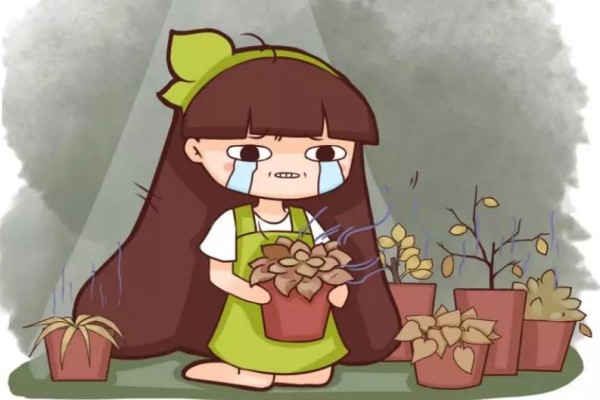
Which flowers go dormant in summer?
In summer, plant dormancy generally falls into 3 types: bulb dormancy, seed dormancy, and full dormancy.
Bulb dormancy
Bulb flowers such as narcissus, tulips, hyacinths, cyclamen, agapanthus, and lycoris need their bulbs to rest in summer.
Seed dormancy
Most annual and biennial plants use seeds as their dormant organ, such as camellias, violets, lilies, daisies, and corn poppies.
Full dormancy
Some flowers cannot tolerate high temperatures as a whole plant and enter a completely dormant state in summer, such as clivia, carnations, geraniums, fuchsias, and calla lilies, which belong to full dormancy.
Succulent dormancy
In summer many winter-growing succulents and some spring-autumn-growing succulents enter a dormant period, such as Aeonium arboreum 'Zwartkop', Haworthia cooperi, mountain roses, Sempervivum, string of coins, black claws, coral beads, and Haworthia.
How do you tell whether a plant is dormant?
During dormancy, leaves may wilt, lose their gloss, and drop, and these signs look a bit like the symptoms of illness. So how exactly do you tell whether your flowers are dormant or having a care problem?
Signs of dormancy
1. Look at leaf gloss
Observe the gloss of the leaves. If the leaves are dull and the plant is limp and wilted, and it still cannot regain its gloss after normal care for a period of time, that means it is dormant.
2. Look at the state of the roots and stems
Observe the growth state of the roots for several days in a row and check whether there are newly sprouted buds. If there are none, it means the plant is growing slowly or has even stopped, which is a sign of entering dormancy.
3. Look at signs of dehydration
Before entering dormancy, the plant's leaves gradually fall off and shrink from dehydration. If normal care still cannot improve it, that means it is dormant.
4. Look at the response to temperature
If several days of rainy weather cause the temperature to drop, and at this point the plant suddenly shakes off its usual sluggish state and gradually starts growing, that means it entered summer dormancy because of the temperature, and illness can be ruled out.
Signs of illness
Common plant problems in summer include: yellow leaves, withered leaves, falling leaves, disease spots, root rot, and pest infestation. To rule out the possibility of dormancy, you only need to observe 1 thing.
Observe the potting soil
No matter what symptoms appear on the leaves, the soil is always the first thing to go wrong, whether it is too wet, too heavily fertilized, too dry, or lacking nutrients.
1. If there is a problem with the dryness or moisture state and fertility of the potting soil, adjust it according to the plant's preferences, and after a period of normal care, see whether it can recover its health. If it can, dormancy can be ruled out.
2. If the potting soil is fine, then observe whether the leaves are infested by pests, have disease spots, black rot, and so on. If they do, it means the plant is infected by pests or disease, and dormancy can be ruled out.
Summary: To judge whether a plant is dormant, simply put, there is just one point: the process of elimination. Once you have confirmed that light, water, fertilizer, and soil are all fine, and the leaves still drop off bit by bit until they are all gone, it is basically dormancy.
Gardening fans, have your flowers gone dormant?
If there is anything else you are unclear about,
Remember to leave a comment and ask Huahua~