Learn to fertilize your rubber plant this way for thick stems and shiny leaves
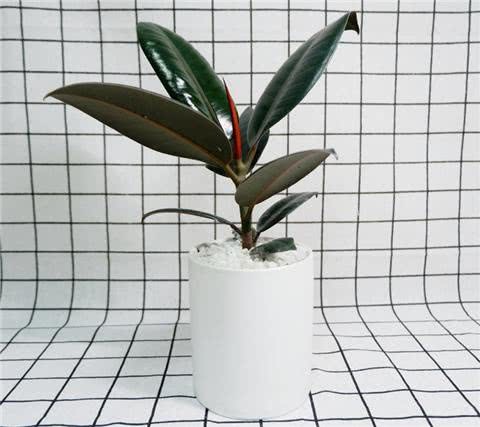
The rubber plant (Ficus elastica) is an excellent potted plant for beautifying the indoor environment. Its leaves are thick, broad and glossy, and it can also purify the air. If you want your rubber plant to grow well, you need to learn fertilizing techniques. Let's take a look below!
Rubber plant care tips:
(1). When the rubber plant is growing new leaves, its demand for nutrients is high, so fertilizer should be increased appropriately. A quick-acting compound fertilizer with balanced nitrogen, phosphorus and potassium can be used, as this provides balanced nutrition.
(2). Dilute half a bottle cap of compound fertilizer in 500ml of water. During the growing season, apply fertilizer once every 15-20 days. If no sufficient base fertilizer was applied when potting, you can increase the concentration and fertilizing frequency, applying fertilizer once every 1-2 weeks to meet the plant's growth needs. For fertilizing, you can put the fertilizer solution into a spray bottle and spray the fertilizer solution onto the plant.
(3). When fertilizing the rubber plant, do not apply too much nitrogen fertilizer, as this will cause the plant to grow leggy, and the stem nodes will grow relatively long, affecting its appearance.
(4). The rubber plant is not tolerant of raw fertilizer or concentrated fertilizer, which will burn the seedlings and damage the roots, and is not conducive to the growth of the rubber plant. During the season when the rubber plant grows slowly, after autumn begins, the rubber plant should have its fertilizing reduced or stopped.
(5). When applying organic fertilizer to the rubber plant, it can be diluted with water and then poured on; it can also be shallowly buried around the plant, avoiding the roots and stems.