Protect snow leopards: you too can do your part by following the plateau's pooper-scooper
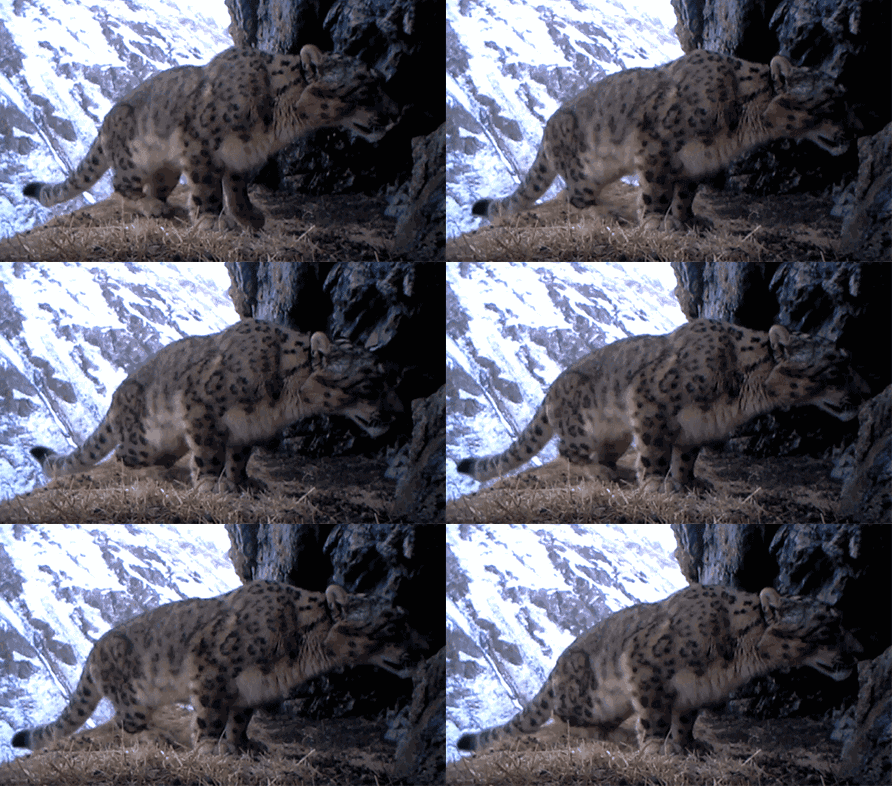
If you read the feature in the Species Calendar on June 9 aboutsnow leopards, you surely won't forget the "cross-dressing boss" snow leopard Bingbing, and you surely remember "Wild Xinjiang."
“Wild Xinjiang" is short for the "Wild Xinjiang Volunteer Team," a Xinjiang civil environmental organization dedicated to alpine ecosystem surveys and conservation. It was us who, through surveys in recent years, discovered that the metropolis of Urumqi is surrounded by snow leopards.
Wild Xinjiang volunteers photographing and documenting on cliff faces.
In snow leopard surveys, two things fascinate us most. The first iscapturing traces in the wild--footprints, feces, suitable cliff walls. Through these traces, we know for certain that a snow leopard has been here, and just thinking about it excites us. The second iscomparing data at home, identifying individual snow leopards by their unique coat patterns. Only on this basis can we know how many snow leopards live in a given area and distinguish and record each individual's behavior.
Looks simple? In fact, when actually comparing the data, it looks like the image below:
After a heavy snowfall, we're the first to rush up the mountain, following freshfootprints, walking the path the snow leopard walked, gazing at the mountain it guards.
Snow leopard footprints: not just observed, but documented with data such as track size.
Sometimes,Lady Luck smiles on us--just after panting our way up a small slope, we come across snow leopardfeces。
Snow leopard feces. The bones inside excite us--this fellow has been eating well lately.
On its own turf, a snow leopard scrapes the ground back and forth with its hind paws (as shown in the first image of this article). This is one way theymark their territory. This behavior creates a small mound of earth, commonly known as a "scrape”。
After scraping, they also post to their social feed and pee: "Hey, this place, I've been here."
Based on the information the traces provide, we can more accurately plan and set up infrared cameras. The infrared cameras recordimage data, and we can then identify them by each individual'scoat patterns.
Snow leopard images captured by infrared cameras.
Wild Xinjiang volunteersanalyze snow leopard activity routes by finding their traces, and identify individual snow leopards by their coat patterns; combining all the information, we analyze whether the snow leopards are doing well, and also whether the alpine ecosystem of our water source areas is healthy. This kind of work ismeaningful and fun。
We want more people to learn about snow leopards, and we also want toshare the happiness of encountering the plateau's big cat, so we designed thischarity gift box:
Come, let's protect togetherthe snow realm's big meow
Each charity gift box includes:
"Leopard Trace" mug x 1
"Leopard Paw" bracelet x 1
"Leopard Cute" necklace x 1
Uniquely coded donation certificate x 1
Half the mug body shows the pattern-covered back
The other half shows the snowy white belly
The bottom of the mug also hasan adorable paw print
With a mug in hand, "leopard" happy
Necklace and bracelet lengths are adjustable
Ceramic material,purely handmade
Every product is one of a kind
Plus an exclusive donation certificate
Funds raised will go toward snow leopard research and conservation
For yourself or as a giftboth are meaningful
Meet the snow leopard
It starts with pressing and holding this QR code