Planting Performance and Cultivation Techniques of the Water-Saving and Drought-Resistant Rice "Hanyou 73" in Anxiang County
Performance and Cultivation Techniques of the Water-Saving and Drought-Resistant Rice "Hanyou 73" in Anxiang County
In Anxiang County, Hunan Province, the prices of cash crops such as cotton and vegetables are currently declining, and they are not suitable for mechanized operations, resulting in low economic returns, while the market for rice cultivation is relatively good. Many farmers want to convert dry land into paddy fields, but they worry that the water supply cannot be guaranteed. Under such circumstances, planting water-saving and drought-resistant rice is a best-of-both-worlds solution. Anxiang County introduced dry rice for trial planting in 2009, and by 2017 had cumulatively planted 366.7 hm2 of dry rice, with an average yield of about 400 kg per 667 m2, and some farmers exceeding 500 kg, while its water requirement is only 30%-50% of that of ordinary rice, comparable to the water requirement of corn, and in Anxiang County rainfall alone can basically meet the water demand. This article introduces the performance and cultivation techniques of the water-saving and drought-resistant rice "Hanyou 73" in Anxiang County as follows:
1 Characteristics of Hanyou 73
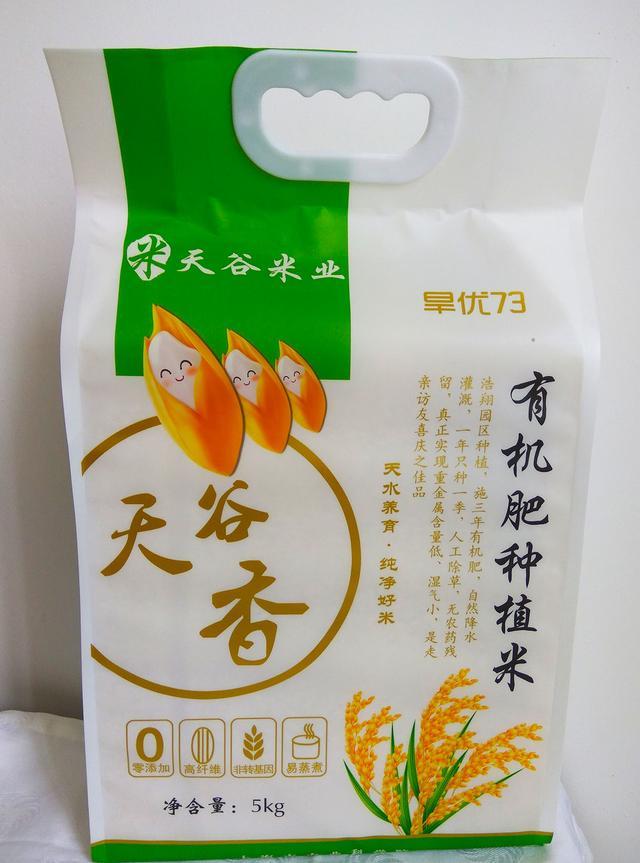
"Hanyou 73" is a new water-saving and drought-resistant rice variety jointly developed by the Shanghai Agrobiological Gene Center and Shanghai Tiangu Biotechnology Co., Ltd., with approval number 2014024. This variety is an indica medium-maturing variety, with drought resistance grade 1, a full growth period of 123 d, an average plant height of 105 cm, a panicle length of 26 cm, 190,000 effective panicles per 667 m2, 137 grains per panicle under water seeding and dry management, a seed-setting rate of 86%, a 1000-grain weight of 27 g, and a length-to-width ratio of
3.3. It has a compact plant type, strong tillering ability, thick and sturdy stems, slightly broad and large leaves, high resistance to bacterial leaf blight and rice false smut, moderate resistance to rice blast, and good coloring at the late stage. Its grain quality meets the national high-quality rice standard grade three.
2 Planting Performance of Hanyou 73 in Anxiang County
In 2015, the author introduced the water-saving and drought-resistant rice "Hanyou 73" for trial planting in Group 4 of Lianmeng Village, Chenjiazui Town, with an area of 1,668 m2 and an average yield of 650 kg per 667 m2. In 2016, the author demonstrated the cultivation of "Hanyou 73" on 6.7 hm2 at the Tangjiagang Village base in Anquan Township, with an average yield of 510.5 kg per 667 m2.
3 Key Points of Cultivation Techniques
3.1 Land Preparation
All dry land must have field ridges built to retain water.
3.1.1 Water seeding and dry management. After waiting for rain or irrigation, level the entire field with a rotary tiller, then manually and evenly sow the pre-germinated seeds (with the hull split and the white radicle exposed).
3.1.2 Dry seeding and dry management. First rotary-till and level the dry field, mix the seeds (with the hull split and the white radicle exposed) with a seed coating agent, then sow manually, and finally use a rotary tiller to shallow-till and cover the seeds.
3.2 Fertilizer and Water Management
Before rotary tilling the dry field, apply 50 kg of ammonium bicarbonate and 50 kg of calcium superphosphate per 667 m2, or 40 kg of compound fertilizer, and a certain amount of organic fertilizer may be added. At the 2-3 leaf stage, apply tillering fertilizer as a topdressing according to the seedling condition; urea or compound fertilizer may be used for the topdressing.
3.3 Sowing Time and Sowing Rate
This variety can be sown in Anxiang County (northern Hunan region) from May 5 to June 15. For water seeding and dry management, sow 2 kg of seeds per 667 m2; for dry seeding and dry management, sow 2.5 kg of seeds per 667 m2.
3.4 Chemical Weed Control
3.4.1 Pre-emergence weed control. Pre-emergence weed control means applying a closed herbicide. 1-2 d after sowing, use 125 mL of Bamianchu (butachlor) plus 30 g of bensulfuron-methyl per 667 m2, dilute with 30 kg of water, and spray. For dry seeding and dry management, underground pests such as cutworms must also be controlled; add Mieshaoli or a specialized pesticide for controlling underground pests to the above agents.
3.4.2 Weed control at the tillering stage. At the three-leaf-one-heart stage, use 100 g of Hanqiuhao or 100 mL of Weidaofu per 667 m2, dilute with 30 kg of water, and spray.
3.5 Pest and Disease Control
Focus on controlling pests and diseases such as rice thrips, rice leaf roller, striped stem borer, planthoppers, sheath blight, and rice blast. At the 2-3 leaf stage, use 40 g of 10% imidacloprid per 667 m2, dilute with 30 kg of water, and spray to control rice thrips. At the tillering stage, use 2 packets of Daoteng per 667 m2, dilute with 30 kg of water, and spray to control rice leaf roller. At the booting stage (about 25 d after the previous application), use 2 packets of Daoteng + 10 g of thiamethoxam and pymetrozine + 10 g of Amimiaoshou per 667 m2, dilute with water, and spray 1-2 times to control leaf roller, striped stem borer, planthoppers, sheath blight, etc.