Effects of plant growth regulators and substrates on the cutting rooting of three feijoa (Acca sellowiana) cultivars
Effects of plant growth regulators and substrates on the cutting rooting of three feijoa (Acca sellowiana) cultivars
Funded by: Sichuan Provincial International Science and Technology Exchange and Cooperation Program (2014HH0053); Sichuan Provincial Science and Technology Support Program (2015FZ0042); Sichuan Provincial Department of Education Achievement Cultivation Program (11zd1121).
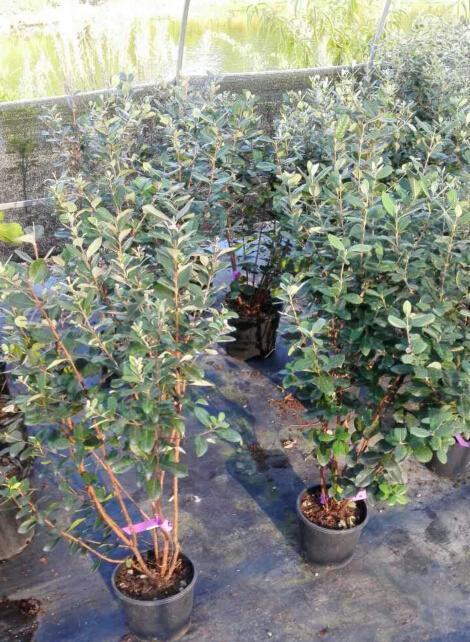
Feijoa (Acca sellowiana) originated in Brazil, Argentina, Chile and other countries. It is a perennial subtropical evergreen shrub, with green canopy and fruit and red flowers. It is a food and ornamental tree species with great development potential, and the main producing countries at present are New Zealand, France and Australia; in recent years, China has begun to introduce and cultivate it, with a small amount of planting in the Jiangsu-Zhejiang region as an ornamental tree species. Cutting is one of the vegetative propagation methods,
and has the advantages of ensuring the superior traits of the mother plant and saving time costs; there are many factors affecting feijoa cutting rooting, such as temperature, plant growth regulators, substrate, and the part from which cuttings are taken.
Autumn temperature and humidity are relatively moderate. When cuttings pass through the low-temperature environment of winter, the synthesis of phenolic compounds in the branches is inhibited, which is conducive to root formation and growth; studies by Jiang Ling et al., Zhang Meng et al., He Shenggen et al. found that plant growth regulators can promote adventitious root formation; the cutting substrate should have good air permeability and water retention, such as vermiculite and a mixed substrate of leaf mold. Wang Xun et al. used a full-light timed mist control system, achieving a feijoa cutting seedling rate of 81%; Zhang Meng et al. and Deng Wentao et al. treated feijoa softwood shoots with plant growth regulators, and the rooting rates reached 88% and 95.2%, respectively. Most subtropical regions of China can introduce this fruit tree. Most of the Sichuan Basin is located in the subtropics, and its environmental conditions are close to or the same as those required for the growth and development of feijoa, so it has the basis and conditions for successful introduction [Jishan Huayao]. The feijoa project team of Southwest University of Science and Technology began feijoa introduction work in 2004 and successfully introduced 16 feijoa cultivars from New Zealand. To date, it has conducted systematic research on their introduction adaptability, growth and development patterns and biological characteristics after introduction, and propagation techniques. This experiment used 1-year-old semi-lignified branches as cuttings to study the effects of different cultivars, plant growth regulators and substrates on feijoa cutting rooting, screen out cultivars that root easily and their suitable plant growth regulators and substrates, and form a supporting feijoa propagation technique, providing a reference for the introduction, promotion and large-scale planting of feijoa.
1 Materials and methods
1.1 Experimental site and materials
The experiment was conducted in the experimental greenhouse of the Longshan Teaching and Research Practice Base of Southwest University of Science and Technology in Mianyang City, Sichuan Province. The top of the greenhouse was covered with a shade net with 50% light transmittance. The seedling bed was a square pool built with bricks, 0.40 m high and 2 m long and wide, with drainage holes at the bottom of the pool. The air humidity in the greenhouse was maintained at about 80%. During the experiment, the average temperature in the greenhouse was 21-23°C, the average temperature in September was 24°C, and the temperature in December was 19-20°C.
Five-year-old feijoa trees of 3 cultivars from the Facility Agriculture Experimental Base of Southwest University of Science and Technology were selected as mother plants. On September 15, 2016, healthy, pest- and disease-free 1-year-old semi-lignified branches were used as cuttings. The cuttings were 8-10 cm long and retained two nodes. The morphological upper end of the cutting retained two opposite leaves, both cut into half-leaves, the upper cut was made with a flat cut, and the lower end was cut obliquely at 0.2-0.3 cm below the lower leaf. After cutting, the greenhouse humidity was maintained at
70%~80%。
The plant growth regulators included indoleacetic acid (IAA), indolebutyric acid (IBA), and rooting powder (ABT). The IAA concentration was 500 mg/L, and the IBA and ABT concentrations were 1,000 mg/L. IAA and IBA were produced by Chengdu Kelong Chemical Reagent Factory, and ABT was produced by the ABT Research and Development Center of the Beijing Academy of Forestry Sciences. The cutting substrates were vermiculite, leaf mold + vermiculite mixture (volume ratio 1:1), and leaf mold + perlite mixture (volume ratio 1:1).
1.2 Methods
Three factors were set: cultivar, plant growth regulator and substrate, with 3 levels for each factor, using an L9(33) orthogonal experimental design (see Table 1), with 3 replicates per treatment and 40 cuttings per replicate. The cuttings were soaked in different concentrations of plant growth regulators for 2 min and then inserted into the substrate, with a cutting spacing of 3 cm x 3 cm. Two months after cutting, when transplanting the cuttings, the rooting rate, root length, root number and rooting type of the cuttings were measured and recorded, and statistical analysis was conducted. The rooting rate was arcsine-transformed before analysis of variance, analyzed with SPSS 22.0 statistical software, and multiple comparisons were performed using the SSR method.
Table 1 Factors and levels of feijoa cutting
2 Conclusions and discussion
The experimental results showed that feijoa cultivar, plant growth regulator and substrate are important factors for the survival of cutting rooting. Cultivar had the greatest effect on rooting rate and root number. Gemini had the highest rooting rate, Unique had the largest average root number, and substrate was the most important factor affecting average root length. Under the conditions of soaking branches in ABT 1,000 mg/L for 2 min and using leaf mold + perlite as the substrate, Gemini had the highest rooting rate, reaching as high as 56.67%. After treatment with the 3 factors, Unique showed only bark rooting, while other cultivars, in addition to bark rooting, also had callus rooting. This indicates that feijoa cutting rooting is mainly bark rooting. In the experiment, the cultivar with the best cutting rooting effect was Gemini, followed by Unique; the most suitable plant growth regulator and its concentration was ABT 1,000 mg/L; the most suitable substrate for Gemini was leaf mold + perlite, and the most suitable substrate for Unique was leaf mold + vermiculite.