The cut-end treatment of collected bonsai stumps is crucial, do not overlook it
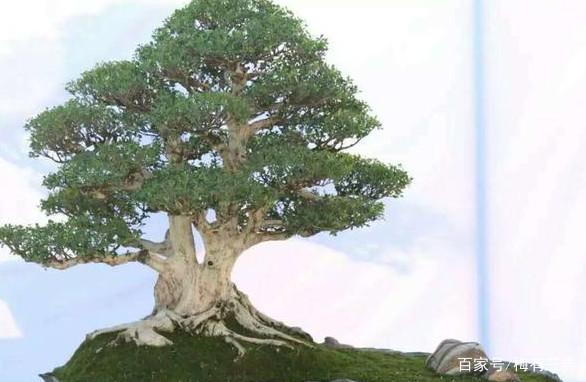
As a progressively refined consumer product, bonsai is becoming increasingly popular. Bonsai is not suited to hand strings, nor to stone tools or jewelry products. Bonsai is a living plant. Wild plants in their original state have formed their developmental habits over a long period. On ordinary days they have strong storage capacity and strong disease resistance. We remove them from their original environment, changing the original light, humidity, pH and humidity, and the plant should unfold and must adapt to this process.
Plant protection is the foundation of bonsai. Without this premise, bonsai design, plastic board binding techniques, artistic conception searching and so on become nonsense.
Whether it is bonsai material or nursery material, the cutting of stumps is often overlooked. In the processing of bonsai raw materials, cutting and trimming are the most important. If both aspects are handled well, the survival rate of potted material can double.
1. The cutting basics of bonsai raw materials
A plant has two parts, the roots and the roots of the leaves. If you want to grow a good plant, you must taste the relationship between its roots and its branches and leaves. There are four formulas to summarize this relationship: "mutual nourishment of the head, appearance, deployment and balance, and anatomical symmetry."
The first three sentences are very casual. The best sentences are those of people who play with bonsai. We can know how long the roots are. When we handle bonsai raw materials, there are few roots, especially in some mountain materials. The original roots are not there, but the branches and leaves are random.
The roots are small, the branches are all there, and the plant has already died. The reason is that the plant's original balance has been broken, and the root system cannot provide enough nutrition for the branches and leaves, so they cannot start.
Because roots and branches and leaves are closely related. For example, when the branches and leaves of a plant fall off (that is, one side is fertile and the other is indifferent), the roots below the plant are strong on the front side, while the other side is weak and feeble.
At this point, we must acknowledge the relationship between roots and branches and leaves.
One is to prune the disconnected branches and leaves, cutting with large scissors for one year, one weak branch and one thin bud, cutting out a weak branch, a strong branch and a strong bud in the mouth.
The second is to provide inappropriate fertilizer and water to the root system, and on the other hand, to develop less potential fertilizer and use more fertilizer on the weaker potential side. In this way, strength can be reinforced to balance the weak.
According to these characteristics of the plant, bonsai raw materials must be handled with rough hands and New Year's Eve scissors.
Let us take this as an example of pruning boxwood.
Figure 1: The current state of the dug boxwood
Figure 2: The first pruning and potting