Encounter these 2 harms when growing orchids in summer, and the orchids are prone to spoiling
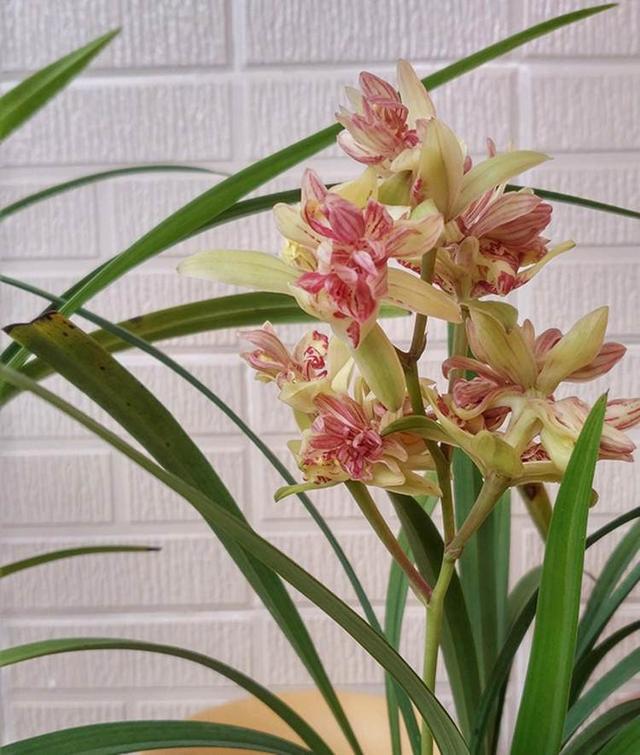
In summer, amid the muggy heat, the weather grows more and more intense, feeling just like a steamer. And for a precious flower like the orchid, summer is a kind of torment. If you are even a little careless with care, problems can easily arise, especially these "2 harms"; if you encounter them and do not take measures in time, blooming orchids are prone to spoiling.
1. Fertilizer harm
The symptoms of fertilizer harm in orchids mainly appear in two ways: on the leaf surface and at the roots. Leaf fertilizer harm usually occurs when a concentrated fertilizer is applied to the leaves; combined with hot, dry weather, the water on the leaf surface dissipates quickly, raising the concentration of the fertilizer solution inside the leaf and burning the orchid leaves. In severe cases, yellow patches with loss of green color appear on the leaf surface.
Once leaf fertilizer harm occurs, it is very difficult to remedy. Therefore, when applying foliar fertilizer, it is better to use it weak rather than concentrated. It is recommended to use a liquid fertilizer specially made for orchids, diluted 1000 times for spraying leaves and 500 times for watering roots, once a week. When spraying foliar fertilizer, do not spray it into the leaf core, and then there will be no problem of rotten roots and rotten leaves.
Root fertilizer harm usually appears as rotten roots and hollow roots after applying concentrated fertilizer. After fertilizer harm occurs to orchid roots, the orchid must immediately be taken out of its pot for handling. Soak the orchid roots in clean water for 2 hours, let them dry, then replace with new orchid-specific growing medium and repot; then place the orchid pot in clean water and soak for 1 hour, using dilution to wash away part of the fertilizer and lower the concentration. If this happens in a high-temperature season unsuitable for repotting, just place the original pot in running clean water and soak for 1 hour.
2. Water harm
At noon in summer, it is often hot and dry. At this time, when the temperature exceeds 32°C, the orchid's stomata begin to close, and it basically enters a dormant or semi-dormant state, stopping normal metabolism. If growers spray water on orchid leaves at this time, the leaf stomata have already closed, and the ability to absorb water declines; therefore, it cannot relieve the transpiration of water from the orchid leaves.
Spraying water at this time increases environmental humidity, and under high temperature and high humidity, pathogens are very easy to breed; if water gets into the leaf core, it can very easily cause rotten cores and collapsed seedlings, and even cause soft rot. Moreover, the water droplets sprayed on orchid leaves are like convex lenses; sunlight shining on the orchid leaves will focus, and the focal point will concentrate solar energy, thereby scorching the orchid leaves.
At this time, black spots easily appear on the orchid leaf surface, and the diseased spots are highly susceptible to pathogen infection, causing disease in the orchid as a result. Therefore, at noon in summer, growers must be careful not to spray water on orchid leaves. It is enough to sprinkle water around the orchid, and do not spray it onto the leaf surface.