Utilization Value of the Chinese Honeylocust (Gleditsia sinensis) and Its Seed Sowing, Seedling Raising and Cultivation Techniques
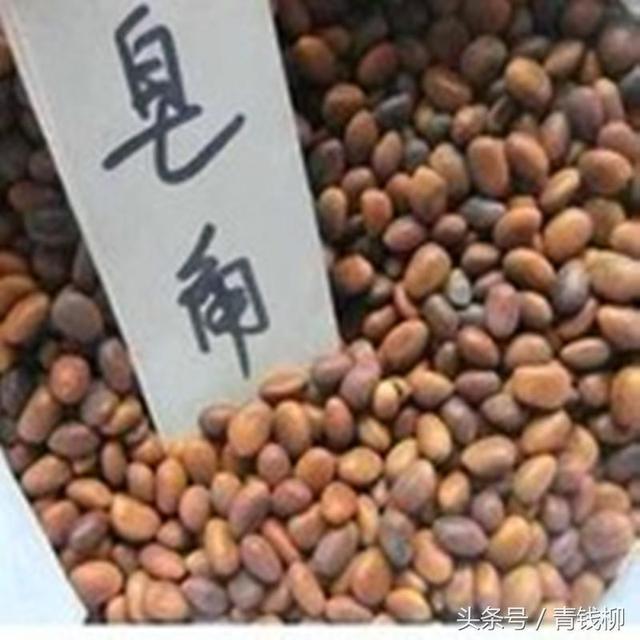
What utilization value does the Chinese honeylocust (Gleditsia sinensis) have? Seed sowing, seedling raising and cultivation techniques of Gleditsia sinensis
1 Ecological habits and distribution of Gleditsia sinensis
Gleditsia sinensis likes light and is slightly shade-tolerant; it prefers a warm, humid climate and deep, fertile, suitably moist soil, but it is not demanding about soil and can grow normally in calcareous soil, saline-alkali soil, and even clay or sandy soil. Gleditsia sinensis grows slowly; its flowering period is April to May, and its fruit ripening period is October. It takes about 6-8 years of vegetative growth before it can flower and bear fruit. Its lifespan is very long, reaching six or seven hundred years, and its fruiting period lasts for several hundred years. Gleditsia sinensis is native to the Yangtze River basin of China and is extremely widely distributed, from northern to southern and southwestern China. It mostly grows in plains, valleys and hilly areas, and in warm regions it can be found at elevations of 1600 m.
2 Value of Gleditsia sinensis
Every part of Gleditsia sinensis is useful. The seeds, thorns, pods, root bark, leaves, tender tips and wood of the whole tree can all be developed and utilized. It is an important raw material for the light chemical industry, food industry and medicinal use. At the same time, it can also serve as a tree species for ecological environment forests, urban and rural landscape forests and raw material forests.
2.1 Economic value.Gleditsia sinensis seeds are rich in galactomannan gum and protein components. Because of its unique rheological properties, galactomannan gum is used as a thickener, stabilizer, adhesive, gelling agent, flotation agent, flocculant and dispersant, and is widely used in petroleum drilling, food and medicine, textile printing and dyeing, mining and ore dressing, military explosives, daily chemicals and ceramics, architectural coatings, wood processing, papermaking, pesticides and other industries. The gum content of the seeds is as high as 30%-40%, and the protein content in the processing residue of Gleditsia sinensis after gum extraction is higher than 30%, so it can be used to make feed raw materials or to extract green protein. Gleditsia sinensis beans are rich in crude protein and polysaccharides, and their oil content exceeds that of soybeans. The wood of the Gleditsia sinensis tree is solid, rot-resistant and wear-resistant, yellow-brown or mixed with red stripes, and can be used to make handicrafts and furniture.
2.2 Medicinal value.The pods, seeds and branch thorns of the Gleditsia sinensis tree can all be used as medicine. The pods used as medicine can dispel phlegm and promote urination; the seeds used as medicine can treat ringworm and relieve constipation; the thorns used as medicine can invigorate the blood and treat sores and ringworm. The fruit and seeds of the Gleditsia sinensis tree are used as medicine. Gleditsia sinensis contains triterpenoid saponins (gleditsioside, gleditsia saponin), tannins, ceryl alcohol, nonacosane, stigmasterol, sitosterol, etc. It has the function of dispelling phlegm and inducing resuscitation. The saponins contained in Gleditsia sinensis are triterpenes and oligosaccharides, and have anti-inflammatory, anti-ulcer and anti-pathological-change effects, as well as effects such as resisting cancer and improving immunity in AIDS. The roots, stems and leaves of Gleditsia sinensis can be used to produce traditional Chinese medicine oral liquid for clearing heat and detoxifying.
2.3 Ecological value.The Gleditsia sinensis tree is an ecological and economic tree species. It is drought-tolerant and water-saving, with a well-developed root system, and can be used for shelterbelts and soil and water conservation forests. The Gleditsia sinensis tree is heat-tolerant, cold-tolerant and pollution-resistant, and can be used for urban and rural landscape forests and road greening. The Gleditsia sinensis tree has comprehensive value such as nitrogen fixation, wide adaptability and strong stress resistance, and is the preferred tree species for returning farmland to forest. Using Gleditsia sinensis to establish grassland shelterbelts can effectively prevent damage by livestock, and it is a preferred tree species for combining forestry and animal husbandry.
3. Seed sowing, seedling raising and cultivation techniques of Gleditsia sinensis
3.1 Seed collection.The fruit ripening period of Gleditsia sinensis is in October. After the fruit ripens, it remains on the branches for a long time and does not fall naturally, but it is easily attacked by insects, so it should be collected in time. Use a hook knife or branch shears to pick it off. The 1000-seed weight is about 450 g, and 1 kg of seeds contains about 2200 seeds. The seed coat is relatively thick, and germination is slow and uneven, so before sowing, treatment and germination promotion are necessary. The method is: more than one month before sowing, soak the seeds in water. Change the water once every 5-7 days so that the seeds fully absorb water and the seed coat softens, and sow after the seed coat cracks. Alternatively, in late autumn or early winter, put the cleaned seeds into water, and after they fully absorb water, take them out and mix them with wet sand for storage and germination promotion; in the following spring, after the seeds crack open, sow them. This traditional water soaking method is labor-intensive and ineffective. In seed treatment, we explored the method of soaking with 98% concentrated sulfuric acid, which works very well. Before germination promotion, soak the Gleditsia sinensis seeds in 98% concentrated sulfuric acid for 50 minutes, then take them out and rinse them with clean water. Then, add warm water and soak for 24 hours; after all the seeds have fully absorbed water, germination can be promoted.
3.2 Seedling raising.About 5 days before sowing, carry out seed treatment. First pour 70-80°C hot water into the seed soaking container, then pour in the seeds, stirring while pouring, taking care to stir evenly, and let it cool naturally. When soaking seeds, the volume ratio of seeds to water is suitably 1:3. After soaking for one day and one night, use a sieve to select the swollen seeds for germination promotion, and treat the remaining seeds again by the same method. For seeds being germinated, first spread a straw mat underneath, then cover with a layer of straw mat on top. Turn the seeds 1-2 times every day, sprinkle water appropriately, and keep the seed coat moist. Choose a seedling site with fertile soil and convenient irrigation, carry out careful soil preparation, apply 3000-5000 kg of organic fertilizer per mu, and build a flat seedbed or raised seedbed. Drill sowing: with a row spacing of 20-25 cm, sow 10-15 seeds per furrow, cover with soil 3-4 cm thick after sowing, and keep the soil moist regularly.
Sowing is best done in spring, generally in early May. Each mu requires 13-15 kg of seeds. 5-6 days before sowing, first irrigate the seedbed and wide ridges with enough bottom water, and after the surface has dried in the shade, sowing can begin. Ridge sowing: along the direction of the ridge, open a long furrow 8-10 cm deep on the ridge surface for sowing; seedbed sowing: every 15 cm, open a strip furrow 6-8 cm deep across the seedbed for sowing. After sowing, cover with soil in time, 3-4 cm thick.
After sowing, irrigate at the proper time, loosen the soil and weed in time, and apply urea once in early July, using 10-15 kg per mu. When the seedlings are 5-6 cm tall, thin them, leaving 15-20 seedlings per meter, and after thinning, irrigate and loosen the soil in time. Before and after the seedlings emerge, promptly control underground pests such as mole crickets. When the seedlings have just emerged, strictly prevent the seedbed surface from crusting, so as to avoid burning the tender seedlings.
Because the seedlings emerge unevenly, during the seedling emergence period, intertillage and soil loosening cannot be carried out; only a rake can be used to gently loosen the surface soil, so as to avoid damaging the young shoots that have not yet emerged. When the seedlings are about 10 cm tall, carry out thinning and final spacing, with a plant spacing of 10-15 cm. From June to August, the seedlings grow quickly, so irrigation and topdressing should be carried out at the proper time and in the proper amount according to the weather and seedling growth conditions, while also paying attention to controlling aphids. In the same year, the seedling height can reach 50-100 cm. For "four-side" greening, 2-year-old large seedlings can be cultivated; after the leaves fall in late autumn, transplant them to a new bed at a row spacing of 0.5 x 0.5 m. In addition to strengthening water and fertilizer management and controlling pests and diseases, transplanted seedlings should also have their buds wiped and branches pruned in time to promote straight growth of the seedling trunk and cultivate large seedlings with a full crown.
3.3 Cultivation techniques.Gleditsia sinensis grows relatively slowly, so sites with fertile and moist soil should be chosen for afforestation. For "four-side" greening or scattered planting, the plant spacing can be 3-5 m. The size of the planting holes depends on the size of the seedlings and the cultivation purpose; generally, large holes of 0.7-1 m are better. After planting, irrigate in time to ensure survival. After 2-3 years, pruning should be carried out to promote rapid growth of the main trunk, and attention should be paid to controlling pests such as scale insects.
Propagation by sowing. Because the seed coat is thick and germination is slow and uneven, the seeds must be soaked before sowing, and then stratified with wet sand to promote germination. Before the seedlings emerge, attention should be paid to controlling underground pests such as mole crickets.
Gleditsia sinensis requires no chemicals for cultivation and management, has a long tree age, grows quickly, is drought-tolerant and water-saving, fixes nitrogen, and because its trunk has thorns, it is not gnawed by livestock. It is an ecological and economic tree species for returning farmland to forest.