What are the basic procedures for the training and pruning of landscape trees?
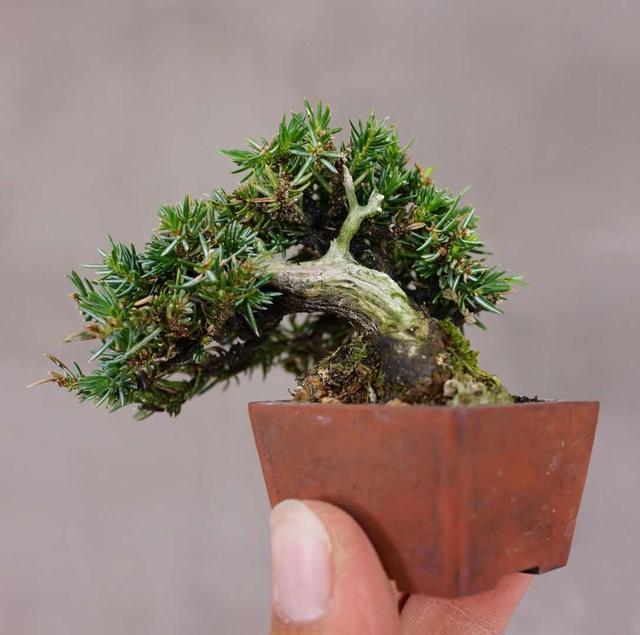
Procedures for the training and pruning of landscape trees
(1) Before climbing the tree, first observe the overall tree form. During pruning, try to keep the tree form unchanged.
(2) Remove dead branches, diseased and pest-infested branches, etc.
(3) Remove the small twigs on the large and medium branches; when retaining them, the distance between every two small twigs must not be less than lm.
(4) Follow the order of pruning from top to bottom, from large to small, and from inside to outside: ① Select a branch fork with relatively good growth vigor and a relatively upright direction as the main tree leader to retain; the surrounding branch forks must not be higher than the main tree leader. ② Remove crossing branches, parallel branches, overlapping branches, overly dense branches and surplus large branches in order from top to bottom. Try to follow the principles of: "a. remove the inferior and keep the good, b. remove the old and keep the new, c. remove the lower and keep the upper". When removing branch forks, the overall tree form must not be affected and it must not be too sparse; if there are residual branches that affect the tree form, they may be retained and removed after new branches grow out next year.
(5) On the retained large branches, remove the medium and small branches: ① Remove inner branches and retain outer branches; remove branches growing inward and retain branches growing outward. ② Remove upper-side branches and lower-side branches (medium and small branches growing upward and downward) and retain parallel branches as much as possible. ③ Remove crossing branches, overlapping branches and parallel branches. ④ When removing thick branches and retaining thin branches, cut beyond the point of attachment; when removing thin branches and retaining thick branches, cut close to the point of attachment. ⑤ Between the upper large branches and the lower large branches, light and air must penetrate and layers must be distinguished; the pruning amount may reach 1/3 to 3/5, so that all retained small branches can obtain sufficient nutrients. ⑥ Using the shortest branch as the baseline, prune the large branches from top to bottom; overly long branches should be cut back so that the whole large tree maintains a round shape, appearing like an "umbrella" from a distance. ⑦ When pruning into a clump tree, the entire clump can be treated as one large tree for pruning, and internal branches should be removed as much as possible so that the whole clump maintains a round shape in appearance.
In summary, it is "one know, two look, three prune, four take away, five protect". One know means the pruning personnel must know the quality requirements and operating standards for pruning. Two look means for each tree, see clearly what to prune first and what to prune afterward, and have a clear idea in mind. Three prune means prune according to the operating standards and quality requirements. Four take away means promptly take away the branches that have been pruned off. Five protect means protective measures. For example, when pruning a large tree with a diameter of 3cm or more, the cut must be smoothed flat, and an antiseptic (plant wound healing paste) must be applied at the cut.
Finally, after completing the pruning, climb down from the tree and check; revise again any places that are not suitable.