Detailed Explanation of Medicinal Resources and Tissue Culture Rapid Propagation Technology of Bletilla striata
Medicinal Resources and Tissue Culture Rapid Propagation Technology of Bletilla striata
After tuber propagation, Bletilla striata is susceptible to infection by pests, diseases, and viruses carried by seed tubers, resulting in degeneration phenomena such as weak growth, severe pests and diseases, and reduced yield. Bletilla striata seeds are numerous and their propagation does not transmit viruses, but they do not germinate easily. Through seed culture for aseptic germination, combined with tissue culture rapid propagation technology, a large number of pest- and disease-free plants can be obtained, and then through hardening-off of seedlings, the survival rate of transplanted seedlings can be improved. This method can not only obtain a large number of healthy seedlings, but also avoid the varietal degeneration caused by repeated tuber propagation.
1. Aseptic sowing
Collect mature but unopened capsules of Bletilla striata as materials for aseptic explants in tissue culture. Carry out aseptic sowing according to the following steps: ① Aseptic treatment of capsules: wash off dust from the capsule surface with tap water, soak and wipe-disinfect with 75% alcohol for 1 minute, rinse twice with sterile water, soak and disinfect with 0.1% mercuric chloride for 8-10 minutes, rinse 5-6 times with sterile water, and after removal, blot excess moisture with sterile filter paper; ② Aseptic treatment of medium: sterilize 1/2MS + NAA 0.5 mg/L medium under high temperature and high pressure, then cool for later use; ③ Inoculation and culture: on a clean bench, cut open the disinfected capsules with a sterile scalpel, and evenly inoculate the seeds onto the surface of the medium with sterile tweezers; ④ Place the inoculated culture bottles in a culture room for cultivation, with a culture temperature of (25±2)°C, light intensity of 1500-2000 lx, and 12 hours/day of light.
2. Aseptic germination
Bletilla striata seeds begin to swell and germinate after 1 week of culture, green small spots can be seen at 2 weeks, and then they gradually germinate into yellow protocorms. The protocorms gradually turn green and differentiate leaf primordia, and leaves grow after 1 month.
3. Proliferation of tissue-cultured plantlets
Use 2-3-leaf rootless tissue-cultured plantlets obtained from aseptic germination as materials for tissue-cultured plantlet proliferation. Use MS + 3% white sugar + 0.7% agar powder + 0.1% activated carbon + 6-BA 1.0 mg/L + NAA 0.2 mg/L as the medium, sterilize under high temperature and high pressure, then cool for later use. Transfer the rootless tissue-cultured plantlets to the medium for culture. The culture conditions are a temperature of (25±3)°C, light intensity of 1500-2000 lx, and 12 hours/day of light.
4. Rooting induction of tissue-cultured plantlets
Use single proliferated plantlets as materials for rooting induction, with 1/2 MS + 2% white sugar + 0.7% agar powder + 0.1% activated carbon + NAA 0.2-0.5 mg/L as the medium, and culture under the conditions of a temperature of (25±3)°C, light intensity of 1500-2000 lx, and 12 hours/day of light. The number of roots reaches 3-5, and the rooting rate is 100% [Jishan Huayao].
5. Hardening-off and transplanting
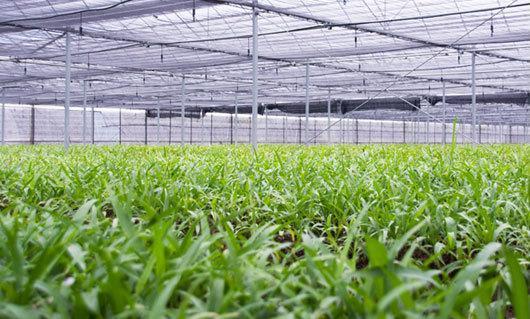
Use tissue-cultured plantlets induced to root as materials for hardening-off and transplanting. The specific operation steps are as follows: ① Hardening-off treatment: in order to obtain robust tissue-cultured tubers and improve the survival rate of acclimatization and transplanting, the tissue-cultured plantlets induced to root need to be placed open indoors, then after 3 days moved into a greenhouse and placed open for 4 days for hardening-off treatment; ② Acclimatization and transplanting: select Bletilla striata tissue-cultured seed bulbs with a 100-bulb weight greater than 43 g after hardening-off treatment as materials for acclimatization and transplanting, and carry out acclimatization and hardening-off treatment on a loose, breathable, water-retaining hardening and acclimatization substrate, such as sawdust or vermiculite + bark (1:1) substrate; ③ Spraying nutrient solution: spray organic water-soluble fertilizer or foliar fertilizer on the transplanted tissue-cultured plantlets to increase the weight of the tissue-cultured plantlets and promote the growth of Bletilla striata tissue-cultured plantlets (figure).