A good bonsai requires effort in its shaping, and it also needs to have an artistic conception.
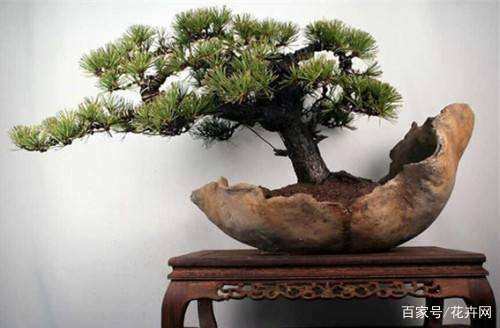
A good bonsai requires not only effort in its shaping to make its form visually appealing, but also a certain artistic conception. Having form alone without artistic conception inevitably makes it look somewhat dull and lifeless; with artistic conception, the whole work seems to come alive, bringing the viewer not only visual enjoyment but also spiritual cultivation.
The artistic conception of a bonsai refers to an artistic realm produced when the viewer, while appreciating the bonsai, resonates based on their own emotions, knowledge and artistic cultivation. The artistic conception of a bonsai is similar to the ideas expressed in literary works, except that this conception, unlike in some literary works, is not directly revealed and requires the viewer to perceive it themselves. Viewers with different life experiences and different literary cultivation will have different perceptions of the artistic conception conveyed by a bonsai.
Appreciating the artistic conception of a landscape bonsai mainly involves looking at the overall composition and evaluating the beauty of the conception through its shaping. In the process of creating a bonsai's composition, techniques such as "clear primary and secondary elements", "conceal before revealing", "see the large in the small" and "near objects large, far objects small" can be used to create a kind of artistic conception. When appreciating a landscape bonsai, viewers can assess whether the bonsai is well made by looking at how these techniques are expressed.
The artistic conception of a tree bonsai mainly depends on the tree's outward form. Tree bonsai pursues a kind of natural beauty even more. For example, a cliff-style old-stump plum bonsai naturally brings to mind a spirit of fearing no severe cold, fearing no setbacks, and being strong and resolute. A pine and cypress bonsai, with its dark green foliage and upward-growing trunk, can bring to mind a scene of prosperity and rising vitality.
Artistic conception is one criterion for appreciating a bonsai, but it cannot be taken as the only criterion, nor should a conception be forcibly attached to a bonsai to set off its quality. A good work should be one that everyone recognizes and that possesses natural beauty. Therefore, in the appreciation of bonsai, the primary criteria are natural beauty and artistic beauty. Only when these two exist can artistic conception be extended from them.
For example, if a work is merely average in its shaping or lacks natural beauty, but is given a very imposing name or a name extremely rich in artistic conception, then do not be fooled by its name, and do not substitute yourself into associations based on its name and thereby think the bonsai is good.
If everyone judged the quality of works this way, then anyone could pick a little blade of grass by the roadside, arrange some stones, and make a "good work". This is extremely detrimental to the development of bonsai art and could very likely bury many good works that have no gimmicks.
When appreciating whether a bonsai is good or bad, one cannot regard the bonsai's artistic conception as the life of the bonsai. Artistic conception should be something the viewer perceives on their own, extended after the bonsai's composition and shaping are perfect, rather than something forcibly bestowed by the maker.