Corn tillers grow back after being removed, wasting time and effort without increasing yield
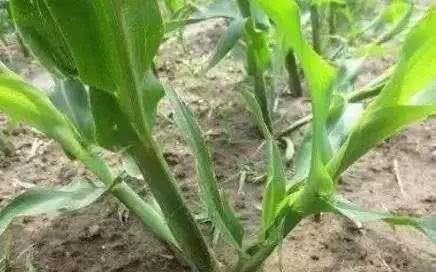
Corn tillers grow back after being removed, and once they grow they get removed again, wasting time and effort, and it won't increase yield!
The so-called corn tillers are actually the tillers of corn. In fact, tillering is a characteristic of grass family plants. For example, wheat and rice both have strong tillering ability, but corn's tillering ability gradually weakened during the course of evolution. For current corn varieties, the number of tillers is generally relatively small.
However, you may have noticed that although corn has relatively few tillers, many plants will grow another round of tillers after the tillers are removed, repeatedly removing them as they grow and growing them again after removal, over and over. That is to say, although the tillering trait has weakened during evolution, it has not disappeared.
So is it necessary to remove tillers? Science Xingnong tells you with data: it is completely unnecessary. It can be said to waste time and effort, doing useless work for nothing!
From the data of production practice, only about 3% of tillers in the field can grow into plants, while the rest gradually die after corn enters reproductive growth. Naturally, does this mean that about 97% of the tillers are consuming the plant's nutrients for nothing? Obviously not. In fact, retaining tillers has quite a few benefits. Let's discuss them below.
Increases the plant's photosynthetic capacity
Due to the presence of tillers, the leaf area of corn plants is somewhat expanded. Compared with plants without tillers, leaf area increases by 30-80%, which naturally can also produce more dry matter accumulation for corn.
Helps store water and conserve fertilizer
The seedling stage of corn is usually the driest time, and drought has the most sensitive effect on plants. However, while tillers increase leaf area, they also reduce direct transpiration from the soil surface, which helps store water. Experiments show that the soil moisture content at a depth of 10 cm for plants retaining tillers can be 14% higher than that of soil for plants without tillers.
Increases roots
The average number of corn roots for plants retaining tillers is 56, while that for plants without tillers is 29. Obviously, corn plants retaining tillers are stronger, especially when encountering extreme storm weather, and are more resistant to lodging.
Many farmer friends believe that tillers cannot set seed and consume a lot of nutrients, but friends who understand plant growth patterns should be clear that the peak of plant nutrient consumption is in the reproductive growth stage. However, most tillers gradually die when entering reproductive growth. That is to say, these tillers continuously make contributions in the early stage, but do not additionally consume the plant's nutrients during the reproductive growth stage.
Related research also shows that nutrients synthesized by tillers are transferred to the main stem. After entering the reproductive growth stage, nutrients from earless tillers are transferred to the ear of the main stem. This is also a major reason why retaining tillers in corn increases yield.
This is Science Xingnong. You are welcome to add a follow and grow knowledge together.