What are the principles and bases for the shaping and pruning of garden trees?
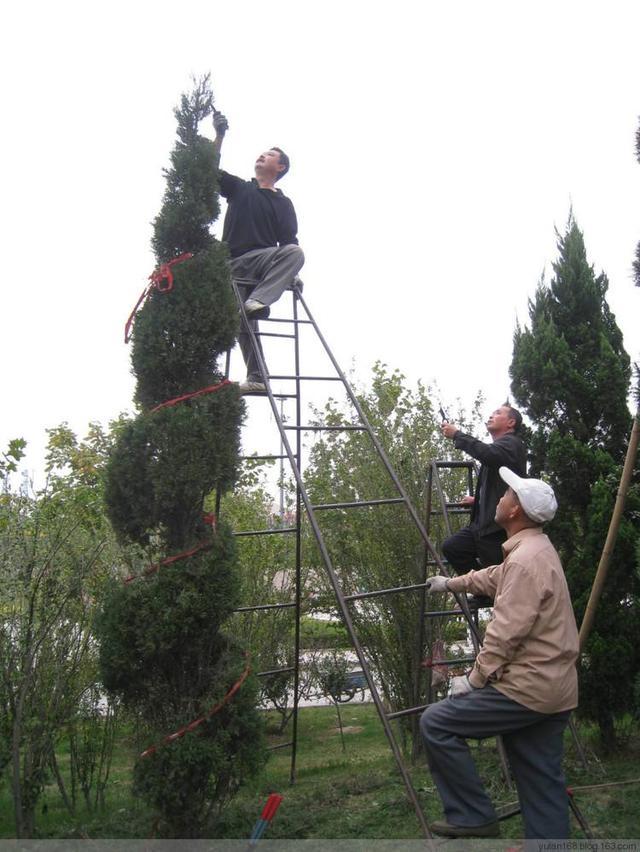
Principles and bases for the shaping and pruning of garden trees
(1) Principles of shaping and pruning of garden trees
Shaping of garden trees refers to pruning plants by adopting certain pruning methods so as to form a certain tree structure and form. Tree shaping is accomplished by adopting specific pruning technical measures. Pruning means adopting the techniques of pruning or thinning on some organs of the plant, such as roots, stems, leaves, buds, flowers, fruits and other parts, that is, it is carried out on the basis of shaping and in accordance with certain target requirements. Shaping and pruning are closely related to each other and are technical measures unified under certain cultivation and management target requirements. Adopting different shaping and pruning measures will also yield different results, and different greening targets each have their own specific shaping and pruning requirements. Therefore, the purpose, requirements and use of the tree in garden greening should first be determined.
(2) Bases for the shaping and pruning of garden trees
① Based on the growth and development and flowering habits of the tree species. For some tall arbor tree species with strong trunk dominance, because
their terminal buds have particularly strong growth capacity, it is easy to form an obvious subordinate relationship between the main trunk and the main lateral branches. Therefore, for tree species with this kind of habit, the shaping method of retaining the central leader should be adopted, and the tree forms cultivated are mostly spire-shaped, conical, cylindrical and other tree forms, such as Sargent crabapple, poplar, spruce, etc.
For some tree species whose apical growth vigor is not very strong but whose branching ability is very strong, and which easily form clustered crowns, they can be shaped and pruned into spherical and semicircular tree forms, such as Mongolian oak, elm-leaved spirea, five-lobed maple, etc.
For tree species that are light-loving and whose purpose is fruiting, most adopt tree forms such as the main trunk delayed-open central leader form, small-crown delayed-open central leader form, and open-center form, such as apple, pear, peach, etc.
For tree species with curved, spreading and drooping habits, winding and tying or natural drooping methods should be adopted to make the crown an open umbrella shape or a weeping branch shape, such as Chinese pagoda tree, weeping elm, etc.
② Based on the functional requirements of the forest. Because trees have different purposes of application in gardens, the pruning requirements they follow are different. Some trees are of the same tree species but can have different applications, so their pruning requirements are also different.
From the requirements of garden art, there are natural styles and geometric forms, and pruning is also different.
③ According to natural conditions and growth vigor. Under different natural conditions, the growth vigor of trees is not the same, and their pruning methods and pruning intensity are even more different. For example: under natural conditions where light, water, fertilizer and other conditions are relatively poor, and the growth vigor is also relatively weak, light pruning is needed, and it is enough to ensure their ornamental effect.
④ According to the needs of the cultivation environment. For example: when there are overhead lines above street trees, the central leader branch should be cut off (topping) at planting time, and the trees should be shaped into a round-headed form. When they are about to approach the wires, they should be pruned into a cup-shaped tree.
⑤ Based on pruning response. Pruning response is the basis for whether pruning is reasonable or not, and it is also an important standard for testing whether pruning is appropriate. Because the growth vigor and growth state of branches are not consistent, applying the same pruning method will inevitably produce different responses. Therefore, the pruning response of trees should be investigated to test whether the pruning method and intensity are reasonable, so that one can have a clear idea in future pruning work and prune reasonably. When pruning, tree age, tree vigor, the number of fruiting branches and the number of flowers, etc., should also be considered to determine HJ. Therefore, when pruning, comprehensive consideration should be made to determine the pruning method, period, and a reasonable tree form.