Detailed Explanation of Cultivation Management, Harvesting and Processing Methods of Yangchun Amomum villosum
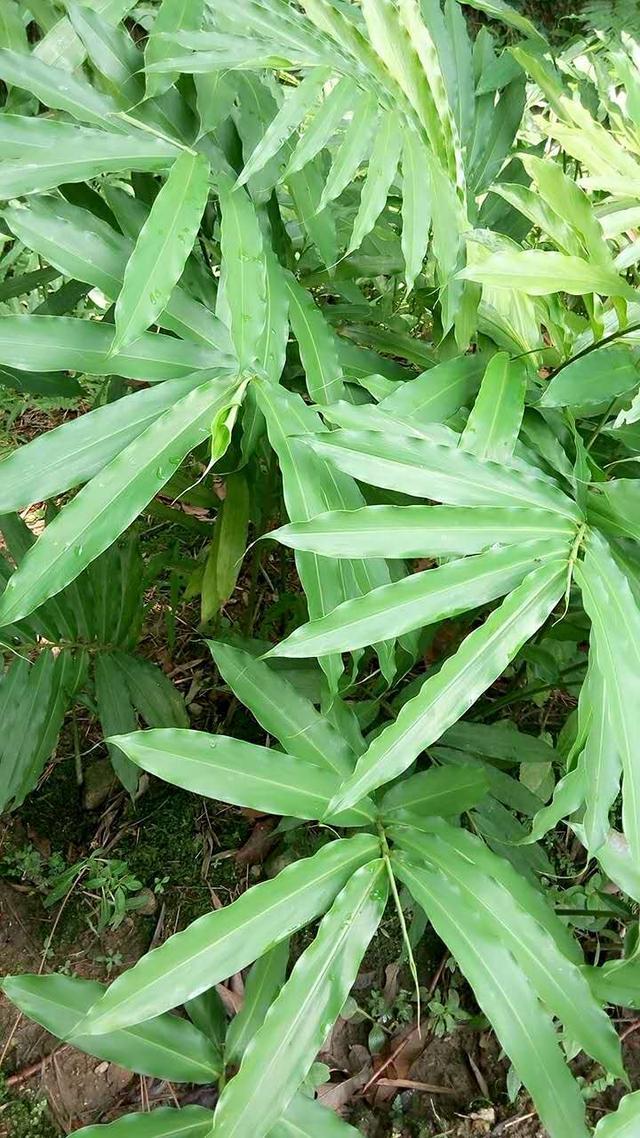
Cultivation Management, Harvesting and Processing of Yangchun Amomum villosum
Amomum villosum is divided into two types. One is domestic, the original plant mainly being Yangchun Amomum villosum native to Yangchun County, Guangdong Province; the other is imported Amomum villosum (West Amomum villosum), originating from Southeast Asia, with the original plant being Guangning green-shell Amomum villosum.
In China, 11 species of the genus Amomum have been identified. They grow wild and are cultivated in Yunnan, Sichuan, Guangdong, Guangxi, Fujian and Guizhou provinces and autonomous regions. They are produced in Yangchun, Gaozhou, Xinyi, Guangning, Xinxing, Fengkai, Enping, Luoding, Maoming, Yangjiang and Xuwen in Guangdong Province; Dongxing, Longzhou and Tian'e in the Guangxi Zhuang Autonomous Region; Funing, Xishuangbanna Dai Autonomous Prefecture, Lincang Prefecture, Simao Prefecture, Honghe Hani and Yi Autonomous Prefecture, border counties under Wenshan Zhuang and Miao Autonomous Prefecture, Gengma, Cangyuan, Mengla, Jinghong and Menglun in Yunnan Province; Changtai in Fujian Province; Chengmai, Ya County and Dan County in Hainan Province; and Cexiang in Guizhou Province.
At present, it is known that Jinghong County in Xishuangbanna Dai Autonomous Prefecture originally had wild green-shell Amomum villosum, but in 1963 Yangchun Amomum villosum from Guangdong Province was introduced. In 1987, the whole county planted 3.29 wan mu (667 sq m/mu, the same below), with an average yield of 10-15 kg per mu. It is mainly distributed beneath the valley rainforests of Jinuo Mountain, accounting for 76% of the county's output. The Yangchun Amomum villosum produced in Jinghong has stable plant traits, good growth, abundant pollinating insect resources, a high natural pollination rate, and large fruits. When the fruit of Amomum villosum turns dark brown or reddish brown, it is picked and processed. In the processed product, the fruit peel clings tightly to the seed mass, and it is dry, free of impurities and undamaged. Its medicinal properties and microscopic characteristics are the same as the Yangchun Amomum villosum recorded in the Pharmacopoeia of the People's Republic of China; therefore, it has been widely used interchangeably. The introduction and promotion of Yangchun Amomum villosum in Xishuangbanna Dai Autonomous Prefecture won the First Prize for Scientific and Technological Progress from the Ministry of Health in 1987.
Maguan County in Wenshan Zhuang and Miao Autonomous Prefecture, Yunnan Province, has climate, soil, vegetation distribution and other conditions suitable for planting Amomum villosum. It is mainly distributed in Bazhai, Langqiao, Miechang, Muchang and Gulinqing townships (towns). The county currently has about 4,000 mu of Amomum villosum, with an annual output of about 50,000 kg. Its quality and efficacy are no different from Yangchun Amomum villosum, and it is well received by users.
Xichou County in Wenshan Zhuang and Miao Autonomous Prefecture, Yunnan Province, has 2 types of wild and artificially cultivated Amomum villosum. The shelled one is called "shaguo", and the kernel is called "sharen". Both the shell and the kernel can be used medicinally as an aromatic stomachic, having the effect of stimulating appetite and aiding digestion, and are used for vomiting, abdominal pain, loss of appetite and other symptoms. It can be developed in areas of Xichou County with a southern subtropical climate type.
Mengla County in Xishuangbanna Dai Autonomous Prefecture, Yunnan Province, originally had green-shell Amomum villosum. In 1963, Yangchun Amomum villosum from Guangdong Province was introduced. In 1987, the whole county planted 2.66 wan mu, with an average yield of 10-15 kg per mu. It is mainly distributed under the tropical valley rainforests of Menglun, Mengla, Mengban and Yaoqu, accounting for about 80% of the county's output.
1 Botanical Characteristics
Yangchun Amomum villosum is a perennial herb, 1-2 m tall, with creeping stems. The leaves are lanceolate or oblong-lanceolate, 20-30 cm long and 3-7 cm wide, with a tail-like fine pointed tip at the apex, a nearly rounded base, and no petiole; the ligule is 3-5 mm long; sunken square-grid reticulate veins can be seen on the leaf sheath. The spike inflorescence emerges from the rhizome, growing on a peduncle 4-6 cm long; the flowers are bisexual, with a calyx and corolla, the calyx white, with 3 segments united, the corolla with 3 lobes united at the lower part of the perianth to form 1 perianth tube, 1 stamen, 2 anther cells, 1 lip (i.e. the petal-like staminode) and 2 vestigial stamens, 1 stigma, and a slender style located in the groove of the pollen-bearing stamen. The ovary is inferior, 3-locular, with numerous ovules.
2 Biological Characteristics
2.1 Soil
Loam rich in humus allows the plants to grow quickly, with thick and strong seedlings, vigorous clumps, many flowers and a high fruit-setting rate. Combined with soil improvement, after harvesting the fruit each year, earth up before Cold Dew, evenly spreading organic-rich topsoil and turf mud over the Yangchun Amomum villosum ground, preferably covering 2/3 of the rhizome. This kind of earthing up can significantly promote plant tillering, make the plants thick and the shoots strong, enhance resistance, and enable the plants to overwinter safely.
2.2 Fertilizer
Fertilizer is a material measure for improving soil quality. Fertilization mainly uses organic fertilizers such as cattle pen manure, compost, pig manure water, composted green manure, burned soil and turf mud. The amount of fertilizer applied depends on the growth of the seedlings and local conditions. Fertilize each year before flowering, after fruiting and after fruit harvest. In particular, after fruit harvest and before White Dew, heavy application is beneficial for promoting thick plants and strong shoots and safe overwintering, and can promote more flowers and strong fruit in the following year.
2.3 Canopy Density
When canopy density is high, the plants are weak, the seedlings grow leggy, the clumps are sparse, the flowers are small, and the fruit is fine; when canopy density is too low, the plants are short, the creeping stems are short, and the leaves are easily scorched by sunlight. The relationship between different canopy densities and the growth and development of Yangchun Amomum villosum is shown in Table 1. The average canopy density is preferably 50%-70%. Shade trees should be tall arbor species with moderate light transmittance and soft leaves, which can regulate water through shade, provide ventilation and air permeability, keep soil moisture at about 20%, and create an environment suitable for insect activity, conducive to pollination during the flowering period.
Table 1 Relationship between different canopy densities and the growth and development of Yangchun Amomum villosum
2.4 Density
The density, sparseness, strength and weakness of seedlings also have a relatively large impact on yield and the number of flowers and fruits, as shown in Table 2. A density of 2.5 wan-3 wan plants per mu is relatively moderate.
Table 2 Relationship between plant density and the growth and development of Yangchun Amomum villosum
3 Field Management
Yangchun Amomum villosum has different needs for soil, fertilizer, light and water in different seasons, and the achievement of high and stable yields depends on scientific management. However, the strength of the seedling clumps and the level of yield are determined by multiple factors, which influence, promote and restrict one another. When one factor changes, it may bring new problems and produce new contradictions. Therefore, different sites and environments require different management measures, but the right remedy must be applied to the case. In the work, grasp the four essentials (apply fertilizer, earth up, cut off dead and diseased seedlings, and eliminate diseases and pests), promote the four earlys (prepare fertilizer and compost areas early, fertilize early, earth up early, and cut off dead and diseased seedlings early), the three preventions (prevent soil and water loss, prevent flower and fruit drop, and prevent trampling by people and livestock), and the two timelies (timely artificial supplementary pollination, and timely fruit preservation and fruit strengthening), so as to promote vigorous seedling clumps, many flowers and strong fruit, and achieve the goal of high and stable yield. Therefore, in terms of organization, assign dedicated personnel for management and strengthen the post responsibility system.
3.1 Pollination
The flower of Yangchun Amomum villosum is a typical entomophilous flower. Its reproductive organs are hidden and the pollen is sticky; the fruit-setting rate through natural pollination by wind is 0.4%-3%. The natural pollination rate is low. According to observations by Wang Xiuzhu et al. (1983), in Mengla County, Xishuangbanna Dai Autonomous Prefecture, Yunnan Province, domesticated Italian bees rarely visit Yangchun Amomum villosum flowers to pollinate. Domesticated Chinese bees generally suck nectar from the side of the flower, and the pollination effect is poor. Therefore, in some Yangchun Amomum villosum planting sites without wild bees, there is little fruit setting and often no harvest. In 1976, the Guangdong Provincial Imported South Medicine Introduction Information Center Station promoted artificial supplementary pollination, raising the fruit-setting rate of Yangchun Amomum villosum to 30%-40%, but labor consumption was excessive. From May to July 1981, the Bee Research Institute of the Yunnan Academy of Agricultural Sciences, together with the Mengla County Pharmaceutical Company and the County Science and Technology Commission, conducted investigations and research and summarized 7 species of wild bees capable of pollinating Yangchun Amomum villosum, from which 2 species of wild bees that can pollinate well during the full flowering period of Yangchun Amomum villosum were selected - the giant honey bee (Apis dorsata Fab.) and the small stingless bee. Using nylon covers to isolate individual flowers, the fruit-setting rate after one pollination was measured, as shown in Table 3. From the table, it can be seen that after one pollination by the giant honey bee, the fruit-setting rate was 63.42% higher than that of the control group (P<0.01), and 38.47% higher than that of the artificial pollination group (P<0.01); after one pollination by the small stingless bee, the fruit-setting rate was 29.22% higher than that of the control group (P<0.01), and 4.27% higher than that of the artificial pollination group (P<0.01). However, the small stingless bee is easier to domesticate than the giant honey bee and can be selected as an ideal pollinating bee for Amomum villosum.
Table 3 Comparative statistics of pollination of Amomum villosum by giant honey bees and small stingless bees
In addition to domestication, the ecological environment of these pollinating bee insects should also be protected. The giant honey bee, i.e. Apis dorsata, is called "Machangfeng" in Xishuangbanna Dai Autonomous Prefecture and "Pengma" in the Dai language. It lives in colonies, and its single comb hangs on tree trunks. Investigation results in Mengla show that the giant honey bee generally inhabits beneath the branches of large trees on steep slopes, with as few as 1-10 colonies per tree and as many as more than 200 colonies living together; the small stingless bee also lives in colonies, with each colony having as few as several hundred individuals and as many as tens of millions, and the colony is composed of a queen, worker bees and drones. The comb is composed of pollen comb, honey comb and brood comb. The colony feeds on pollen and nectar, and in nature most nests are built in dead, hollow tree trunks in forests.
3.2 Fruit Strengthening and Fruit Preservation
The Yangchun Amomum villosum population is relatively weak, plant nutrients are insufficient, and the influence of climatic factors and damage to the rhizome are the main causes of small fruit and fruit drop. Therefore, before flowering, apply pig manure, chicken manure, plant ash and manure water as flower-strengthening fertilizer; during the full flowering period, apply 150 kg per mu of 1:5 manure water; after fruiting, apply 300 kg per mu of 1:3 manure water as fruit-strengthening fertilizer. On the days of Major Heat and Minor Heat, open ventilation rows in sites where the seedling clumps are too dense and conditions are hot and humid, and drain accumulated water, which can reduce rotten fruit.
3.3 Renovating Old Amomum villosum
For planting sites that have flowered and fruited continuously for many years and where the seedling clumps have clearly declined, with many old seedlings and few strong seedlings, carry out renovation. Move soil and re-earth up, apply green manure, and apply 5,000 kg of turf mud, 2,500 kg of cattle pen manure and 25 kg of phosphate fertilizer per mu as base fertilizer. This can play a very good role in restoring the vigor of the seedling clumps, and results will be seen after 2-3 years.
For Yangchun Amomum villosum to achieve high and stable yields, in addition to effectively doing the above work, site construction should also include the "one pen, two ponds" (cattle pen, manure pond, water storage pond), and at the same time seed source selection and breeding should be carried out.
3.4 Harvesting and Processing
Yangchun Amomum villosum is harvested in August-September. In early summer, 500 g of fresh product can yield about 80 g of dry product after roasting; at the Beginning of Autumn, 500 g of fresh product can yield about 200 g of dry product after roasting. Roasting method: roast dry over gentle fire, using rice husks, raw firewood, camphor leaves or charcoal as fuel, and roast 3 times. The 1st time is called "killing the sap", the 2nd time is called "returning to the furnace", and the 3rd time is called "re-furnacing". After the 3rd roasting and drying, it can be boxed. When roasted to 50%-60% dry, it can be placed in the sun to dry. If it is directly dried in the sun without roasting, it is not easy to preserve, is extremely prone to mold, and turns black; therefore, it must be roasted over fire. Roast 2 times a day, 12 hours each time, using camphor wood leaves to cover the charcoal fire so that no open flame is produced but smoke is emitted. After being smoked, Amomum villosum has a very fragrant taste. When roasted until the fruit peel is soft (about 50%-60% dry), spray water once. After spraying, the fruit peel suddenly contracts, causing the fruit peel and seeds to bind tightly without gaps. In this way, it can be preserved for a long time; otherwise, when there are gaps inside the Amomum villosum, it is prone to mold. During each roasting, 2-3 layers of sieves can be placed on the stove, and the topmost sieve should be covered with a wet cloth. In this way, when the Amomum villosum on the 1st sieve is almost dry, place it on the topmost layer; when the Amomum villosum on the topmost layer is dry, take it away and replace it with unroasted ones. Alternating roasting in this way can fully utilize the earthen stove.
3.5 Varieties and Commercial Specifications
Local farmers divide Yangchun Amomum villosum into two types: yellow seedling and large green seedling. The yellow seedling bears more fruit, which is round and small, light red in color, with red-brown seeds, and the fruit is not firm. It mostly grows in Yangchun Xishan and Yangjiang, Enping and other places; the fruit grows upward and tastes pungent. The large green seedling bears less fruit, which is long-round and large, red in color, with a short fruit stalk, black seeds, oily, firm and plump, shaped like a cow's teat. Traditional Chinese medicine considers its medicinal effect strong, with the five flavors of sour, sweet, bitter, pungent and salty; the fruit grows downward and grows in Yangchun Dongshan Panlong, Jinhuakeng and other places. It is said that when the fruit of the Dongshan large green seedling is stewed with pork, it all turns red.
Top-quality Yangchun Amomum villosum should be mature, firm and plump, sweet and fragrant in taste (with the five flavors), with black and oily firm peel, kernel and seeds, and the fruit peel does not easily fall off when rubbed by hand.
Shelled Amomum villosum seeds are separated; the large grains are Shaliwang; shelled Amomum villosum seeds are separated; the relatively large grains are Shalitou; shelled Amomum villosum seeds are separated; the small grains are Shali; the fruit peel of Amomum villosum is Shake.