How to control wild wheat in wheat fields? A detailed explanation of timing and methods
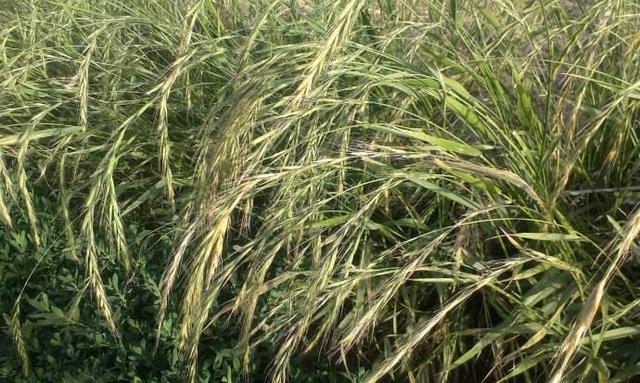
Timing and methods for controlling wild wheat in wheat fields
What is commonly called wild wheat includes brome grass, wild oats and jointed goatgrass.
In southern Hebei Province, wild wheat has caused damage in succession. The wheat planting area in Shahe City is about 110,000 mu, and most wheat fields show damage from wild wheat. Wild wheat not only competes with wheat for water and fertilizer, sunlight and space, but also easily induces lodging in wheat, causing yield reduction. Some of the biological characteristics of wild wheat itself, together with infection and spread by external factors, determine that its control is relatively difficult, and the damage tends to worsen year by year.
1 Reasons why wild wheat is difficult to control
1.1 Wild wheat seeds have strong vitality. Buried in the 20 cm tillage layer, they can survive for 2 ~ 3 years, or even longer. Once external conditions permit, they can germinate, grow and set seed. Some seeds can still germinate after being burned by fire or passing through the digestive tract of livestock.
1.2 Strong reproductive capacity. Wild wheat has a relatively strong tillering ability; generally a single plant can produce 10 ~ 20 tillers, and basically all of them can form spikes and set seed. The amount produced increases as fertilizer and water conditions improve. Wild wheat is highly competitive and forms strong competition with wheat.
1.3 Early maturity, grains fall off easily. It matures 5 ~ 10 d earlier than wheat; the grains are small, and the spike opening is loose, so the grains fall off easily after maturity, and mechanical harvesting makes grain shattering even more serious. Shattered grain is the main source of reinfection.
1.4 Wide transmission routes. The transfer of wheat seed and the cross-regional operation of combine harvesters carry wild wheat seeds, leading to long-distance spread. Wild wheat seeds are light and can spread with wind or irrigation water, infecting adjacent or downstream fields. Some undecomposed organic fertilizer may contain wild wheat seeds, and if applied to farmland, it causes reinfection.
2 Measures and methods for controlling wild wheat
2.1 Select seed carefully. Before sowing wheat, carefully select good seed and remove wild wheat. If conditions permit, seed coating can be carried out, or coated seed can be purchased directly.
2.2 Chemical control. At present, the most effective herbicide against wild wheat is mesosulfuron-methyl (Sima) oil suspension. Before wheat overwinters, after the weeds have all emerged, 30% Sima oil suspension can be used at 30 ml/mu, plus 100 ml of special adjuvant, diluted with 30 kg of water and sprayed, preferably using a special nozzle. Generally, applying chemicals in spring is not advocated.
2.3 Hand pulling. In wheat fields where chemical control is not thorough, hand pulling in the second spring is a very effective method. Although it can be pulled before wild wheat matures, the earlier the pulling, the better. Wild wheat can be identified from the wheat jointing stage, and it is even easier to identify after wheat heading. It must be pulled out with the roots, pulling large and small plants together, for 2 ~ 3 consecutive times. The pulled plants must be taken out of the field and deeply buried in a centralized manner, burned, or fed to livestock. At the same time, clear weeds from field ridges and ditches to reduce sources of spread and diffusion.