The thorny tree in the mountains was once cut down for firewood, but its roots are a rare anti-inflammatory remedy.
Friendly reminder
Hemu Report aims to share and popularize information about various plants and their uses, for reference only. If medicinal use is needed, it is advisable to consult a professional physician to avoid problems!
In rural areas, when it comes to plants that people fear, naturally it is the poisonous ones or the thorny plants that frighten people the most. A careless touch will cause pain, so in the past many farmer friends greatly disliked those thorny trees and basically cut them down on sight, to avoid stabbing people or stabbing poultry and livestock. However, in order not to waste these cut-down trees, they were used as firewood. Below, the author will introduce a kind of thorny tree.
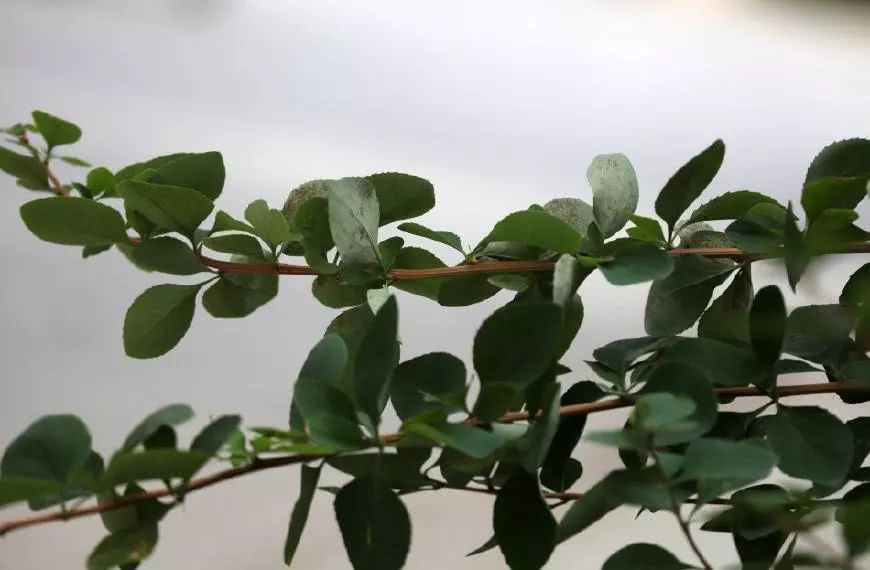
In most rural mountainous areas north of the Yangtze River basin in our country, there is such a thorny wild tree. Its thorns generally grow on the edges of the leaves and on the branches that bear fruit. In the author's hometown, this tree is commonly called "sankezhen" (three needles).
In the rural areas of the past, living conditions were not as good as now, especially for farmer friends living near the mountains, who basically relied on the mountains to make a living. For example, when there was no food to eat, they would go up the mountain to dig some wild vegetables and wild mushrooms to eat; when sick, they would go up the mountain to dig some herbs to treat the illness; when there was no firewood to cook, they would go up the mountain to cut some firewood. And this sankezhen was a kind of tree that farmer friends often cut for firewood in the past.
The trunk of sankezhen is light and dry, very suitable for firewood, and because it has thorns on its body, many farmer friends also somewhat disliked it, afraid it would stab people and poultry and livestock. Therefore, basically when they saw it grow up, they would cut it and carry it home to store as firewood.
After June each year, sankezhen also produces "tempting" small red wild fruits, which look very much like cherries. However, do not be fooled by how pretty this wild fruit looks, for it is extremely unpalatable. The author remembers that as a child, seeing how pretty this wild fruit was, he secretly ate it behind his parents' backs, and ended up crying from the bitterness. The wild fruit of sankezhen is very bitter, comparable to Coptis chinensis, so when you see this wild fruit, do not be greedy and sneak a taste. I wonder how many rural children born in the 1980s and 1990s ate this bitter fruit when they were young?
However, although farmer friends at that time greatly disliked this wild tree and often cut it for firewood, they would leave its roots, because the root of sankezhen is a rare medicinal item. In the past, when many old farmer friends in mountainous areas cut down this tree, they would keep the roots, dry them in the sun and save them for later use. So what is the root of sankezhen used for?
The scientific name of sankezhen is "Berberis amurensis" (large-leaf barberry). According to the records of "Chinese Materia Medica", the root of Berberis amurensis contains alkaloids, which give it medicinal value. Its taste is bitter and its nature is cold. As medicine, it has the effects of clearing heat and drying dampness, and purging fire and detoxifying. It can be used to treat acute enteritis, dysentery, jaundice, heat arthralgia, scrofula, pneumonia, conjunctivitis, swollen abscesses and sores, uterine bleeding, damp-heat diarrhea, mouth and tongue sores, sore throat and throat obstruction, red and swollen eyes, acute nephritis, tonsillitis, stomatitis, bronchitis and many other conditions.
Among the people, the root of Berberis amurensis is also often used as a substitute for Coptis chinensis, and it is a good medicine for treating inflammation. However, nowadays, with the improvement of rural living standards and medical standards, farmer friends no longer need to cut it for firewood or use it as a medicinal herb, which has also caused many people to no longer recognize Berberis amurensis.
The author reminds: although Berberis amurensis has very good medicinal value, the author does not recommend using it at will. In the past, it was used only because conditions were poor. Everyone can simply learn about it.
Dear friends, have you ever used "Berberis amurensis" as firewood before? You are welcome to leave a message and exchange ideas!
Text/Hemu Report, images/Internet
If you like Hemu's articles, you are welcome to follow!