Orchid leaf tips always scorched yellow? So these are the reasons
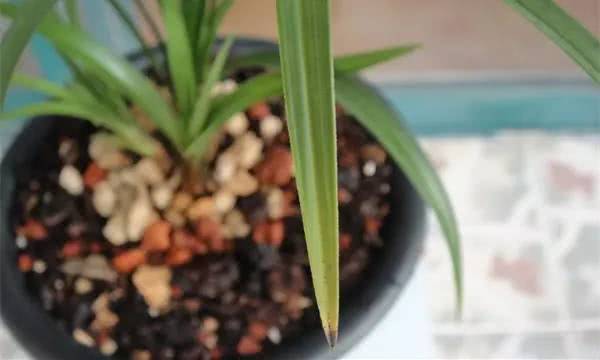
Orchid tip scorch is a very common orchid disease. Although this problem does not have much effect on the normal growth of orchids, after all, scorched tips are still unsightly and will greatly reduce the ornamental value of orchids, and it is exactly this point that gives many flower lovers a real headache.
Generally speaking, there are two causes of orchid tip scorch: one is an unsuitable surrounding environment, such as improper fertilizing, too strong light, too low humidity, etc., and the other is an invasion of disease on the orchid, such as viruses, pathogenic bacteria, insect pests, etc.
Improper management
1. Excessive fertilizing
There are strict limits on the fertilizer ratio when fertilizing orchids. If too much fertilizer is applied and the concentration exceeds the standard, the excess nutrients in the orchid will gather at the tip of the orchid leaves, thus causing orchid tip scorch.
Solution:For orchids, I suggest it is best to grow them plainly, do not use fertilizer with too high a concentration, and do not spray any hormones. The nutrients provided by watering the orchid in daily care are enough to support its normal growth.
If you feel your orchid needs fertilizing, you can apply some light fertilizer, or use some slow-release fertilizer.
2. Insufficient humidity
Orchid tip scorch is often related to the amount of water supplied in the environment. If the water supply is insufficient, it is very easy to cause orchid tip scorch.
Besides insufficient watering and the soil in the pot being too dry, tip scorch is also greatly related to air humidity being too low. When the water supply and demand inside the orchid leaves is imbalanced, it is very easy to cause orchid tip scorch.
Solution:If you grow orchids indoors, this situation is unlikely to happen, but if you grow them outdoors, because outdoor air humidity is hard to control, the orchid is very likely to develop tip scorch.
In this case, you need to immediately cut off the scorched leaf tips, and then spray some clean water into the air around the orchid to achieve the effect of raising air humidity.
3. Improper light
If you do not pay attention to proper shading in summer, the orchid will receive too high a light intensity, causing leaf tip scorch.
Correspondingly, if the orchid is grown in too shady a place for a long time, the orchid leaves will become thin and weak, and at such times, whenever they are exposed to sunlight, the leaves are very likely to scorch immediately.
Solution:You must give the orchid proper sunlight exposure; too much or too little is bad for its normal growth. You can grow it in a place with diffused light, pay attention to proper shading in summer, and in spring and autumn, when the sunlight is not strong, you can place it in the sun for care.
4. Watering problems
If watering is improper, it may trigger many situations unfavorable to orchid growth, and then cause orchid tip scorch. For example, too much watering, too little watering, or spraying water under strong light can all cause orchid tip scorch.
If the water quality used for watering is polluted, it can also cause orchid tip scorch.
Solution:Watering is a key part of growing orchids well. In the process of caring for orchids, pay attention to watering at the proper time and with normal water quality, and the amount of water used for watering must also be strictly controlled; too much or too little is bad for its normal growth.
Disease invasion
Actually, generally speaking, if orchid tip scorch is caused by improper management, although the situation may look rather serious, it actually does not have much effect on the orchid's own normal growth. As long as you promptly adjust your care techniques and pay more attention in future cultivation, it is fine.
But if orchid tip scorch is caused by pests and diseases, then you must pay more attention, because once this situation appears, it must be dealt with promptly to prevent pests and diseases from infecting other parts of the orchid.
The most common pests and diseases include red spider mites, scale insects, rust disease, etc. As long as these pests and diseases appear, immediately remove the diseased leaves and other infected parts, and then spray chlorothalonil, carbendazim and other agents for treatment.
The season when orchid pests and diseases occur frequently is summer and autumn. In May and June, spray the orchid with Huahualing solution to prevent the appearance of pests and diseases. In the normal care process, prevention is often much more important than treatment.
If you also like growing flowers, then follow us!