Grow your rubber plant this way for thick, broad, dark green leaves and an attractive, sturdy shape that won't topple over
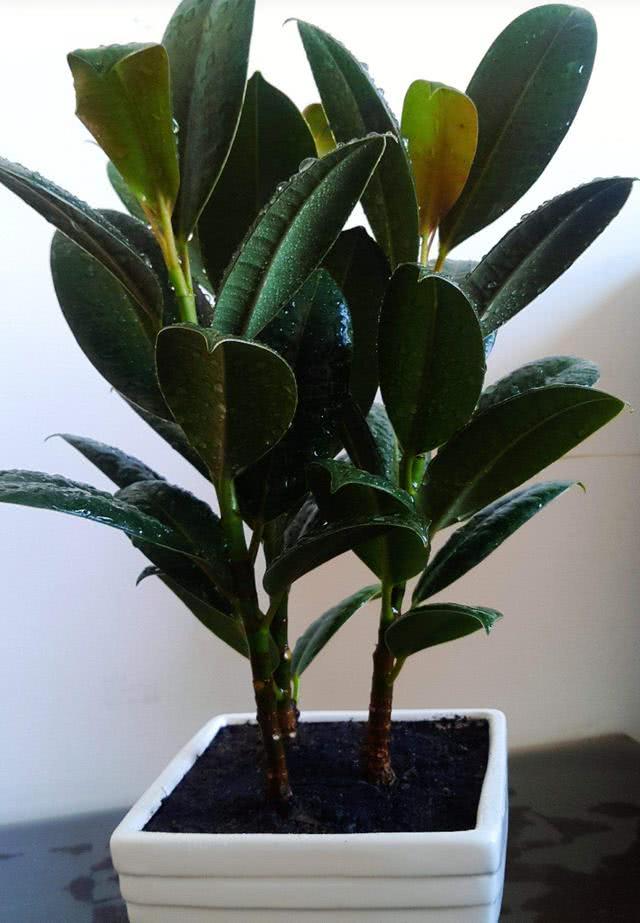
The rubber plant (Ficus elastica) is native to India and is a well-known foliage plant for both pots and open ground. Its leaves are large and glossy and it stays evergreen all year round. Grown in a pot to accent the living room or study, it not only has high ornamental value but can also purify formaldehyde from organic compounds and absorb carbon monoxide and carbon dioxide from the air, and it also does a great job of absorbing and purifying smoke and dust. If there is a smoker in the family, keeping a rubber plant can do a good job of protecting the family from secondhand smoke. Some gardeners complain that their rubber plant grows weakly, with thin, small leaves, excessive leggy growth and few branches, or even a shape so tall that it tends to topple over. This is mainly caused by the following few reasons.
1. Soil. The rubber plant grows very quickly, so it is recommended to repot it once every spring. The rubber plant likes loose, breathable, slightly acidic soil. For the potting mix, it is recommended to combine rotted pine needle soil or leaf mold with garden soil and river sand in a 3:2:1 ratio. Pine needle soil is slightly acidic, loose and breathable, and is a soil type the rubber plant really likes, but if you don't add garden soil it can easily lead to poor root anchoring, and once the plant grows tall it may topple over. Before potting, you can add a small amount of rotted chicken manure as a base fertilizer at the bottom of the pot.
2. Light. Because the rubber plant is native to India, it especially likes a warm environment. At home you can grow it in the yard, or place the plant on a south-facing balcony or bedroom windowsill so it gets plenty of light. In the height of summer it can be shaded appropriately. If it is kept for a long time in too shady a spot indoors, the plant cannot carry out photosynthesis fully and very easily develops leggy stem nodes and thin, small, dull, lusterless leaves.
3. Watering. The rubber plant does not need much water. But during the vigorous summer growth period, when temperatures are high and water evaporates quickly, a lack of water will hinder its growth, while too much water or long-term waterlogging in the pot will cause leaf drop or root rot. So watering should follow the principle of watering when dry and letting it dry out between waterings, keeping the potting soil only slightly moist. Combine this with misting the leaves, which both cleans the leaves and makes them glossy and maintains the air humidity it needs.
4. Fertilizing. The rubber plant is a heavy feeder, and during cultivation nitrogen fertilizer should be the main one, supplemented by phosphorus and potassium fertilizers. Nitrogen fertilizer promotes more vigorous growth of branches and leaves, while phosphorus and potassium fertilizers strengthen the plant's ability to resist cold and to resist toppling over, and increase its resistance to outside conditions. In spring and autumn, apply a nitrogen fertilizer or rotted soybean cake water once every 20 days, or bury a few cooked soybeans around the edge of the pot. In summer the rubber plant grows quickly, so you can apply a dilute organic liquid fertilizer once every 15 days, applying light fertilizer frequently.
5. Pruning. For a small rubber plant, to control its leggy growth and encourage more branches to sprout, you can pinch out the growing tips and top it appropriately according to its shape. This prevents the plant from growing too tall and toppling over. For a tall plant, you can prune it in late spring and early summer each year. Cutting out overly dense branches, crossing branches, and overlapping parallel branches not only encourages more side branches to sprout but also improves the plant's air circulation and prevents disease.