A woody plant even easier to grow than pothos, with unusual flower shapes, blooming in all four seasons and can also be made into a bonsai
Introduction
Green plants and potted plants have already become essential decorative items in home life. Keeping some flowers and plants at home has many benefits: it can beautify the room and also delight the mood and cultivate the character. "Huasheng Potted Plant Diary, Issue 1082" takes you to know a very easy-to-grow woody plant.
In the scorching summer, most of the succulents and herbaceous plants kept at home have already begun to look half-dead, entering the stage of "difficulty getting through summer." Summer is not a good season for growing flowers. When growing plants now, most flower enthusiasts choose tough "lazy-person green plants" such as pothos and spider plants. The flower introduced today is called the pagoda tree. It is not afraid of high temperatures and severe heat; the hotter the weather, the more beautiful its flowers bloom, making it suitable for growing now.
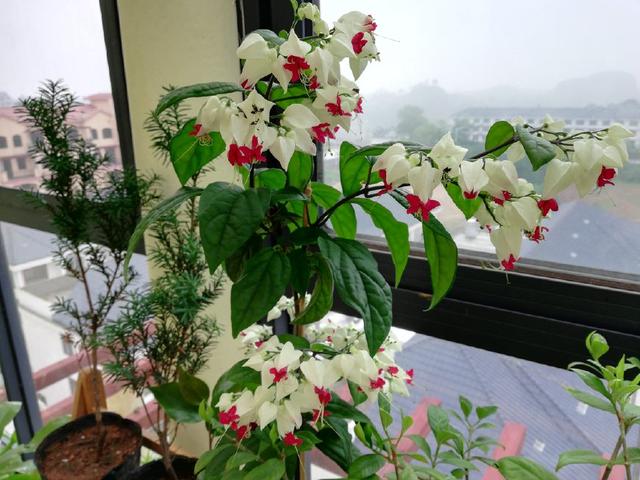
The pagoda tree is a new type of indoor potted ornamental flowering woody plant. It is a perennial evergreen woody plant of the genus Clerodendrum in the family Verbenaceae, native to western Africa, and has not been introduced into China for long, yet it is already very popular. Its flowers look very much like the "pagoda candy" we ate as children, hence the name. The red corolla extends from the white pagoda-shaped calyx, like a dragon spitting out a pearl, so it is also called "dragon spitting pearl." The name is auspicious, and the flower shape is unusual and beautiful.
Like other plants from tropical regions, such as Madagascar jasmine, wax flower, and bougainvillea, the pagoda tree has an extremely long blooming period. In South China, this plant blooms all year round. Even in the northeastern region of the north, as long as it gets enough light in winter, it still blooms brilliantly. It blooms diligently and tirelessly, earning the title "blooming machine."
The pagoda tree has extremely strong adaptability to the environment, and its care is super simple. It is not picky about soil; ordinary garden soil can grow it. It also has low fertilizer requirements. With ordinary watering, it can grow lush branches and leaves and bloom continuously. It is super worry-free to grow, even easier than pothos. It can also be propagated like succulents by stem cuttings, with a very high survival rate. One plant can be divided into several pots in a year.
The pagoda tree has requirements for light. Although it can survive with completely indoor care, it will not bloom much. It is not cold-tolerant, so flower enthusiasts in the north must move it back indoors in winter. The pagoda tree grows vigorously and tolerates pruning. Pruned into a bonsai tree, its ornamental value is even better. Its attractive plant shape, emerald green leaves, and red-and-white two-colored flowers make it a new favorite among potted plants. It has not been introduced into China for long, yet it has already entered thousands of households and is widely praised.