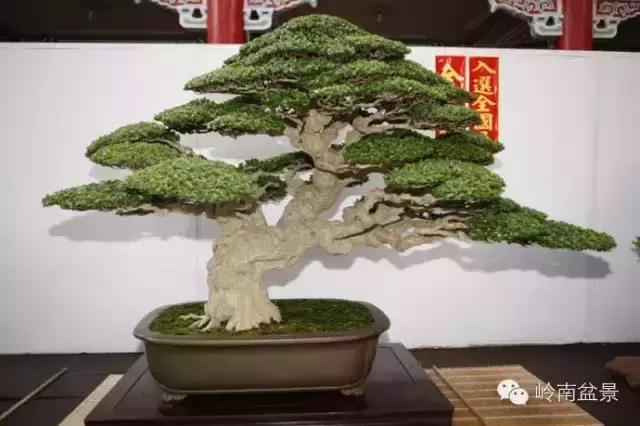
A group of penjing works to enjoy: when the sea pomegranate flowers bloom it seems to laugh at me; without wine, even Yuanming stays sober alone
Dragon Boat Festival
besides zongzi
there are also
calamus
fine wine
poetry
and penjing
......
Dragon Boat Festival Day
Dynasty: Tang Dynasty
Author: Yin Yaofan
Original text:
In youth, festivals stir deep feelings; who knew that in old age sighs would arise; I do not follow the custom of wearing mugwort charms, but pray over calamus wine and speak of peace. The hair at my temples adds white day by day, the pomegranate brocade shines bright before the eyes year after year; for a thousand years the wise and the foolish alike are but a moment; how many sink into oblivion, how many leave a name.
Dragon Boat Festival in the Jiyou Year
Dynasty: Yuan Dynasty
Author: Bei Qiong
Original text:
Wind and rain at Duanwu bring gloom and darkness; at Miluo there is nowhere to mourn the heroic spirit. When the sea pomegranate flowers bloom it seems to laugh at me; without wine, even Yuanming stays sober alone.
Qu Yuan Tower
Dynasty: Song Dynasty
Author: Su Shi
Original text:
The people of Chu grieve for Qu Yuan, and after a thousand years the feeling has not ceased. Where has his noble spirit drifted? The elders can only choke with sobs. To this day on the blue river, people toss in rice to save him from hunger and thirst. The lingering custom became the boat race, and mournful cries split the Chu mountains. Qu Yuan was an ancient heroic man, and his resolve to face death was most fierce. How could the common world understand it, as he clung on, unable to bear the parting. Nanbin once belonged to Chu, and on the mountain there remains a tower. It must have been built by a Buddhist, fearing that he would sink into oblivion. Though this matter has no proof, the intent was already earnest. Which ancients did not die? Why need one weigh long life against early death? Fame is truly endless, while wealth and honor are but briefly hot. The great minister understood this principle, and so he held fast to his integrity unto death.
Three Poems on Duanwu
Dynasty: Song Dynasty
Author: Zhao Fan
Original text:
Idly they say to cast poems into the Miluo, but since I am alive and happy now, what can it do to me? I have heard of the Wooden Lay Buddhist who seeks blessings; let me try making a prayer to the mugwort figure.
Loyal advice was unused, and in the end he drowned; what remains are writings spread like stars. Why should I further raise a cup of calamus wine, and for you beat time and sing a long song.
Year after year Duanwu comes with wind and rain, as if to lay out Qu Yuan's old grievance. With whom shall I discuss such matters? South and north of the house the turtledoves clamor.
On Duanwu
Dynasty: Song Dynasty
Author: Wen Tianxiang
Original text:
At noon on the fifth day of the fifth month, someone gave me a branch of mugwort. Old friends I cannot see; new acquaintances are a thousand li away. My loyal heart shines as in former days, but the hair at my temples has already changed day by day. I wish to follow Lingjun, but the Three Xiang are cut off by the distant sea.
Huanxisha
Dynasty: Song Dynasty
Author: Chen Ke
Original text:
Lightly painted fragrant ointment brushes the purple silk, the peony blossoms are heavy and the green cloud hairpin tilts, hand rubbing plums, shoulder to shoulder with my love. After illness the mood is timid after all, when weary the appearance cannot help but stir pity, then I move the needle and thread before the small window.
Huanxisha: Small courtyard, idle window, deep spring colors
Dynasty: Song Dynasty
Author: Li Qingzhao
Original text:
In the small courtyard by the idle window spring is already deep. The layered curtains are not yet rolled up, and the shadows lie heavy. Leaning on the tower, speechless, she plays the jade qin. Distant peaks emerge from the mountains, hastening the dusk; a fine wind blows the rain and stirs light shade. The pear blossoms are about to fall, and I fear they cannot be restrained.
Dragon Boat Festival
Dynasty: Tang Dynasty
Author: Li Longji
Original text:
Duanwu comes at midsummer, when the days are clear and grow longer. Salt and plums already season the cauldron, and yeast brings round the cup. In ancient matters people leave traces, and as years deepen the threads pile long. Before the railing I know the hibiscus is lush, and facing the water I sense the fragrance of reeds. Countless multitudes all return to longevity, and all you lords together preserve prosperity. If loyalty and steadfastness are not abandoned, it will leave fragrance for descendants.
Harmonizing on Duanwu
Dynasty: Song Dynasty
Author: Zhang Lei
Original text:
In the boat race I deeply grieve for a grievance of a thousand years; once the loyal soul has gone, how can it return? The state has perished and the body is gone; what is there now? Only the Li Sao remains in the world.
Yu Jia Ao: In May the pomegranate flowers blaze with seductive beauty
Dynasty: Song Dynasty
Author: Ouyang Xiu
Original text: In May the pomegranate flowers blaze with seductive beauty. The green willows, wet with rain, hang heavy. Five-colored new silk wraps the horn-shaped zongzi. Sent on golden plates. On the painted round fan of raw silk, paired phoenixes coil. It is just the season of the orchid bath stirring. The calamus wine is fine, shared in clear goblets. Among the leaves an oriole sometimes sings a strain. Still drowsy and confused. Idly it startles and breaks the dream by the gauze window.
Seven-character regulated verse: Duanwu (Lao She)
Duanwu happens to meet wild wind and rain, and village children still wear old clothes; invited with deep feeling, they bring straw rain capes and hats, daring for the mud to be deep as they long for the thatched cottage; a guest shares one heart like flesh and blood, and with no money to buy wine, I sell my writings; in those years at this gathering the fish were three chi long, unlike today when the beans taste fragrant.
The Fifth Day of the Fifth Month (Mei Yaochen) The Qu clan has long drowned and died, and the people of Chu could not contain their grief. How could it ever withstand slander? In vain they wished to drive off the dragons. The hatred from before death is not yet extinguished, and they pursue traces after his passing. The clear deep waters of the Yuan and Xiang should reflect a thousand peaks.
Watching the Boat Race on the Fifth Day (Bian Gong) All are startled as dragons race upon the water, not knowing they were originally magnolia boats. Cloud banners rustle, turning the blue sky; thunder drums rumble, shaking the green stream. Qu Yuan's wronged soul remains through all ages, and the old customs of Chu land still linger today. On a leisure day at the river pavilion one may hold a grand gathering, drunkenly chanting the Li Sao without dispelling sorrow.
On the Fifth Day at Chuzhou, Boat Racing Prohibited (Tang Xianzu) Alone I write of calamus in a bamboo-leaf cup, just returned from treading the fragrant grass of Pengcheng. I know well I will not die at the Ou River, so why should boats trouble to mourn Qu?
Seven-character regulated verse: Duanwu (Tang, Yin Yaofan) In youth, festivals stir deep feelings; who knew that in old age sighs would arise; I do not follow the custom of wearing mugwort charms, but pray over calamus wine and speak of peace. The hair at my temples adds white day by day, the pomegranate brocade shines bright before the eyes year after year; for a thousand years the wise and the foolish alike are but a moment; how many sink into oblivion, how many leave a name.
The Fifth Day: One Selected (Chen Zilong) In the Wu sky of May the waters stretch far, and as far as the eye can see mist and clouds rest ungathered. There are those who gather green herbs, as lovely as the Lu maiden, and several teams of young A-tong folk play in the tide. Pearl blinds and bamboo mats by the lotus pool, painted oars and qin-zithers on narrow boats. I mean to peer at the palace foot from the dragon tower, but pitiful is the west end beyond the river and sea.
Duanwu Day: Bestowed Robes (Tang, Du Fu) The palace robe too has a name, and at Duanwu I received gracious favor. Fine ko-hemp holds the wind, soft; fragrant gauze layered like snow, light. Where the imperial hand inscribed it, it is still damp; worn in the summer heat, it feels cool. Within my mind it matches the length, and for life I bear the sage's kindness.
Poem on Double Fifth in the Yimao Year (Southern Song, Lu You) Double Fifth in the mountain village is fine, and pomegranate flowers have suddenly grown thick. Zongzi wrapped in two buns, mugwort bound on a tall cap. Old customs just now store medicines, and even my frail body is dotted with cinnabar. As the sun slants my tasks are done, and with a smile I turn to cup and plate.
Duanwu: the calamus wine is fine, shared in clear goblets
The "duan" of Duanwu means upright, for man is the heart of heaven and earth and the tip of the five elements, and so duan is the beginning. "Wu" is the center, "one vertical and one horizontal make wu," and only when vertical and horizontal interweave is there a center; interweaving is the struggle of yin and yang, and so at the third quarter of the wu hour heads were pushed out the Wu Gate for execution, as a matter of discipline and uprightness. From this, yin and yang interweave and stand upright -- this is the original meaning of the Dragon Boat Festival. Daughters' Festival At the Dragon Boat Festival, every household dresses up its little girls prettily and tucks pomegranate flowers into their hair, so it is also called "Daughters' Festival." "Red apricot singlets, flowers all over the head, colored fans and fragrant sachets never leaving the hand."
△Glutinous rice and small date zongzi
Besides eating zongzi, there are also cherries, mulberries, water chestnuts, peaches, apricots, as well as Five Poisons cakes and rose cakes. In old Beijing people also ate new garlic with cold noodles at noon, while on the streets vendors cried mulberries, large cherries, cattail, mugwort, and cool large zongzi of glutinous rice and small dates.
△Five Poisons cake.
The Five Poisons cake is actually a rose cake, only with a stamp carved with the images of the "five poisons" -- scorpion, toad, gecko, centipede and snake --
pressed onto the flaky rose cake. Nine-son zongzi According to ancient records, Duanwu zongzi came in all shapes: "There are horn zongzi, cone zongzi, wild-rice zongzi, tube zongzi, steelyard-weight zongzi, and also nine-son zongzi."
△Nine-son zongzi "
What are "nine-son zongzi"? They are nine small zongzi strung into one bunch. In childhood my mother folded small zongzi from stiff paper, wrapped each with threads of various colors, several to a string, ending with a net bag holding a single-clove garlic, and hung a string on each person's mosquito-net hook.
△Zongzi wrapped from silk thread Realgar wine At Duanwu, realgar wine is used to ward off poison.
Realgar was called "golden stone" by the ancients, and named because it is the "male of cinnabar." The ancients said it could kill a hundred poisons and repel a hundred evils; worn on the body, ghosts and spirits dared not approach; when entering mountain forests, tigers and wolves would submit; when crossing rivers, poisonous creatures dared not harm one.
△The Duanwu custom of smearing realgar on children's foreheads, believed to drive away poisonous insects.
The typical method is to write the character "wang" on a child's forehead with realgar wine. But this substance is toxic, so "realgar wine" is not for drinking; rather, from Duan Yi (the first day of the fifth month) onward, a little realgar is steeped in wine and sunned until ready, then applied to children's foreheads and the base of the ears to repel poison. Medical herb Mugwort is gathered and steeped in wine, and only when drunk can it "dispel evil"; mugwort is the bitter-fragrant wormwood. At Duanwu, cattail dragons and mugwort tigers are hung on doors to avert (rang) poisonous qi; cattail is tied into a dragon, mugwort into a tiger.
△Mugwort Mugwort can cure a hundred illnesses, so it is called the "medical herb," and is burned in acupuncture and moxibustion.
Mugwort is the fragrant herb of the poor; the refined use orchids, the poor use mugwort. A beautiful woman is called "shao'ai," which most people do not know. Mencius said: "Knowing the love of beauty, one admires shao'ai," and in The Peach Blossom Fan there is "having accumulated some wealth and gathered some lovely ai." Albizia blooms once a year, near midsummer, when the branches of albizia are fragrant and green, and the vivid red pom-poms again cluster in the green shade.
△Albizia flower "Do not grieve in the curtain, allow albizia; fifty clear strings are played for you.
The plucking sound chokes spring and stirs your bones; bone-ardor pulls one onto the horse's saddle" -- forcing a joyful face, in the end it is still a flower of sorrow. Lychee Around Duanwu comes the season for tasting new lychees. By season it should be "the fifth month is lychee weather," and only in the fifth lunar month do lychees ripen in abundance. But Yang Wanli of the Southern Song, on the eighth day of the fourth lunar month in his era, already had a splendid poem on tasting new lychees: "A dot of rouge dyes beside the stem, suddenly red all over the green garment. Purple-jade bones, clove-thin; snow-white flesh, cool in the noon heat." It makes one's mouth water.
The above is excerpted from Micro-reading the Solar Terms (by Zhu Wei) Duanwu custom: eating zongzi "Zongzi fragrant, fragrant the kitchen. Mugwort leaves fragrant, fragrant the hall. Peach branches stuck on the main gate, look out the door and the wheat is yellow. Here Duanwu, there Duanwu, everywhere Duanwu." This was a folk rhyme describing the celebration of Duanwu that was once widely popular. Generally speaking, the customs of celebrating Duanwu vary only slightly from place to place, while eating zongzi at Duanwu has been the same everywhere in China through the ages.
Today's zongzi are even more varied and dazzling. Zongzi in various places today generally use ruo leaves to wrap glutinous rice, but the fillings depend on local specialties and customs; famous ones include longan zongzi, meat zongzi, crystal zongzi, lotus-seed-paste zongzi, candied-fruit zongzi, chestnut zongzi, spicy zongzi, pickled-cabbage zongzi, ham zongzi, salted-egg zongzi and so on. Dragon boat racing Dragon boat racing is the main custom of Duanwu. It is said to have originated in ancient times when the people of Chu, unwilling to let the worthy minister Qu Yuan die by throwing himself into the river, rowed boats to chase and rescue him. They vied to be first, and when they reached Dongting Lake they found no trace. Afterward, every year on the fifth day of the fifth month they rowed dragon boats to commemorate him. By rowing dragon boats they sought to drive away the fish in the river, lest the fish eat Qu Yuan's body.
The practice of boat racing prevailed in Wu, Yue and Chu.
People rowed dugout canoes carved in dragon shapes amid urgent drumbeats, playing at racing, to entertain the gods and delight people; it was a semi-religious, semi-entertaining item in sacrificial rites. Wearing fragrant sachets At Duanwu, children wear fragrant sachets; legend says it has the meaning of warding off evil and driving away plague, but in practice it is used to adorn the front of the garment.
Inside the sachet are cinnabar, realgar and fragrant medicines, wrapped outside with silk cloth, overflowing with clear fragrance, then tied with five-colored silk threads into cords, made in various different shapes, knotted into a string, all kinds and exquisite and lovely. Hanging mugwort and calamus A folk saying goes: "At Qingming plant willows, at Duanwu plant mugwort." At Duanwu, people make hanging mugwort and calamus one of the important elements. Every household sprinkles and sweeps the courtyard, inserts calamus and mugwort sticks at the top of the door, and hangs them in the hall. They also use calamus, mugwort leaves, pomegranate flowers, garlic heads and dragon-boat flowers to make human or tiger shapes, called mugwort figures and mugwort tigers; made into garlands and ornaments, beautiful and fragrant, which women vie to wear to drive away miasma.
Mugwort, also called domestic mugwort or wormwood. Its stems and leaves both contain volatile aromatic oils. The peculiar fragrance it produces can drive away mosquitoes, flies, insects and ants and purify the air. In traditional Chinese medicine mugwort is used as medicine, with the functions of regulating qi and blood, warming the uterus, and dispelling cold and dampness. Processing mugwort leaves into "moxa" makes an important medicinal material for treating illness by moxibustion.
Calamus is a perennial aquatic herbaceous plant, and its narrow, long leaves also contain volatile aromatic oils; it is a medicine for refreshing the mind and opening the orifices, strengthening bones and resolving stagnation, and killing insects and sterilizing.