What to do about the unpleasant smell in a new home? Grow this plant and it will absorb all the formaldehyde
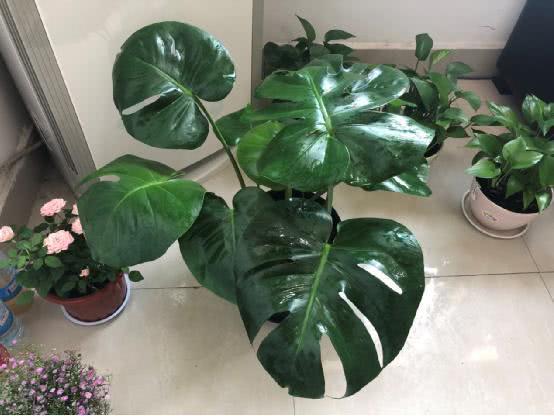
After buying or renovating a new home, people always worry about the formaldehyde problem, since it affects our own health. Many people choose to open the windows for ventilation for a while and grow a few pots of plants that absorb formaldehyde. In the past, when these plants were mentioned, we would only think of green plants like pothos or spider plants, but recently, when chatting with an old gardener, the editor learned a shocking secret: there is a plant whose formaldehyde-absorbing effect is much better than other plants. That's right, it is the Swiss cheese plant (Monstera deliciosa).
The Swiss cheese plant can be considered quite special among green plants, because not only are its leaves very deep green, but its shape is also very unique. Placing a pot indoors will definitely make it a eye-catching "hit" plant. So exactly how should you grow a Swiss cheese plant well? First, we can start with its habits. The Swiss cheese plant is naturally afraid of cold and prefers a warm and humid environment. So indoors is more favorable for the growth of the Swiss cheese plant than outdoors. In fact, it is precisely because of this habit that it has become the showpiece of ornamental plants in many families' living rooms.
If a plant wants to grow well, then water supplementation is absolutely indispensable, and this also applies to the Swiss cheese plant. In fact, it is precisely because the leaves of the Swiss cheese plant are larger than those of other plants and we also need to take care of the surrounding humid environment that it needs more water during the growth period. Especially in summer, although there is still no clear answer on the specific frequency of watering, growers still need to observe the potting soil frequently. Once the surface of the potting soil turns white (a sign of water shortage), immediately water it thoroughly once, and in the early morning or evening each day, you can also spray a little water around the flower pot.
If the Swiss cheese plant is to look good, then the "splitting" of the leaves is very important. The splitting of the Swiss cheese plant refers to the cracking of the leaves, which mainly depends on three factors: light, water, and fertilizer. We have already introduced the topic of watering just now. As for light, in summer, when the Swiss cheese plant grows fastest, we should best let it enjoy a few hours of "sunbathing" in the early morning or evening. Diffused natural light is the best choice, and when the harshest sunlight of the summer afternoon appears, we should best move it back indoors to prevent the leaves from being sunburned.
As for fertilizer, in addition to a certain amount of base fertilizer added when the potting soil is first prepared, attention should also be paid to topdressing in summer. Usually, the nutrient solution needed by ordinary flowers can help the Swiss cheese plant solve most problems. However, it should be noted that if leaf fertilizer is to be sprayed, it is best to wipe the leaves in advance to keep them clean.