Detailed Explanation of Paris polyphylla Medicinal Resources and Growth and Development Patterns
Medicinal Resources and Growth and Development Patterns of Paris polyphylla
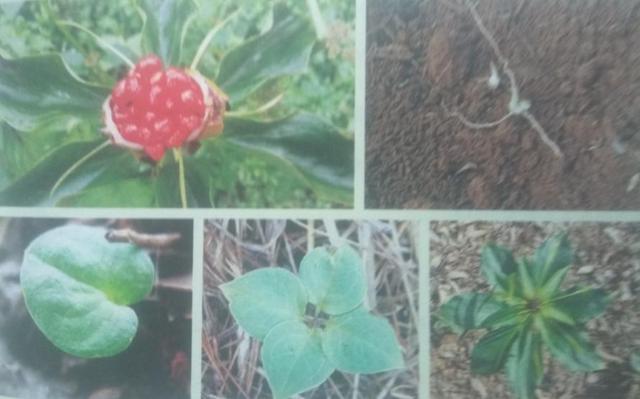
Paris polyphylla is a perennial herb with a relatively long life cycle, generally over 10 years, and under good conditions can survive for 30 years. The entire life cycle of Paris polyphylla begins with seed germination and can be divided into the seed germination stage, vegetative growth stage, and reproductive growth stage. The growth and development process of Paris polyphylla is shown in Figure 1.
1 Growth and development process of Paris polyphylla var. yunnanensis
(1) Seed germination stage
The seed germination cycle of Paris polyphylla requires 2 years. Generally, germination begins 3-4 months after sowing. Typically, by the end of the sowing year, one main root sprouts, and by the second year, a heart-shaped leaf emerges, entering the vegetative growth stage.
(2) Vegetative growth stage
The vegetative growth and development of Paris polyphylla requires 5-6 years before it enters the reproductive growth stage and begins to flower and fruit. The vegetative growth stage of Paris polyphylla can be further divided into the heart-shaped leaf stage and the two-leaf and multi-leaf stage.
1. Heart-shaped leaf stage
After the heart-shaped leaf emerges from the soil, the plant can carry out photosynthesis relying on water and nutrients absorbed by the roots. The carbohydrates produced are transported through the vascular tissues of the leaf veins and stem, and the Paris polyphylla seedling begins autotrophic growth. During this period, if Paris polyphylla suffers loss of leaves due to natural disasters, diseases, or pests, the plant is extremely prone to death. The heart-shaped leaf stage is a fragile period for Paris polyphylla growth and also a critical period.
2. Two-leaf and multi-leaf stage
After growing for 1-2 years in the heart-shaped leaf stage, the aboveground stem of Paris polyphylla becomes taller and thicker, the number of leaves increases, and the rhizome segments also thicken significantly. The plants generally emerge in April-May. The stem is columnar, usually single, but sometimes there are two or three stems. This period is a rapid growth phase for Paris polyphylla, with high demand for water and fertilizer. Therefore, particular attention should be paid to water and fertilizer management. Not only should the base fertilizer applied in autumn and winter each year be sufficient, but appropriate topdressing and foliar fertilizer should also be applied during the vigorous growth period. In the multi-leaf stage, the rhizome of Paris polyphylla has already formed and accumulated to a certain extent, and it also has strong resistance to external stress. This is the most suitable period for transplanting Paris polyphylla [Jishan Huayao].
(3) Reproductive growth stage
Under natural field conditions, Paris polyphylla var. yunnanensis and Paris polyphylla var. chinensis may not enter the reproductive growth stage even after growing for 7 years. Under cultivation conditions, due to sufficient water and fertilizer, they can enter the reproductive growth stage after 4 years of emergence at the four-leaf stage. At this time, Paris polyphylla grows rapidly; not only do the aboveground stems become taller and thicker, and the number of leaves increases, but flowers and fruits also appear, the rhizome segments thicken significantly, and the underground stem takes on a screw-like shape. The plants generally emerge in April-May, followed by the flowering period. After the aboveground stem emerges, the flower bud has already formed at the top of the stem, enclosed within the unexpanded leaf cluster. After 2-3 days, the flower parts are exposed, the pedicel elongates, and the leaves and flowers unfold. From September to November, the seeds mature successively, the capsule splits, and the outer seed coat changes from pale red to deep red, falling off naturally after maturity. The fruit weighs 0.24-26.20 g and contains 1-268 seeds. The number of leaves of Paris polyphylla usually increases with the age of the rhizome, and tends to stabilize at the flowering age.